
The Migration Surge at Ceuta: A Disturbing Reality
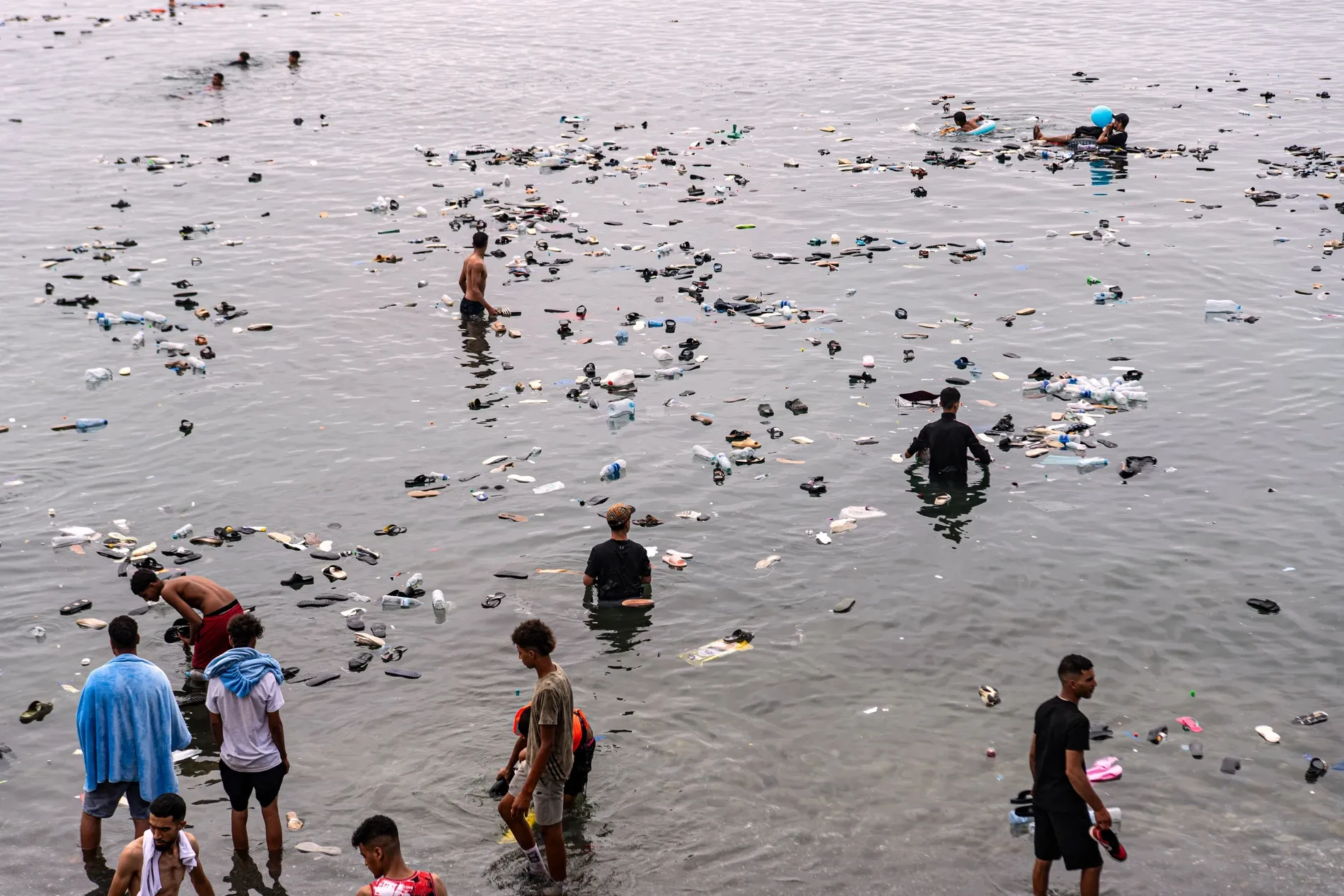
In recent weeks, we have witnessed a tragic surge in migration as tens of thousands of individuals decided to leave everything behind, risking their lives to swim towards the Spanish border. This mass movement has sparked widespread discourse, stirring a deep sense of shock and dismay across Morocco and beyond. The events that unfolded on July 30th and 31st, when between 50,000 and 70,000 predominantly young people attempted to cross into the Spanish enclave of Ceuta, have left many questioning the underlying causes and implications of such desperation. It is impossible to ignore the profound pain that a segment of the Moroccan population is experiencing, as nearly every community has been touched by this crisis.
Reports indicate that in major cities like Rabat and Casablanca, thousands of young people stormed train stations, eager to embark on a journey northward. Many individuals, hailing from rural areas or small towns, pooled their resources to share taxis or hitch rides on trucks. In the vicinity of Fnideq, just a few kilometers from the border, some hotels were left unstaffed, and cafés saw their waitstaff flee in pursuit of a better future. The stories that have emerged are heart-wrenching: couriers abandoning their scooters, office workers taking a leap into the unknown in hopes of supporting their families or affording medical treatment for loved ones, and young women disregarding their mothers' tears in their quest for freedom. Tragically, it is reported that around 50 female footballers from local Moroccan teams attempted the same perilous journey, with at least one, a 26-year-old, losing her life in the process.
Understanding the Roots of This Crisis
In the aftermath, a cacophony of explanations has emerged, with theories proliferating regarding the motivations behind this mass exodus. Some have suggested that social media fueled rumors of Spain welcoming migrants, while others point to smuggling networks and diplomatic tensions between Madrid and Rabat as contributing factors. A thorough investigation is necessary to clarify these issues and establish accountability, but what remains alarming is the sheer scale of the migration: tens of thousands of Moroccans made the harrowing decision to leave everything behind, with 141 reported casualties according to the Moroccan human rights organization AMDH. This heartbreaking reality cannot be ignored, and it forces us to confront the immense suffering experienced by a significant portion of the Moroccan populace.
It is crucial to recognize that those who sought to cross the border cannot simply be labeled as “migrants.” Just hours prior to their departure, they were workers, students, athletes—our children, neighbors, and colleagues. The crisis at Ceuta defies simplistic explanations; it encompasses a diverse cross-section of society, all of whom feel trapped in a system that fails to provide them with an adequate livelihood, with opportunities seemingly shut off, and with mounting frustration over inadequate public services and unequal development. Despite undeniable economic achievements, such as a 5% growth rate and a rise in foreign investments, Morocco is grappling with a profound social crisis. Youth unemployment exceeds 37%, living costs are on the rise, and regional disparities continue to widen. Two starkly different Moroccos exist side by side—one that exports cars and will host the 2030 World Cup, and another that feels overlooked and humiliated.
The recent statistics published by the Haut-Commissariat au Plan (the Moroccan statistics office) reveal that approximately one in three Moroccans aged 15 to 29 is neither employed nor studying or in training. Alarmingly, nearly 72% of this demographic are women, highlighting significant regional disparities. Such distressing statistics should awaken our collective conscience and compel us to advocate for the youth with all available means, ensuring they feel that the future holds promise for them. The societal efforts must focus on empowering those who are the driving force of our future, rather than dismissing this crisis as an external conspiracy or manipulation. It is unacceptable for certain elites to accuse these young individuals of recklessness while they themselves secure foreign passports for their children and send them to study in Europe.
The words of sociologist Fatima Mernissi resonate painfully in this context: “If you cannot leave the place where you are, you belong to the weak.” This sentiment captures the tragedy of the current situation all too well, as many young people yearn for mobility. While summer often brings travel for many, this freedom remains an unattainable luxury for a considerable portion of the global population, particularly for Moroccans who face not only financial barriers but also the daunting challenge of obtaining a visa—even for the middle class capable of providing guarantees. The message to these young people seems clear: Europe remains out of reach.
As international migration dynamics evolve, the disparity in access to opportunities intensifies the crisis. In response to the surge, Morocco has deployed an unprecedented security presence to prevent a second wave of migration towards Ceuta, signaling both an external and internal message. The state of emergency persists in Ceuta, where residents describe the situation as an “invasion” while simultaneously expressing frustration towards right-wing populists who exploit their plight. Meanwhile, Morocco has expelled Spanish correspondents from the border town, a move likely in retaliation for Spain’s earlier refusal to allow a Moroccan TV crew into Ceuta. This complex web of migration, societal crisis, and political maneuvering requires urgent attention and comprehensive solutions.
As reported by faz.net.