Overview of Migration Pressures in Morocco
In a comprehensive report released by the Moroccan Ministry of Interior, the scale of migration pressure on the kingdom for the year 2025 has been starkly highlighted. Official statistics reveal that a total of 73,640 attempts at irregular migration towards Europe, including the Canary Islands and the enclaves of Ceuta and Melilla, were thwarted last year. This figure underscores the substantial investments made by Rabat in border and coastal surveillance, but it only becomes fully meaningful when compared to European data. The statistics demonstrate a high efficiency of Moroccan security forces, but they also shed light on the ongoing diversion of migration flows in the western Mediterranean region.
The effectiveness of Morocco's strategy is reflected in the statistics provided by the European Border and Coast Guard Agency, Frontex. While the Ministry of Interior in Rabat emphasizes the high number of interception operations, Frontex reported a significant decline in irregular arrivals on the West African route (towards the Canary Islands) by approximately 66%, totaling 17,788 individuals for the year 2025. This trend is closely linked to the enhanced border security measures in Morocco and Western Sahara, along with deeper cooperation with the European Union. In contrast, the western Mediterranean route, which leads directly to the Spanish mainland and the enclaves of Ceuta and Melilla, saw a slight increase of about 11% in arrivals, amounting to 18,987 individuals, confirming the regional shift in migration pressure.
Challenges and Humanitarian Concerns
A critical aspect of the government report is the dismantling of over 300 criminal smuggling networks in 2025. The Ministry of Interior notes that these networks are constantly evolving their strategies and increasingly consolidating their operations. The professionalization of these gangs poses new challenges for security authorities. Nevertheless, the statistics from the UNHCR reveal an interesting shift: among those who actually arrived in Spain, Moroccan nationals constituted only about 5.0% (1,843 individuals) in 2025, while Algerian nationals dominated the statistics on the mainland route, accounting for over 50%. This indicates that Morocco is primarily functioning as a transit country for migrants from Sub-Saharan Africa and other Maghreb states.
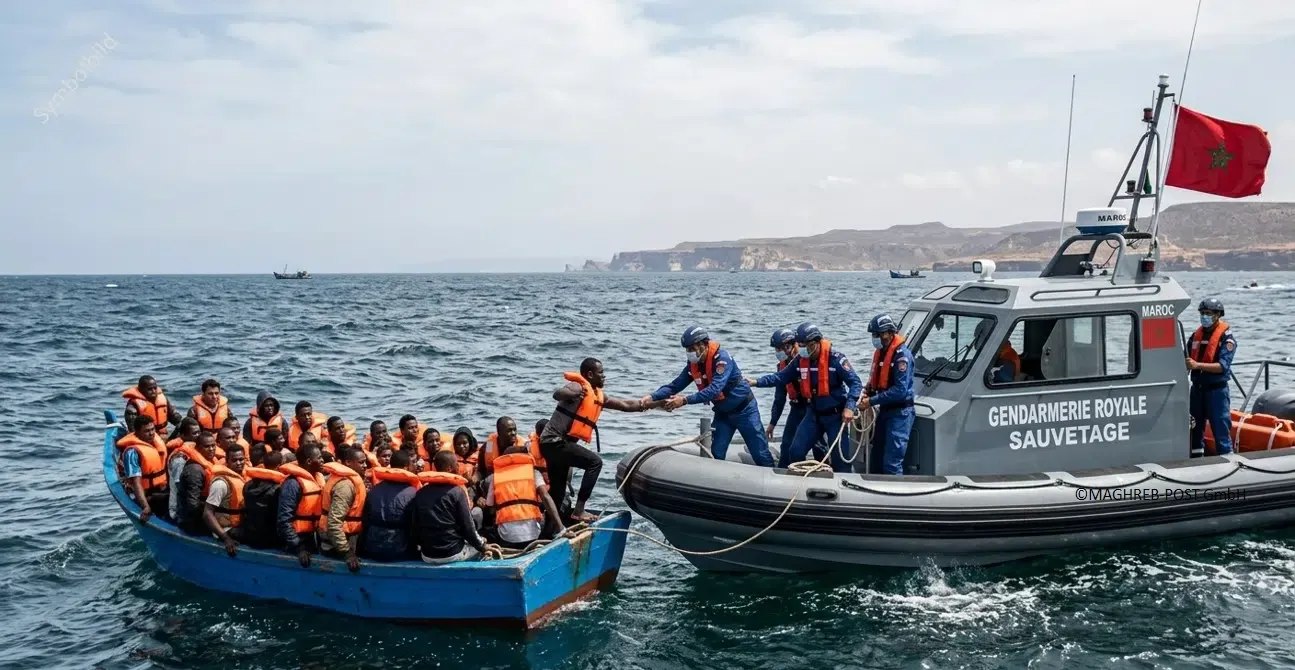
Despite the official reports of success, the humanitarian situation remains precarious. The International Organization for Migration (IOM) documented at least 2,185 deaths or missing persons across the Mediterranean in 2025. Particularly alarming is the situation in the Atlantic, where IOM data indicate that at least 1,214 people lost their lives attempting to reach the Canary Islands. These figures contrast sharply with the 13,595 rescues reported at sea by Moroccan units. While Rabat emphasizes its 'humanitarian approach' through the support of 4,372 voluntary returnees, the death toll reported by the IOM highlights that increased monitoring often makes migration routes more dangerous and lengthy.
Morocco's geopolitical significance in the migration landscape has been further solidified by its designation as a 'safe country of origin' by the EU in early 2026. This classification leads to expedited processing of asylum applications, particularly in Spain, where Moroccan nationals now have a very low recognition rate according to Eurostat. However, this also places a growing responsibility on Morocco as a destination country. An increasing number of individuals are opting to remain in the country rather than risking the perilous crossing. Thus, the balance between meeting the EU's security interests and maintaining humanitarian standards within its own borders remains the central political issue for the coming year, as the data from 2025 indicates that while migration pressure is being managed, it is far from resolved.
As reported by maghreb-post.de.