
The invocation of the Friday prayer as a legal argument within the realm of International Law stands as one of the most intriguing cultural and legal confrontations in history. This debate came to a head at the International Court of Justice (ICJ) in The Hague in 1975 during the pivotal advisory proceedings concerning Western Sahara. The case encapsulated the complexities of sovereignty, territorial claims, and religious allegiance, intertwining spiritual belief systems with international legal standards.
Spiritual Sovereignty and Legal Claims
In 1974, amid Spain's process of decolonization, the United Nations sought clarity from The Hague regarding the status of Western Sahara, questioning whether it constituted _terra nullius_ (land belonging to no one) back in 1884. If it was not, the UN demanded an explanation of the legal ties that connected it to Morocco. The Moroccan government faced a significant challenge: it lacked concrete documentation—maps, customs, or tax records—that could substantiate its claims of governance over the Saharan territory by the sultans of the past. In response, Morocco's diplomatic strategy pivoted towards a defense rooted in traditional Islamic law, or _Sharia_.
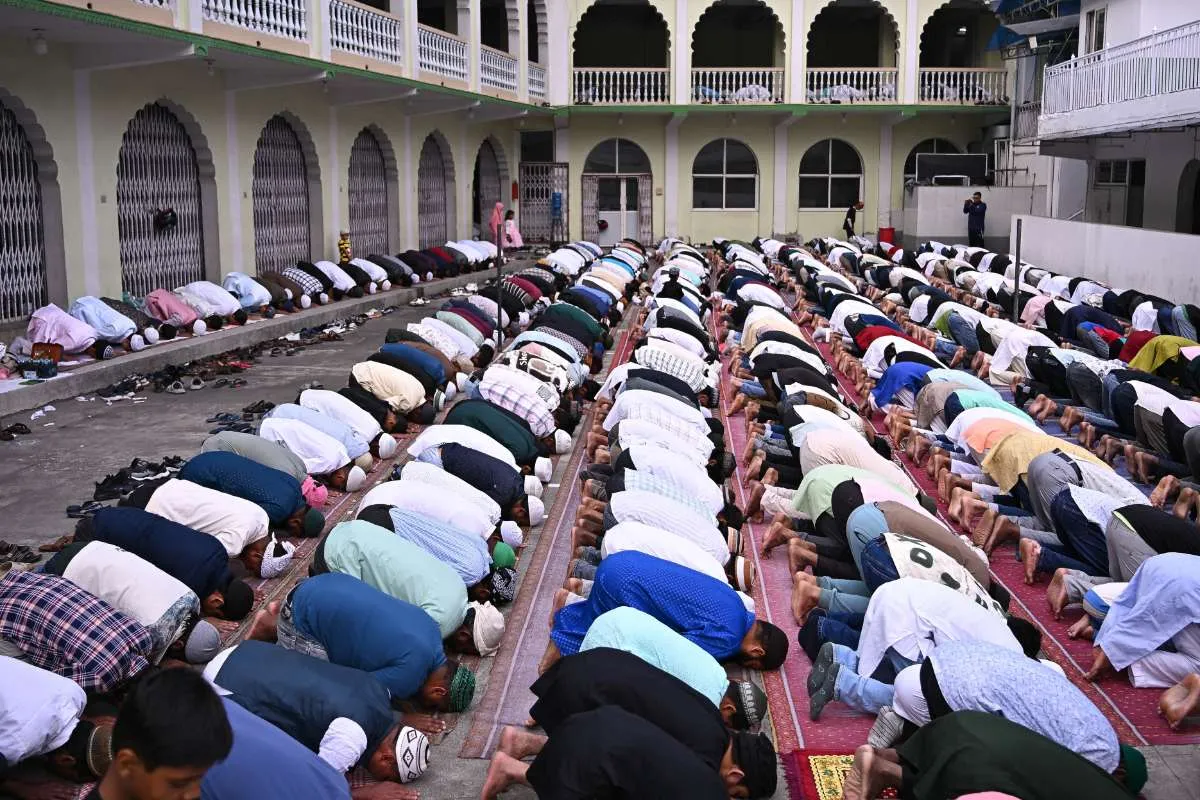
Moroccan representatives provided evidence indicating that the nomadic tribes of the Sahara, notably the Reguibat, included references to the Sultan in their Friday prayer sermons, known as _Khutbah_. They argued that, in Islam, sovereignty does not hinge on geographical demarcations but is instead defined by the bond of religious loyalty, termed _Bay'ah_, between the populace and the _Amir al-Muminin_ (Commander of the Faithful), represented by the Sultan. This legal rationale suggested that the voluntary prayers offered by Saharan imams for the Sultan on Fridays demonstrated their recognition of his legitimate authority, thus asserting that the Sahara was not a no-man's land but rather Moroccan territory through a blend of spiritual and religious connections. Similar arguments were made regarding other regions such as Mauritania, parts of Algeria, and the Spanish cities of Ceuta and Melilla.
The Hague's Judicial Response
The judges of the International Court of Justice, primarily trained in Western legal traditions—rooted in Roman, continental, or Anglo-Saxon law—listened to Morocco's arguments with a mixture of attention and skepticism. Within the framework of traditional international law, sovereignty is contingent upon two objective criteria: the intention to act as a sovereign entity and the actual, ongoing, and exclusive exercise of state functions, including police, taxation, and administration. The landmark ruling delivered by the International Court on October 16, 1975, navigated this complex dilemma with a nuanced approach.
In a decision that acknowledged Morocco's position to a limited extent, the court recognized that there existed _"legal ties of allegiance"_ of a religious nature between the Sultan and certain Saharan tribes, affirming the reality of the Friday prayers and the associated spiritual recognition. However, the court simultaneously articulated a significant limitation regarding territorial sovereignty. The judges unanimously concluded that these religious ties did not equate to formal sovereignty over the land. They posited that praying for a spiritual leader does not automatically confer upon that leader the political or administrative ownership of a territory, drawing a parallel that underlined the absurdity of equating such recognition with governance, as it would imply that the Pope of Rome might be the head of state for a substantial portion of the global population.
As reported by escudodigital.com.