
In the first part of this report, migrants from Sub-Saharan Africa shared harrowing details about their perilous journeys across the Sahara Desert, exposing the extortion, human trafficking, detention, and torture they faced on their path to North Africa. However, the tragedy does not conclude upon reaching Morocco; rather, it marks the beginning of a new phase characterized by repeated attempts to reach Europe, forcing many to reassess their priorities and future.
The Tension Between Crossing Borders and the Possibility of Stability
The experiences of migrants from Sub-Saharan Africa in Morocco unveil a complex humanitarian reality that transcends mere statistics and policies. Their stories represent a continuous movement between hope and hardship, the desire to cross borders, and the potential for stability, juxtaposed with the European dream against the backdrop of life in North Africa. Within these intersecting narratives, numerous individual stories emerge, illuminated by firsthand testimonies that reveal the profound human aspect of migration, a phenomenon that has become one of the most pressing issues of our time.
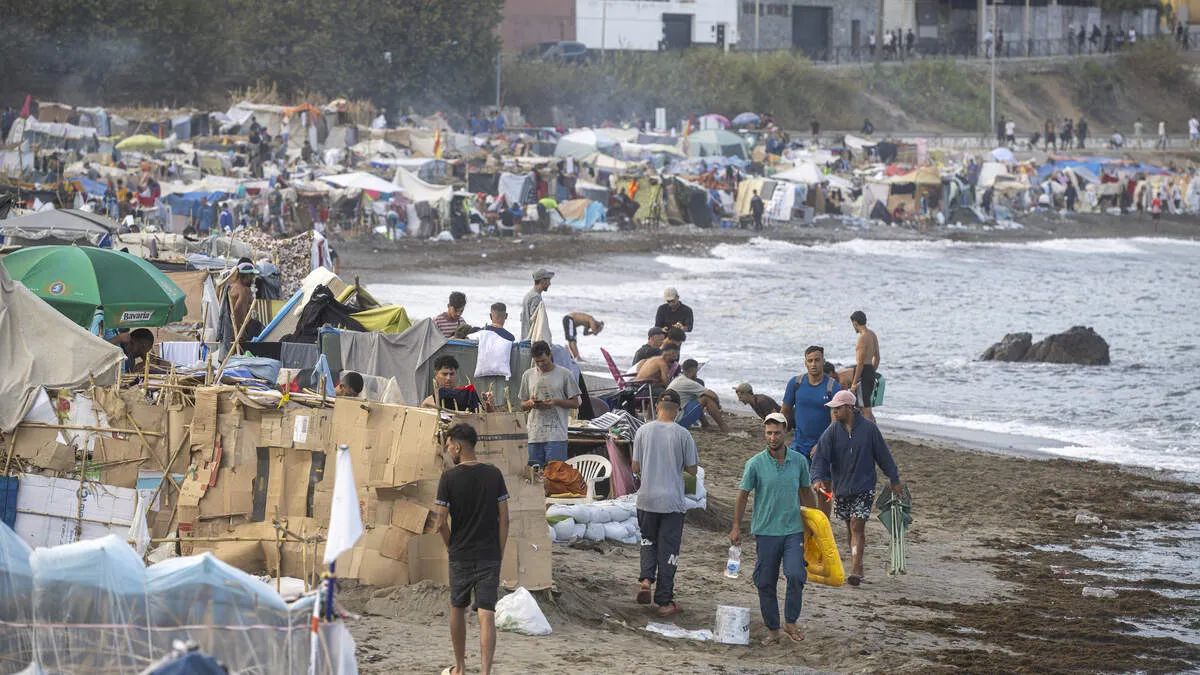
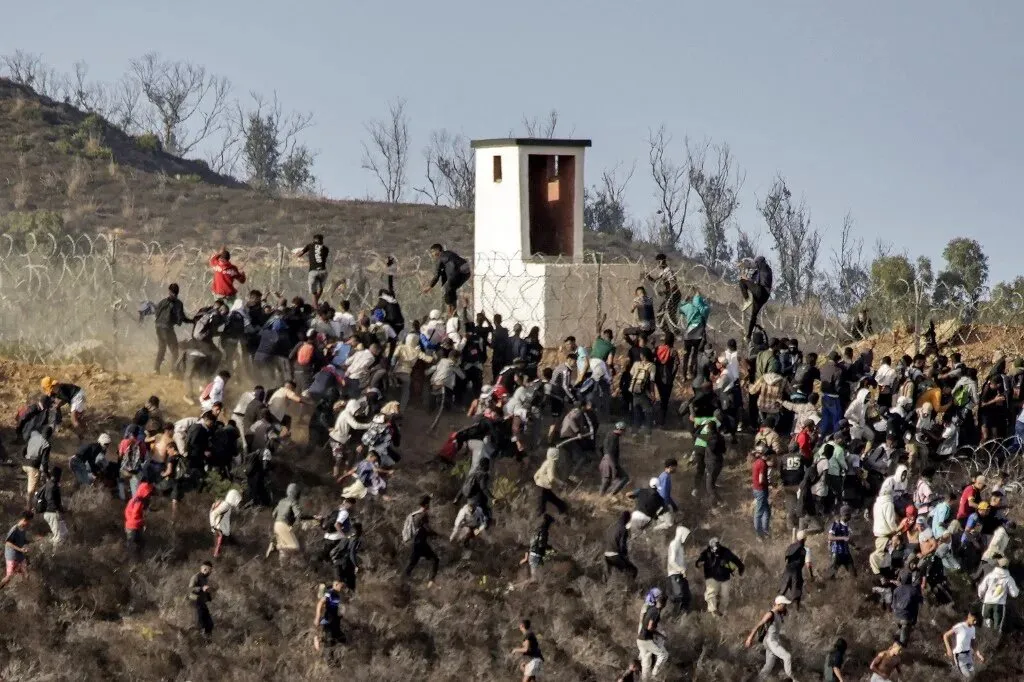
Cameroonian youth Kaghma Gauthier recounts his pain-filled journey, noting that his suffering did not cease upon reaching Morocco; his aspiration was to reach Europe at any cost. "We attempted to cross the fenced land borders multiple times and made several attempts to migrate by sea from Tangier, all of which ended in failure," he laments. The economic conditions were equally harsh; without any support, he had to rely entirely on himself, spending all he had on crossing attempts only to return to square one, trapped in a relentless cycle of failures and suffering.
Ahmad, a Sudanese youth who fell victim to human trafficking and narrowly escaped death, recounts the horrors he faced while in Libya. He explains, "Libyan military contacts reached out to individuals in Tunisia, demanding ten Sudanese migrants in exchange for a liter of gasoline. We were then transported to Libya, where we were taken to a prison known as 'Al-Asa.' There were around one hundred and five detainees inside the prison." He describes how they were lined up, interrogated about the duration of their detention, and the failure of their families to pay the demanded ransom for their release. He witnessed the execution of sixty-five individuals in front of him, a traumatic experience that has left lasting scars.
From the Dream of a European Paradise to Finding Stability in Morocco
Traditionally, Morocco was seen as a temporary stopover for migrants heading toward Europe, particularly Spain, via the Mediterranean Sea or the enclaves of Ceuta and Melilla. However, this perception has become less accurate in recent years. Recent studies indicate that an increasing number of migrants are remaining in Morocco for extended periods, sometimes for several years, due to the difficulties in reaching Europe or changing plans over time. This shift reflects a new reality characterized by "unplanned stability" within Morocco.
Kaghma reflects on his previous perception of Europe, describing it as the "promised paradise." He explains, "I saw firsthand how some friends who left Cameroon in 2012 improved their conditions and supported their families after arriving in Europe, which fueled my own desire to pursue the same path.” However, over the years, his outlook has transformed; Europe is no longer a goal to achieve at any cost but has become merely a destination for tourism and vacations. His priorities and life perspectives have evolved significantly over time.
According to human rights activist Abdelali Khafi, "Initially, Morocco represented a passage for African migrants from Sub-Saharan countries to the other side, but over time it has transformed into a country of stability for many of them. Today, there are groups among these migrants whose legal statuses have been regularized, which is positive." However, he emphasizes the necessity of ensuring that all individuals present in the country are known to the relevant authorities, as the existence of undocumented individuals could pose significant security challenges. It is clear that most of these migrants seek a dignified life and wish to integrate and work.
Kaghma is now convinced that he can achieve much within Morocco, especially as a holder of a self-employment card. "What I lack today is the capital needed to launch my own projects and realize my aspirations in entrepreneurship." Meanwhile, many migrants from Sub-Saharan Africa in Morocco find themselves in vulnerable social and economic conditions, primarily working in the informal sector, where formal job opportunities remain limited.
In terms of housing, many rely on shared accommodations or unstable living conditions, particularly in densely populated urban centers. Socially, experiences of integration vary greatly, with some instances of solidarity and coexistence with the local community contrasting sharply with others marked by tension or discrimination, driven by apparent cultural and economic differences. Despite this, civil society initiatives exist to support migrants and enhance their integration, particularly in areas such as health, education, and legal assistance.
During his time in Morocco before regularizing his status, Kaghma recounts living without residency documents, sharing overcrowded apartments with numerous other migrants, especially in Tangier, where he sometimes lived with fifteen or twenty others in the same unit. "I was relatively fortunate to secure informal work as a manager of an internet café and a computer technology trainer, benefiting from my educational background. However, the low wages often forced me to beg for money to cover expenses, pay rent, send money to my family, and finance attempts to cross borders," Kaghma shared. He added, "After internal deportations, I found myself sleeping on the streets in multiple cities, even experiencing this in Agadir, where I spent long months without shelter before gradually finding housing, albeit in poor condition, thanks to some savings and a growing knowledge of the country.”
Abdelali Khafi raised the issue of the resettlement of migrants within Morocco, a topic that continues to stir much debate. He noted that, "These operations cost the state significant budgets, while many of those relocated return to the cities they left, particularly Casablanca or the northern regions, seeking new opportunities or a better life."
As reported by france24.com.