
The Rise of the Atlas Lionesses
Long before filling stadiums and shining on the world stage, Morocco's Atlas Lionesses had to start from scratch. Until 1997, there was no national women's football team in Morocco, leaving the spotlight entirely to men's football. The journey toward establishing a women's team was not initiated by a football player but rather by an athlete of remarkable stature: Nawal El Moutawakel. She made history as Morocco's first Olympic gold medalist and was a pioneer for Arab, African, and Muslim women in the realm of sports.
In 1997, when the concept of forming the Atlas Lionesses began to take shape, El Moutawakel was serving as the Secretary of State for Youth and Sports. She collaborated closely with General Hosni Benslimane, who was then the president of the Royal Moroccan Football Federation (FRMF), to bring this vision to fruition. The idea surfaced at a time when women's football was starting to gain international traction, as noted by sports journalist Jamal Astaifi in a 2023 interview with Femmes du Maroc. However, within Morocco, institutional support for the women's game was sorely lacking. Nadia Maqdi, famously known as 'Tigana' and the first captain of the team, recalls, 'Until 1997, the federation did not seem interested in women's football.'
Building a Team Without a League
This disinterest was reflected in the formation of the team. With no structured women's league in place, selectors had to draw from a modest pool of talent. Maqdi reminisces that players were chosen during a two-day local tournament held at the Moulay Rachid National Sports Center in Salé. The athletes hailed from 'unconventional teams', informal structures, or amateur backgrounds long before women's football gained the recognition it enjoys today. Despite this limited talent pool, Morocco managed to form its first women's national team in record time. By the following year, the Lionesses were ready to represent Morocco in the continent's premier women's competition.
Morocco's entry into the 1998 African Women’s Championship was somewhat serendipitous, as they qualified after Kenya withdrew, securing a direct spot alongside Nigeria, Egypt, and Congo-Kinshasa (now the Democratic Republic of Congo). This marked a significant milestone for a team that was barely born. Maqdi recalls the pride she felt representing her country, though she admits she did not fully grasp the importance of that moment at the time. 'I was just happy to play,' she confesses. The inaugural match was a harsh introduction, as Morocco faced Nigeria, the reigning champions and hosts, suffering a staggering 8-0 defeat.
However, Morocco bounced back just three days later, defeating Egypt 4-1, marking their first continental victory. On October 23, they drew against Congo-Kinshasa. Despite these performances, Morocco was eliminated in the group stage due to goal difference. Interest from the public was limited, with journalist Saïd Zeddouk noting that few spectators attended those early matches. Nevertheless, the team proved that they could compete on the international stage.
Morocco qualified once again for the continental championship in 2000 in South Africa. Although they faced another early exit in the group stage, a new star emerged: Lamia Boumehdi, who at just 16 and a half was the youngest player on the national team. The federation subsequently established a U19 team, with Boumehdi as captain, which faced senior teams in an Arab tournament in Cairo in 2001. In 2004, she played in a temporary Arab team against Chelsea, even scoring a goal. After their initial appearances in 1998 and 2000, Morocco disappeared from the finals of the continental championship for some time.
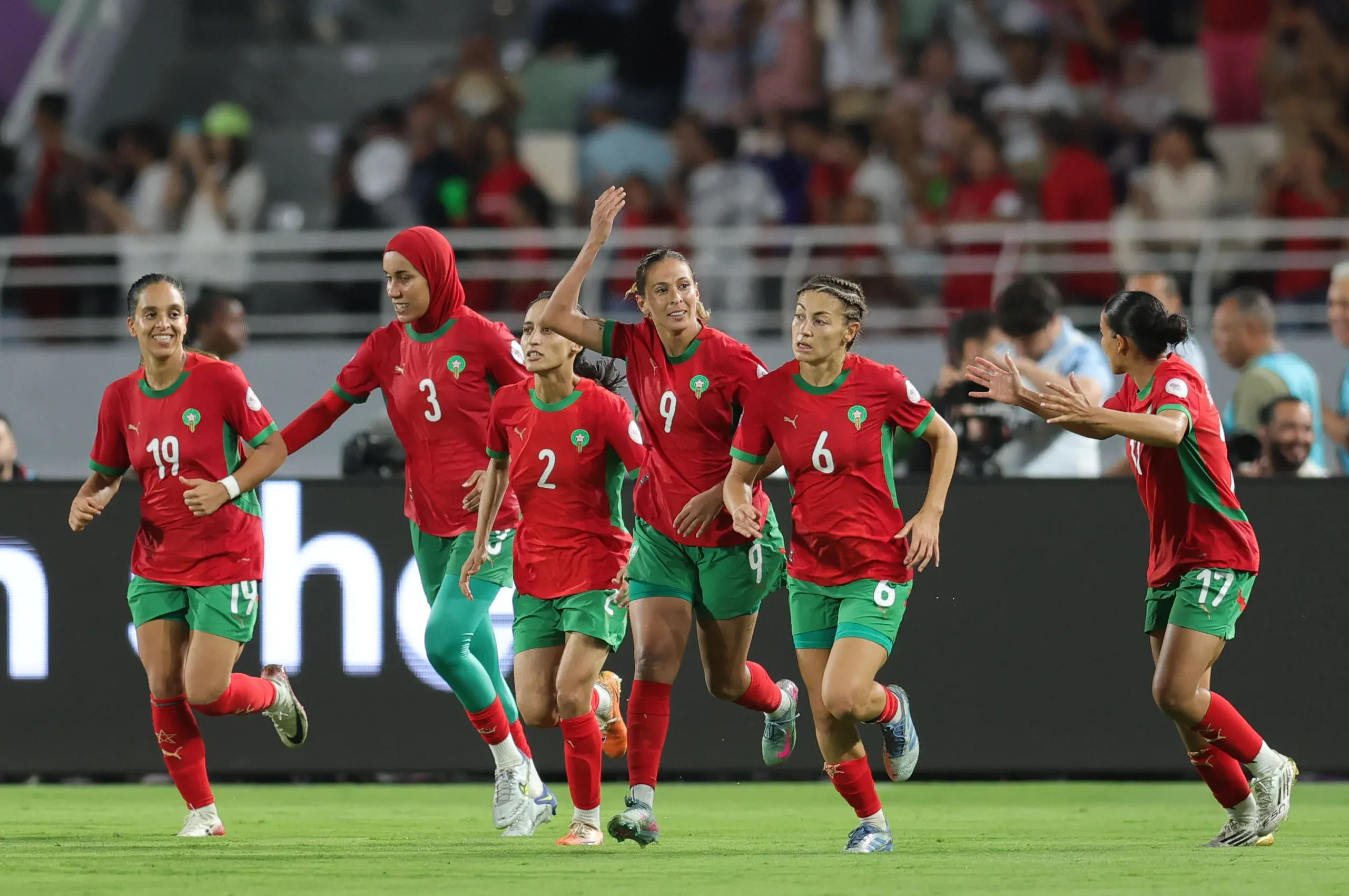
Two decades after these beginnings, a structural turnaround was on the horizon. In August 2020, the FRMF signed a program contract that integrated women's football into a broader national strategy. The results of this initiative became evident during the 2022 Women's Africa Cup of Nations held in Morocco. The Lionesses reached the finals and qualified for the World Cup, marking a historic achievement as the first Arab team to participate. Their journey rekindled their connection with the public, drawing thousands of spectators to their matches. This summer, the Lionesses continue to make history, qualifying for a second consecutive World Cup and reaching the semifinals of the 2026 Women's Africa Cup of Nations in Morocco.
As reported by yabiladi.com.