
Media Representation and Racial Dynamics in Morocco
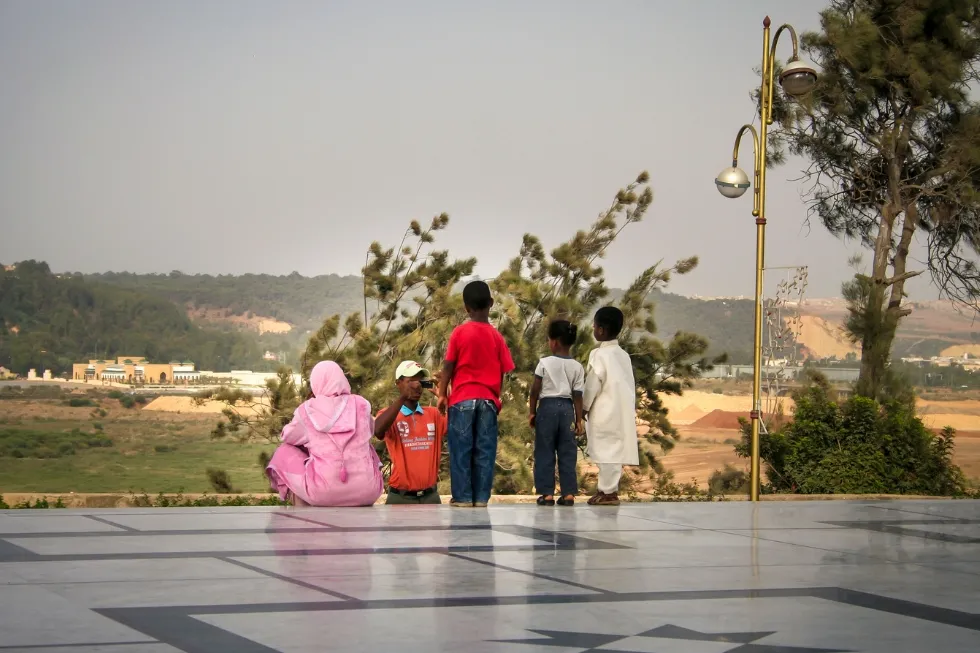
In June 2026, Hespress, Morocco's foremost digital news outlet, published a headline that read: "Murder Case Haunts An African In Al-Darwa." This headline notably lacked any mention of the individual’s nationality or specific geographical context, simply referring to the person as “an African.” Such language implies a broader narrative wherein Morocco, situated on the African continent, is paradoxically positioned outside its own geographical identity. This framing is not an isolated occurrence; other media outlets in Morocco have adopted similar terminology, reinforcing a pattern of exclusion that categorizes Sub-Saharan migrants as representatives of Africa while simultaneously suggesting that Morocco does not belong to the continent. This linguistic choice not only reflects a troubling oversight but also fosters a culture of exclusion that is evident in numerous crime reports covering events from that month. During a time when Moroccan law enforcement was intensifying its efforts against organized crime and drug trafficking, the language used in these reports revealed a clear bias: when the accused was Moroccan, they were identified by their city or neighborhood, whereas Sub-Saharan individuals were uniformly labeled as “African.” This practice underscores a discursive issue that is deeply embedded in the media’s language choices, rather than a reflection of legal or institutional racism.
While Morocco does not operate under an apartheid-like legal framework, the way its media narrates stories about race and ethnicity has significant implications for public perception and societal attitudes. This discrepancy highlights the necessity of scrutinizing the language employed by newsrooms, which can inadvertently perpetuate stereotypes and foster an environment of discrimination. It is essential to recognize that while the media’s language reflects broader societal attitudes, it does not equate to an assertion that Morocco is institutionally racist. Nevertheless, language is a powerful tool that shapes public perception, and the events of 2026 have brought this dynamic into sharp focus.
Historical Context of Black Othering in Morocco
The phenomenon of othering black Africans in the Maghreb predates the era of digital media and is deeply entrenched in the region's history. Unlike Western racial paradigms, which are often defined by specific legal and institutional contexts, Moroccan racial attitudes are influenced by a complex interplay of ethnicity, religion, and historical narratives. Prior to the Arab conquest of North Africa, the indigenous Amazigh (or Berber) communities often exhibited prejudices against black Africans, a phenomenon documented by historians such as Chouki El Hamel in his work, *Black Morocco: A History of Slavery, Race, and Islam*. The arrival of Arab settlers in the 7th century introduced new racial hierarchies that further complicated the social landscape. Influential figures from this period, including the 14th-century historian Ibn Khaldun, perpetuated notions associating dark skin with savagery, thus embedding a loose hierarchy that placed Arabs at the top, followed by the Amazigh, and relegating others to a lower status. These historical legacies found fertile ground during the colonial era, as French authorities exploited existing divisions through strategies that emphasized ethnic differences.
Following Morocco's independence, nationalists aimed to forge a singular Arab-Moroccan identity through policies of Arabization, which largely overlooked the country’s African identity. This historical reluctance to embrace Morocco’s Africanness continues to influence contemporary discourse, particularly within the media. The recent tensions surrounding the 2026 Africa Cup of Nations (AFCON) final between Morocco and Senegal crystallized these issues, as incidents of violence and discrimination against Sub-Saharan businesses were sparked by the match. This event revealed the fragility of racial sentiments in Morocco, highlighting how quickly latent prejudices can surface when provoked. Social media platforms became battlegrounds for racial rhetoric, with derogatory comments targeting Sub-Saharan migrants, illustrating the extent to which existing biases can be legitimized through careless language.
The juxtaposition of Morocco’s diplomatic efforts to position itself as a continental leader against the backdrop of the media’s exclusionary language creates a stark paradox. Morocco has actively pursued partnerships with Sub-Saharan nations since rejoining the African Union in 2017, yet its most influential news outlets perpetuate narratives that undermine these efforts. The inconsistency between the Foreign Ministry's pan-African ambitions and headlines that treat “African” as synonymous with foreignness not only detracts from Morocco’s reputation but also risks fueling the very attitudes that its policies seek to combat. In a society grappling with economic challenges, the careless framing of racial identities may serve as an easy scapegoat for broader frustrations, ultimately hindering the nation’s progress toward unity and understanding.
As reported by fairobserver.com.