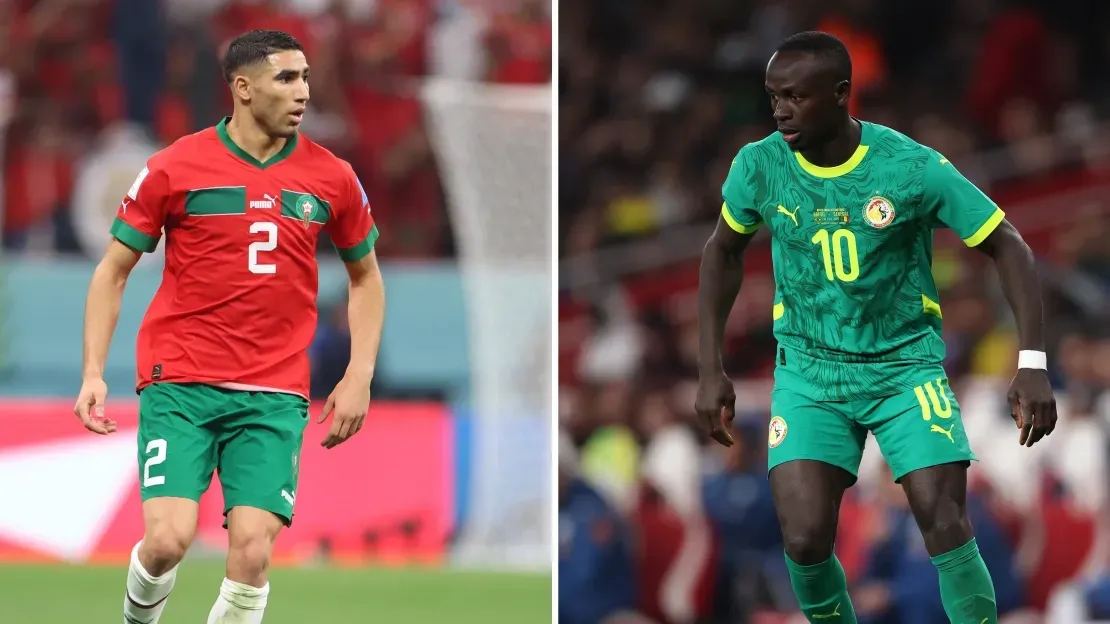

The ongoing legal confrontation between Morocco and Senegal regarding the identity of the champion of the 2025 Africa Cup of Nations is no longer confined to the corridors of the Court of Arbitration for Sport in Lausanne, Switzerland. The ramifications of this situation have extended into a highly significant individual race, the African Ballon d'Or, amidst an open competition among numerous stars. The outcome of this legal battle could potentially influence the identity of the national team that will ultimately be recognized as the continental champion, adding another layer of complexity to the discussions surrounding individual accolades.
Morocco vs. Senegal: How the CAS Decision Could Shift the Ballon d'Or Race
The case has entered a critical phase following a hearing held at the Court of Arbitration for Sport on October 8, 2026. The Senegalese Football Federation has appealed against a decision made by the African Football Confederation's Appeal Committee on March 17, which declared the Senegalese team as having lost by withdrawal and awarded Morocco a 3-0 victory, based on articles 82 and 84 of the competition regulations. Senegal is demanding the annulment of this decision, seeking to be recognized as champions of the Africa Cup, while Morocco stands firm on the ruling by the relevant authorities within the African Confederation that awarded them the title. The final decision now rests with the Court of Arbitration for Sport, which has yet to issue a ruling following the hearing, although it has indicated that a reasoned decision will be released as soon as possible, without specifying a timeline.
The significance of this case in the context of the African Ballon d'Or race lies in the fact that the resolution of the Africa Cup title may serve as a crucial factor in evaluating the season's performances, given the prestigious status of the tournament in continental football. However, it's important to note that a decision from the court does not guarantee that the award will automatically go to a player from the victorious team, as the selection process also considers individual performances, accomplishments with clubs and national teams, consistency, and the player's influence on match results.
Ashraf Hakimi vs. Bamba Dieng: A Clash of Achievements
Ashraf Hakimi, the star of Paris Saint-Germain and the Moroccan national team, enters this competition bolstered by his position among the elite of African football and a rich record of achievements with his club, which includes titles such as the UEFA Champions League, Ligue 1, and the UEFA Super Cup. These collective accolades significantly enhance his profile in the context of the season evaluation, especially following his role in guiding the Moroccan national team to the quarter-finals of the 2026 World Cup. Hakimi was also awarded the African Player of the Year for 2025 during the CAF Awards, making him the first defender to win this accolade since 1973 and the first Moroccan player to do so since Mustapha Haji in 1998. Thus, the validation of Morocco's claim to the Africa Cup title could further solidify Hakimi's collective accomplishments and lend additional value to his contributions to the national team, particularly if they are complemented by strong individual performances.
On the flip side, Bamba Dieng possesses a significant advantage with his recent recognition as the African Player of the Year in La Liga for the 2025-2026 season, having garnered 38% of the votes, surpassing competitors such as Ghana's Inaki Williams and Ivory Coast's Nicolas Pépé. This achievement not only holds individual merit but also bolsters his credentials in the continental awards race, especially since he scored the winning goal in the Africa Cup final and earned the Man of the Match award, as noted by his club Villarreal. Thus, Dieng's case is closely tied to two notable accomplishments: his standout performances in La Liga and his pivotal role in the continental final, should the title be officially awarded to his teammates, including Sadio Mané.
As the decisive moment approaches, the final ruling in the Morocco-Senegal case could significantly alter the landscape of the African Ballon d'Or race. The anticipated decision places both parties at a critical juncture that has the potential to reshape the ongoing debate surrounding the title. The outcome could either bolster the case for one player or leave the significance of individual achievements more pronounced in the final assessment. Ultimately, while the Lausanne court will adjudicate the dispute regarding the Africa Cup title, the criteria governing the selection of the African Player of the Year will remain distinct and anchored in its own voting mechanisms, involving national team coaches, captains, technical committee members, and media representatives.
As reported by winwin.com.