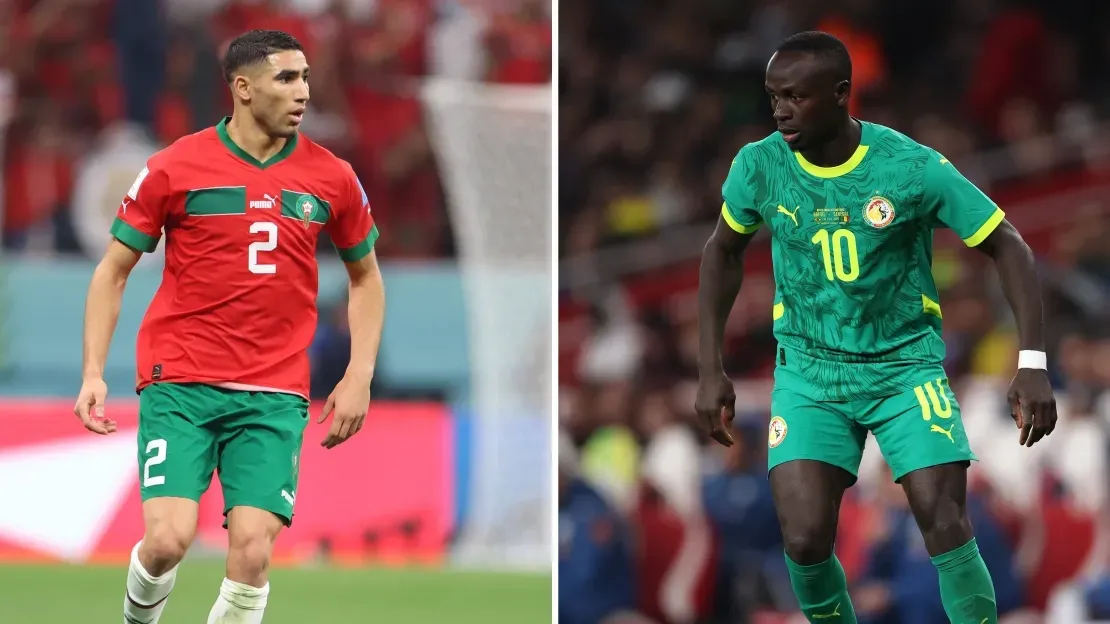

The ongoing legal confrontation between Morocco and Senegal, regarding the identity of the champion of the 2025 Africa Cup of Nations, has transcended the confines of the Court of Arbitration for Sport (CAS) in Lausanne, Switzerland. Its ramifications have now extended into an equally significant individual race—the contest for the African Ballon d'Or. This competition has opened up a dynamic contest among several star players, with the identity of the national team that will ultimately be crowned continental champion playing a crucial role in the outcome of this prestigious award.
The juxtaposition of Achraf Hakimi, the star of Paris Saint-Germain and the Moroccan national team, against Papa Gueye, the Villarreal midfielder and Senegalese international, presents a fascinating paradox. Both players boast compelling credentials that bolster their chances in the race for the African Ballon d'Or. However, the resolution of the legal dispute surrounding the championship could lend symbolic weight to one player’s candidacy, especially considering that winning a continental title is among the most significant achievements assessed when evaluating a player’s season performance.
Morocco and Senegal: CAS's Decision Could Shift the Ballon d'Or Equation
The case has entered a pivotal phase following a hearing held by the CAS on October 8, where the Senegalese Football Federation challenged the decision made by the African Football Confederation’s Appeals Committee on March 17, which deemed the Senegalese team the loser due to withdrawal and awarded Morocco a 3-0 victory based on Articles 82 and 84 of the competition regulations. Senegal is petitioning for the annulment of this ruling and the declaration of their team as the champions of Africa, while Morocco stands firm on the decision made by the governing bodies of the African Confederation, which conferred the title to Morocco. The final word rests with the CAS, which refrained from delivering a verdict during the hearing, assuring that a reasoned decision would be issued as soon as possible, without specifying a timeline.
The significance of this case in the context of the African Ballon d'Or race lies in the fact that confirming the Africa Cup title could significantly influence how the season is evaluated, given the stature of the tournament in continental football. However, it is important to note that the court's decision will not automatically award the prize to a player from the winning national team, as the selection process is also influenced by individual performances, achievements with clubs and national teams, consistency, and the overall impact of the player on results.
Hakimi: A Rich European Record Versus the Quest for Continental Glory
Achraf Hakimi enters the competition bolstered by his status among Africa's elite football stars and a rich record of achievements with Paris Saint-Germain, highlighted by his triumphs in the UEFA Champions League, Ligue 1, and the UEFA Super Cup. These titles significantly enhance the collective weight of his season evaluation, complemented by his contribution to the Moroccan national team reaching the quarter-finals of the 2026 World Cup. Hakimi was honored as the African Player of the Year for 2025 at the CAF Awards, making him the first defender to win the accolade since 1973 and the first Moroccan since Mustapha Hadji in 1998.
Thus, the potential affirmation of Morocco's rightful claim to the Africa Cup could bolster Hakimi's collective achievements, adding further value to his contributions with the national team in discussions surrounding the award, particularly if his overall performance is strong, despite the fierce competition from Senegal in the individual race.
Conversely, Papa Gueye possesses a noteworthy card in his arsenal: his recognition as the African Player of the Year in the Spanish league for the 2025-2026 season, where he garnered 38% of the votes, surpassing competitors like Ghana's Inaki Williams and Ivorian Nicolas Pépé. This achievement is not only significant for its individual merit but also enhances Gueye's position in the continental awards race, especially after scoring the winning goal in the Africa Cup final and being named the Man of the Match, as reported by his club Villarreal. This links his profile to two prominent accomplishments: his stellar performance in the Spanish league and his critical contribution in the continental final, should the title be officially awarded to his teammates.
The moment of truth is approaching—the decisive ruling on the Morocco-Senegal case is imminent! The Africa Cup final file enters a critical phase before the Court of Arbitration for Sport, and the awaited decision places both parties at a pivotal moment that could alter the landscape and conclude the heated debate over the title. What lies ahead for Morocco and Senegal?
The potential outcome of the legal proceedings may indeed influence the evaluation of Hakimi's and Gueye's achievements throughout the season. However, it remains essential to recognize that the CAS ruling will not directly determine the winner of the African Player of the Year award, as the court's jurisdiction is limited to the Africa Cup title dispute and does not extend to the individual honors governed by the Confederation of African Football. The awards depend on voting mechanisms that involve various stakeholders, including national team coaches, captains, technical group members, and media representatives, thus broadening the assessment beyond just the final match outcome or the identity of the winning team to encompass the player's overall contributions and performance during the award period.
Between Morocco and Senegal, the equation hinges on a delicate balance between individual and collective accomplishments. Hakimi boasts an impressive European record and previous experience as an award winner, while Gueye enters the fray buoyed by his achievements in the Spanish league and strong performances with his national team. Winning the Africa Cup could provide an additional boost to one candidate's profile, but it does not negate the necessity of evaluating the broader elements of the season, nor does it guarantee a shift in voting outcomes. As we await the verdict from the Court of Arbitration for Sport, the question remains: how will the resolution of this dispute impact the African Ballon d'Or race? Will the continental title confer significant weight to one of the stars' profiles, or will individual and European achievements play a more critical role in the final assessment? One thing is certain: Lausanne will adjudicate the Africa Cup dispute, while the quest for the title of the best player on the continent will continue to adhere to its own established criteria and voting results.
As reported by winwin.com.