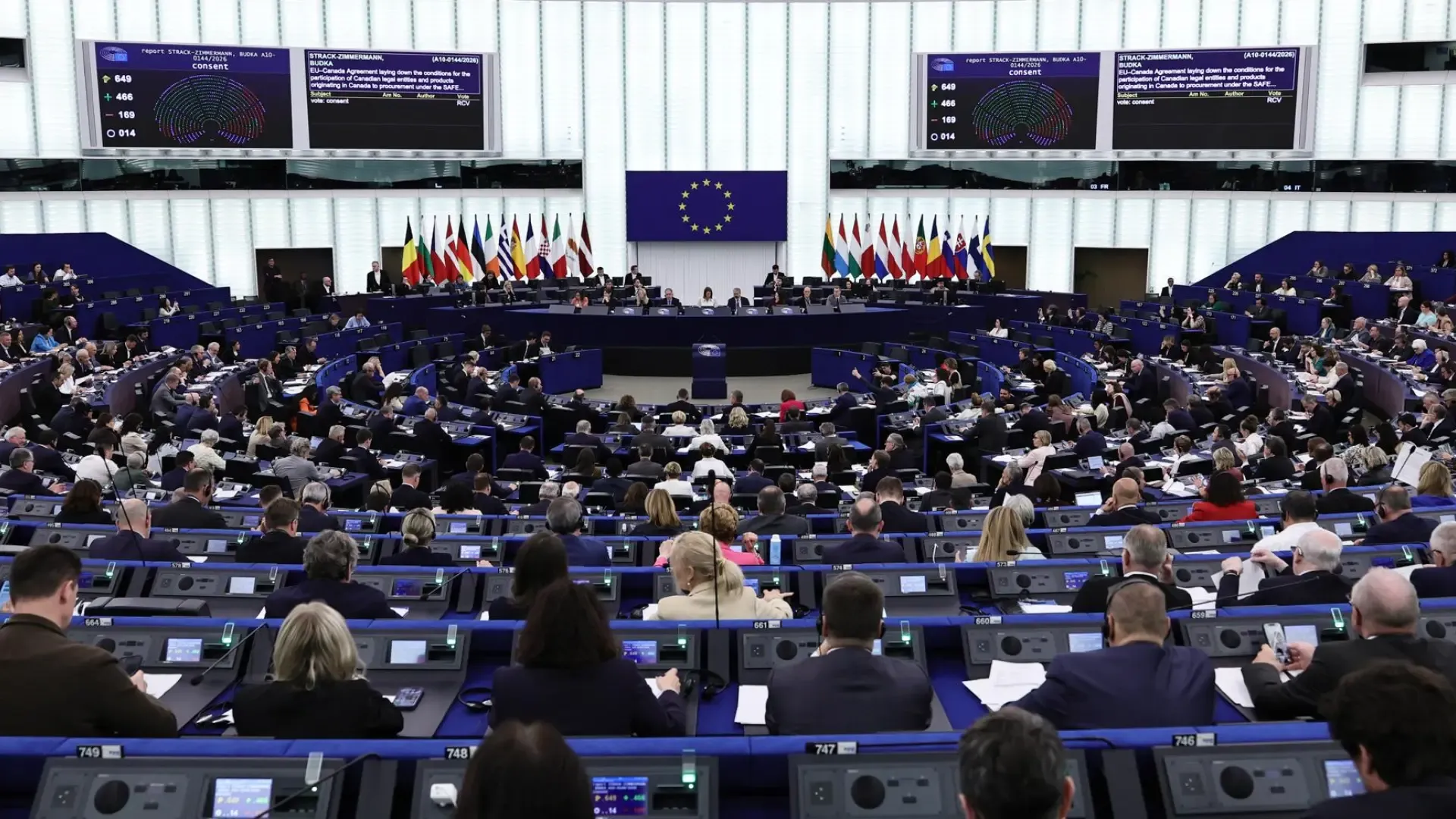

The recent influx of migrants into Ceuta on July 30 and 31 has sparked intense political debate within the European Parliament, emphasizing the urgent need for a coordinated strategy to safeguard the external borders of the European Union (EU). The discourse among political factions remains divided, particularly concerning the extent of the response required and whether the EU should hold Morocco accountable, and if so, in what manner. European People's Party (EPP) members and Vox representatives have suggested that the EU might consider suspending its trade agreement with Morocco, a notion that has been categorically dismissed by the Vice President of the European Parliament, Javier López, who belongs to the Socialist Party.
In a press conference held in Strasbourg, López asserted that there is "zero risk of confrontation between the European Union and Morocco," and he emphasized that the likelihood of breaking commercial agreements is also "zero." Currently, the EU stands as Morocco's primary trading partner and its largest foreign investor, thanks to the Euro-Mediterranean Association Agreement, which established a free trade zone. The Moroccan kingdom, along with Algeria, ranks as the EU's foremost trade partner among southern neighboring countries.
Contrastingly, the EPP has a different narrative. Javier Zarzalejos, Chairman of the Committee on Civil Liberties, Justice, and Home Affairs of the European Parliament, believes that the Ceuta crisis has highlighted Spain's failure to adapt its measures in accordance with the Migration and Asylum Pact. He contends that the EU must commit all its resources to ensure effective migration policy, but he suggests that the situation goes beyond mere policy adherence. Zarzalejos commented, "It is difficult to normalize relations with Morocco" when the repatriation of the bodies of those who drowned has not even been authorized for burial in Moroccan soil, responding to inquiries about whether his group's report might pave the way for suspending the trade agreement with Rabat.
Jorge Buxadó from Vox vehemently argues that "mass and uncontrolled migration is Europe's primary issue," stressing that immigration policies alone do not resolve crises; rather, it is the decision-makers who need to take action. He stated that the external borders must serve as "an insurmountable wall if we wish to guarantee the free movement of Europeans," openly advocating for the suspension of the trade agreement with Morocco and even proposing visa restrictions for Moroccan citizens.
Estrella Galán, Vice President of the Committee on Civil Liberties, Justice, and Home Affairs, emphasizes that the EU must cease outsourcing its borders to third countries that do not respect human rights, asserting that migration policy control should take a different direction. From her perspective, the Ceuta crisis is not merely a normative migration flow issue but rather a geopolitical crisis being exploited by various internal and external actors.
Juan Fernando López Aguilar from the Progressive Alliance of Socialists and Democrats (S&D) reminds us that this is not the first critical episode Europe has faced, recalling previous crises in Lampedusa (Italy), the Greek islands, and the Baltic states bordering Russia and Belarus. He considers Ceuta and Melilla to be critical frontiers and believes that the government has acted in accordance with the European Migration and Asylum Pact, urging the European Parliament to focus more on what the EU can do rather than pointing fingers at a member state.
He further stated that "the EU must engage diplomatically with Morocco, with which it has signed an agreement," making it clear that it would be "foolish" to sever diplomatic relations with a strategically important neighbor of the EU, especially in areas like drug policy, counter-terrorism, and fighting jihadism, as well as being Spain's second-largest trade partner after the EU member states.
As reported by 20minutos.es.