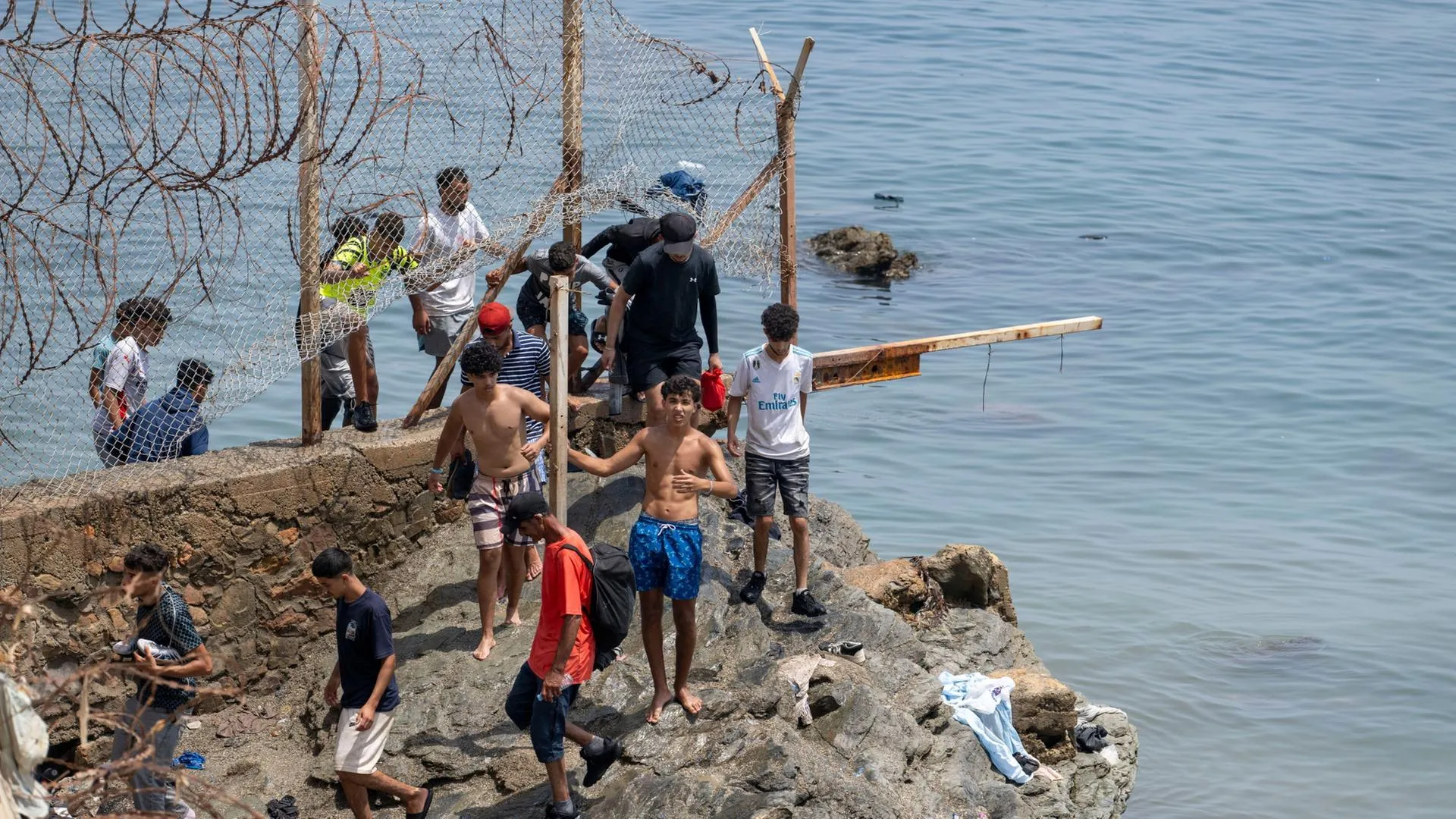

Understanding the Migration Crisis in Ceuta
The recent events in Ceuta, a Spanish enclave in North Africa, have sparked significant debate regarding the freedom of movement within Europe. The influx of approximately 50,000 Moroccans into the city, as reported by the Spanish Ministry of the Interior, was both remarkable and fleeting, as most individuals returned home shortly thereafter. This situation, while seemingly akin to a day trip, represents one of the most severe migration crises Europe has faced in recent history. It starkly illustrates how neighboring countries can exploit the vulnerabilities of their populations as leverage against European nations.
It is difficult to comprehend how, in Morocco—where security forces are omnipresent—border officials could simply abandon their posts, allowing tens of thousands to storm the border. This is not a new scenario for Spain; just five years ago, a similar crisis unfolded when Spain treated a leader of the Polisario Front, which advocates for the independence of Western Sahara, resulting in another surge of around 5,000 migrants into Ceuta. In response, Spanish Prime Minister Pedro Sánchez dismissed his foreign minister and largely sided with Morocco, which opposes a referendum on self-determination for the native population of the contested desert region.
The Need for a Unified European Response
Spain’s approach to Morocco has often been characterized by a reluctance to confront its neighbor. Jorge Dezcallar, a former head of Spanish intelligence, pointed out that when Morocco blocked the flow of goods to the Spanish enclave of Melilla in 2019, Madrid did not protest. Similarly, there was no outcry when spyware was discovered on the devices of Spain's Prime Minister and several ministers, with only whispers suggesting Moroccan intelligence involvement.
Currently, as Morocco opens its borders following Spain's extensive economic agreement with Algeria—its primary rival in the Maghreb—there seems to be a strategic calculation at play. Morocco appears to view immigration as Europe’s Achilles' heel. However, crossing into Ceuta or Melilla does not guarantee entry into mainland Spain, as there are stringent exit controls in place. Questioning the integrity of travel within the Schengen Area due to the events in Ceuta is a form of populist opportunism. Instead, a more constructive approach would involve European nations contemplating how to reduce their susceptibility to external pressures from neighboring countries. A crucial first step towards this goal would be to demonstrate solidarity in their external relations.
As reported by tagesschau.de.