
The CAF Decision and Its Broader Implications
The recent ruling by the Confederation of African Football (CAF) Appeals Committee, which declared the Senegalese national team the loser by forfeit in the final of the 2025 Africa Cup of Nations (Morocco 2025) and awarded the title to Morocco, transcends the realm of sports. This pivotal moment serves as a lens through which we can observe a significant structural evolution within the African continent. Football has evolved beyond mere competition; it has become a strategic instrument of soft power, a means to redefine the symbolic dynamics among nations. Central to this transformation is the Moroccan model, which stands out not only for its victory but for the profound implications it carries for state and identity.
Morocco's Strategic Approach to Football and Nationhood
What transpired was more than a mere correction of a match outcome; it was a reaffirmation of a comprehensive system of values encompassing discipline, legitimacy, and institutional respect. These principles have been actively championed by Morocco in recent years under the visionary leadership of King Mohammed VI. This approach intertwines the realms of state and sports in a unified endeavor aimed at cultivating a modern national identity that remains rooted in its cultural heritage while embracing contemporary practices.
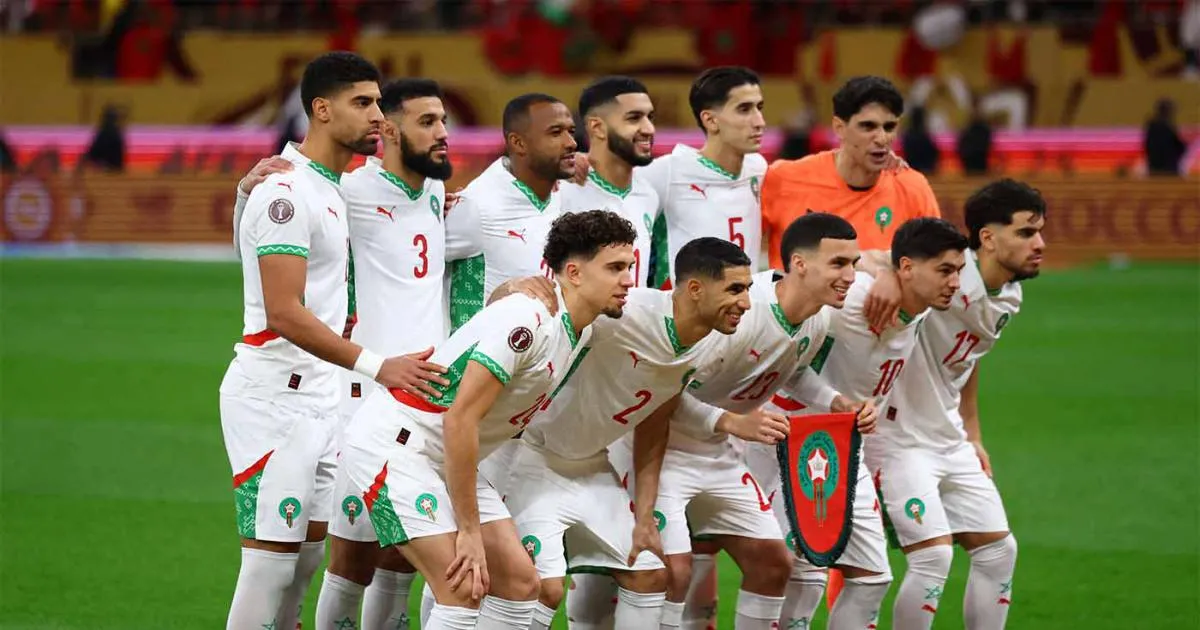
In this context, the Moroccan national football team evolves into something much larger than a mere collection of players; it embodies a new sociological phenomenon. The squad is primarily composed of individuals raised in the diaspora, nurtured in disciplined European environments yet maintaining a deep-seated connection to their homeland. These athletes, emerging from modest backgrounds, represent not only the product of elite football academies but also a dual heritage: authenticity in their cultural identity coupled with modern athletic performance. This unique blend equips them with the ability to harmonize national pride with professional discipline, effectively balancing emotion and rationale.
Integral to this equilibrium is the role of coach Walid Regragui, who transcends the typical responsibilities of a technical director to become a cultural and psychological conduit between disparate worlds. Drawing from his own diaspora experiences, Regragui has forged a relationship built on trust and familiarity with his players, moving beyond conventional leadership paradigms to adopt a more nurturing, 'elder brother' approach. This apparent simplicity conceals the intricate administrative insight that has been crucial to Morocco's success.
However, the achievements of the Moroccan team cannot be divorced from the robust infrastructure that has supported them. Morocco has invested not only in results but also in the conditions that foster success, such as state-of-the-art stadiums, world-class training facilities, and a strategic vision for hosting significant championships. Under the guidance of Fouzi Lekjaa, Morocco has embarked on a sporting renaissance, positioning sports as a diplomatic tool and a means to project a cultured image of the nation.
The dramatic moment of the final showcased another dimension of Morocco's experience: the capacity for self-restraint. In the face of unsportsmanlike behavior, both the government and the public opted for reason, steering clear of reactions that could tarnish the nation's reputation or its relationships within Africa. This was a significant test of both political and sporting maturity, one that Morocco navigated successfully, albeit at a bitter cost.
The most notable aspect of this experience was the reaction of the senior players, who accepted the apparent loss with a profound sense of responsibility, prioritizing the stability of the broader context over fleeting moments of triumph. Their response was not a sign of weakness but rather an acknowledgment of the intertwined nature of football and politics in Africa. They understood that any impulsive emotional reaction could spiral into a conflict far more consequential than a mere sporting defeat.
Contrasting with the tension of the final, Morocco also showcased its famed hospitality. The festive atmosphere, meticulous organization, and warmth exhibited during the tournament were integral to a larger narrative that has established Morocco as a premier host for international sporting events, where professionalism is seamlessly integrated with cultural spirit.
While the CAF decision ultimately restored justice, it prompts a philosophical and political inquiry: Is delayed justice sufficient? Although the ruling rectified the situation, it did not fully alleviate the sting of the experience. Ideally, justice should have been administered in real-time, within the confines of the match itself, rather than through the appeals process. Immediate justice not only ensures fairness but also cultivates a culture of respect for the rules, both on and off the field.
The coronation has indeed arrived, yet it came in a manner that was quieter and more introspective than one might have wished. Had this triumph occurred in an immediate context, it could have been a pure celebration, unmarred by the lingering sentiment that something was initially taken away and then returned. The moment could have been a comprehensive jubilation experienced by players, fans, and the Moroccan football establishment collectively, rather than in a fragmented two-stage process.
Nevertheless, what transpired affirms a deeper truth: that even delayed justice, when paired with political acumen and self-discipline, can transform pain into meaning and bitter experiences into narratives of victory. From the heart of a complex moment, Morocco has fostered a new celebration in football—not solely for reclaiming a title, but for demonstrating how a state, when managing sports with rationality, can achieve dual victories: once on the field and once in the annals of history.
As reported by middle-east-online.com.