
The National Rally of Independents Unveils New Commitments
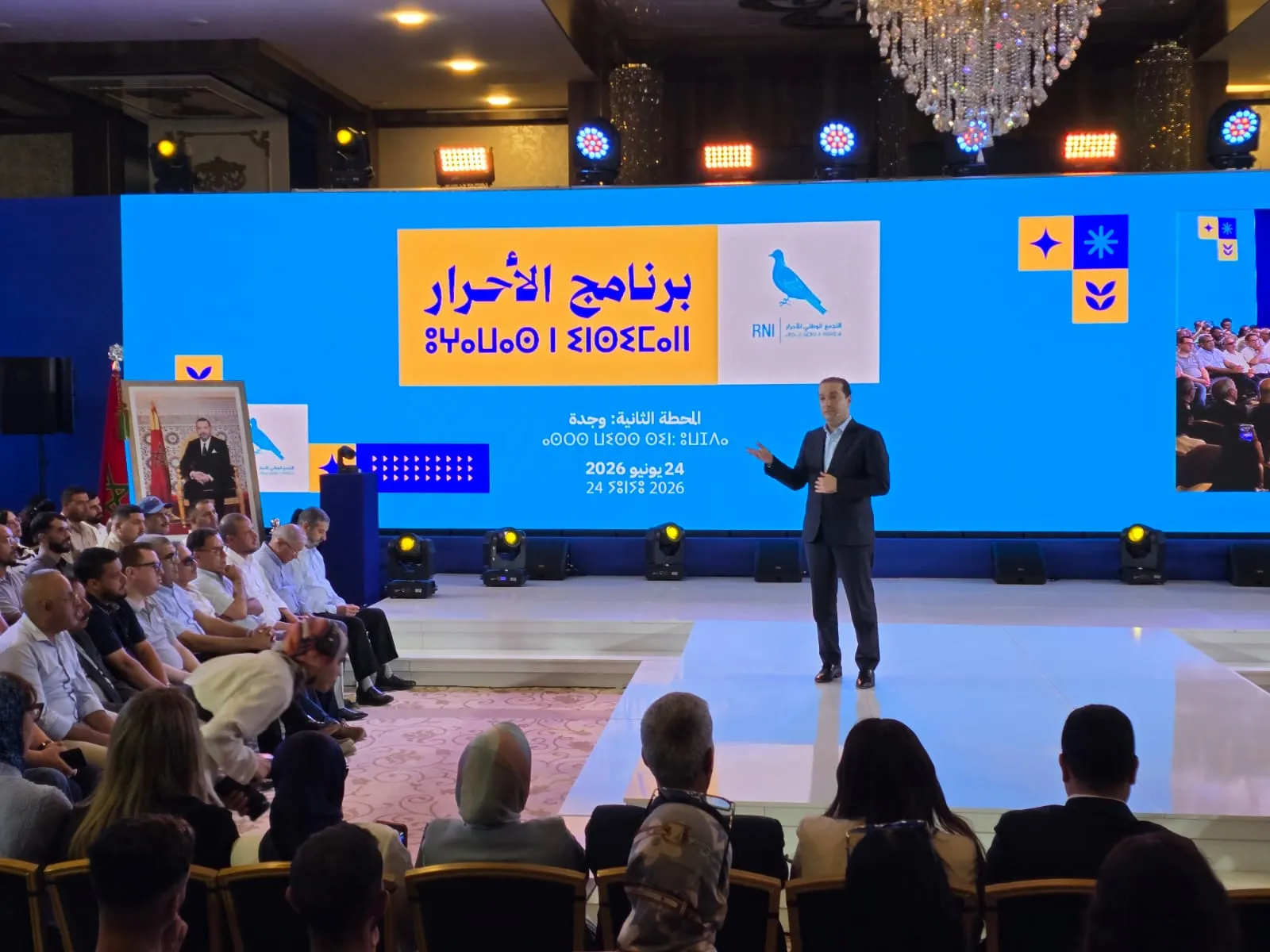
On June 24, 2026, in the city of Oujda, Mohamed Chouki, the leader of the National Rally of Independents (RNI), announced the party's completion of its candidate coverage across various electoral districts in the eastern region of Morocco, in preparation for the upcoming legislative elections scheduled for September 23. This announcement came during a party meeting dedicated to presenting the "RNI Program," where Chouki outlined the foundational elements that he claimed formed the basis for the party's electoral program. He emphasized that the program is built on two main pillars: actively listening to citizens and engaging in fieldwork on one hand, and leveraging the achievements of the current government on the other.
Chouki detailed that the program's presentation occurs through a series of communication sessions, which commenced in the city of Fes. The goal is to progressively unveil the commitments and accompanying measures that are "well-studied, numbered, clear, transparent, and implementable." In relation to the upcoming elections, he highlighted several candidates who will represent the party in various districts of the eastern region. Notable mentions include Halim Foutat, the head of the Beni Ansar commune in the Nador region, Mohamed Kayed in Oujda, and Abdelrahman Makroud in Jerfif, following the earlier announcement of five candidates for local electoral constituencies.
Engagement and Commitment to Citizen Needs
Chouki affirmed that the electoral program resulted from a series of listening and consultation sessions led by party members and elected officials throughout various regions. These field meetings allowed for the identification of numerous issues faced by citizens, including the expansion of the electrical network, school transportation, water supply, well maintenance, and the challenges encountered by livestock breeders. He expressed gratitude towards several elected members and active participants of the RNI, including Abdelrahman Makroud, Mohamed Kayed, and Halim Foutat, as they have played a significant role in bridging the gap between the party and the citizens, effectively conveying their expectations and concerns.
Chouki recalled examples from visits made by party members to remote villages, where some residents noted that these visits represented their first direct interaction with political figures. He added that the preparation of the program was not limited to fieldwork but also included institutional consultations with the party's affiliated organizations in a process known as "Future Path." The party took into account the perspectives of representatives from various sectors, including health, agriculture, trade, traditional crafts, as well as youth and women, with the aim of integrating their recommendations into the overall vision of the program. He remarked that the program also builds upon the achievements of the current government, acknowledging the complex and multifaceted economic and international context in which the government has been operating.
In outlining the primary objectives of the program, Chouki underscored that protecting the purchasing power of citizens is a core focus that intersects with various proposed measures. He highlighted interventions related to water and energy, facilitating access to public services, and certain fiscal measures linked to education as integral components of this approach. Furthermore, he affirmed that the program is grounded in a comprehensive vision that draws on past governmental experiences and the proposals collected from citizens and party members, aiming to formulate a roadmap for the upcoming phase.
In discussing spatial justice, Chouki clarified that the party's approach extends beyond infrastructure development; it also encompasses the equitable provision of public services across different territorial areas, recalling royal directives that call for avoiding a "two-speed Morocco." According to the party's vision, spatial justice entails ensuring equal access to water, energy, health, and education services, alongside continuing to enhance public schooling and expanding educational reform programs. He concluded his remarks by noting that the meeting is part of a series of communication events dedicated to presenting the party's various commitments and accompanying measures, announcing plans for additional sessions in the near future to showcase further aspects of the program.
As reported by al3omk.com.