The Nigeria-Morocco Gas Pipeline: Transforming Energy Dynamics
The ambitious gas pipeline project between Nigeria and Morocco has evolved rapidly from a distant planning phase to a more concrete reality. Recent reports from international media outlets, including Reuters, suggest that an intergovernmental agreement supporting the project is expected to be signed within the year. This initiative carries significant implications, backed by an estimated investment of around $25 billion and an infrastructure plan that could stretch over 6,000 kilometers, traversing up to 13 African nations.
What sets this project apart is its dynamic nature; it is not a closed or linear endeavor but rather a continuously negotiating framework that begins to alter the political and economic balances in West Africa, as well as its relationship with Europe, even before its completion. For Europe, this pipeline is part of a broader strategy for energy diversification. While it does not replace existing gas flows, it introduces an additional source into a system still characterized by structural tensions.
Strategic Implications for Europe and Africa
Spain finds itself in a distinct position within this evolving scenario. With over 30% of the European Union's regasification capacity, Spain has already established itself as a crucial infrastructure hub in the southern part of the continent. Should this corridor progress, its role as a gateway for redistributing African gas to Europe could be significantly strengthened. The European Commission has emphasized the necessity of developing "secure and diversified energy corridors in southern Europe," a technical formulation that effectively integrates Spain and North Africa into the same operational framework.
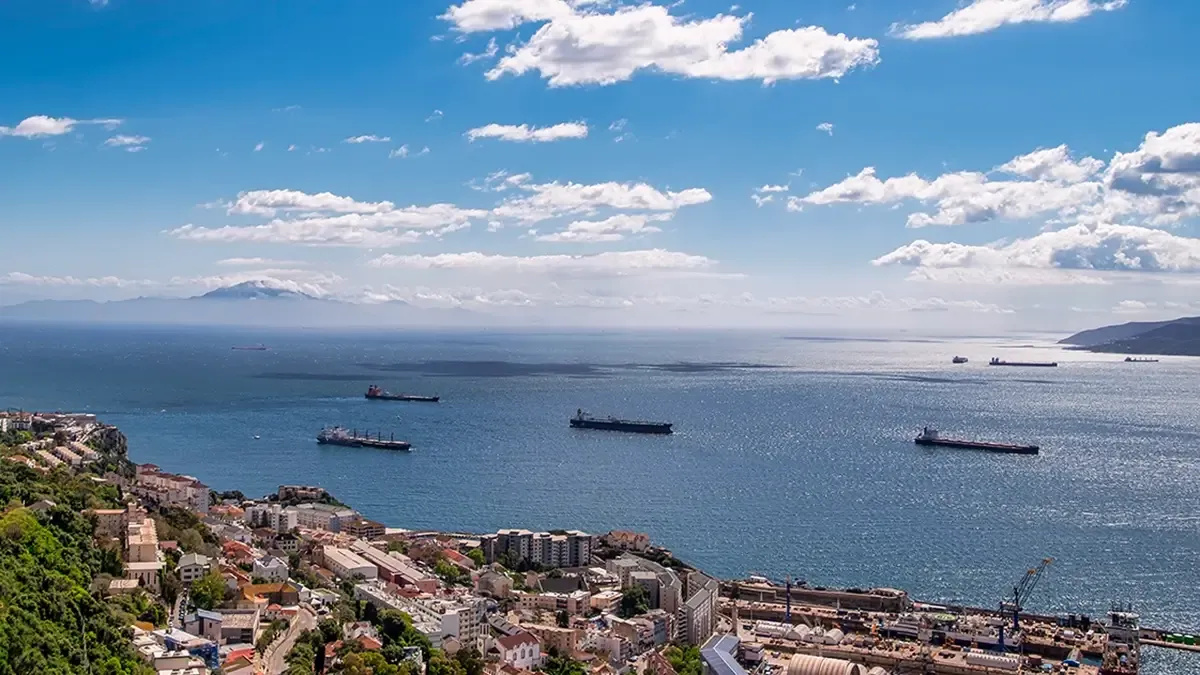
The most visible impact, albeit indirect, is anticipated to be on the Strait of Gibraltar. While its geographical function remains unchanged, its significance within the energy system is set to evolve. If African gas establishes itself as a flow towards the Moroccan Atlantic façade, the Strait will become part of a broader energy chain connecting West Africa to Europe. This situation intertwines diverse interests: Morocco aims to solidify its position as a regional energy hub, Spain seeks to maintain its status as the natural gateway to the European system, and the United States is closely monitoring the stability of the entire framework from the perspective of global strategic flows.
In this context, the Moroccan port network, often discussed separately, plays a crucial role in the same movement. The Tanger Med Port already serves as one of the major logistics centers in the Mediterranean and Atlantic, with activity levels that have placed it on the map of Africa's leading ports. This is not a future project; it is a well-established infrastructure acting as a redistribution point between continents. Further east, the Nador West Med Port is still under development but is designed to be more than just a conventional port. It is envisioned as an industrial and energy hub, aimed at accommodating some maritime traffic and enhancing Morocco's Mediterranean facade alongside the growth of the Atlantic axis. At the southernmost point, Dakhla Atlantic Port emerges as perhaps the most strategically significant due to its location, directly linking it to West Africa and the logic of the gas pipeline. Although still under construction, it aligns with the vision of expanding southward and opening new maritime routes.
Collectively, these three ports do not function as isolated entities; rather, they outline a parallel logistical network that reinforces Morocco's role as a connecting platform between energy, trade, and maritime routes, indirectly enhancing the importance of the Strait of Gibraltar within the new Atlantic axis.
Economic projections suggest that even in the construction phase, there will be significant impacts, including the creation of tens of thousands of direct and indirect jobs in West Africa, alongside associated investments exceeding $10 billion in complementary infrastructures such as roads, electrical networks, and port development. For Europe, the primary value lies not in the additional gas volume but in reducing supply risks. For Spain, this scenario opens up opportunities for enhanced energy centrality, although it also increases exposure to external dynamics in North Africa and the Sahel.
The logic of the project is to connect gas produced in Nigeria to Morocco's Atlantic coast, thereby establishing an export route to Europe. The expected capacity is around 30 billion cubic meters annually, a figure that does not single-handedly replace current European supplies but introduces an additional vector in a market still unstable following the reduction of Russian gas flows. Governments from West Africa, the ECOWAS (Economic Community of West African States), and state-owned enterprises like the Nigerian National Petroleum Company (NNPC) and the Office National des Hydrocarbures et des Mines (ONHYM) are participating in this initiative. In theory, it is a project of regional integration; in practice, it involves prolonged negotiations concerning infrastructure control, energy tolls, and influence over final flows.
In this context, Morocco's role undergoes significant change. While it does not act as a gas producer, it aspires to concentrate transit, storage, and part of the redistribution, positioning itself as more than just a transit country. King Mohammed VI of Morocco has repeatedly advocated for the nation to be seen as an "energy bridge between Africa and Europe." The gas pipeline directly supports this strategy, reinforcing Morocco's image as a structural node in the South Atlantic.
From the ONHYM perspective, the project is described as a "framework for African regional integration." The NNPC director, Mele Kyari, has framed it as a means to "monetize energy resources on a global scale." Two distinct approaches converge on a common idea: the pipeline is not merely infrastructure; it embodies economic positioning capacity. Beyond the regional level, the project fits into a broader global dynamic. For years, the United States has focused part of its strategy on so-called "chokepoints"—critical points where trade and energy flows converge. Ormuz, Suez, Malacca, and Panama are part of this strategic vulnerability map.
The logic is less about direct control and more about the capacity to influence essential routes within the global system. In this respect, the Nigeria-Morocco corridor adds to a trend of reconfiguring energy flows toward the Atlantic and Southern Europe, with indirect implications for the international balance of power. The Nigeria-Morocco gas pipeline is not merely an energy project but functions as a mechanism for the progressive reorganization of economic space between Africa and Europe. Morocco gains structural centrality as an energy node, Nigeria expands its reach as a global exporter, Europe adjusts its energy security strategy, and the United States maintains its focus on critical corridors within the international system.
In this evolving landscape, the Strait of Gibraltar transcends its geographical boundary role, becoming part of a broader Atlantic energy architecture integrated into the global network of chokepoints that define much of the current economic and geopolitical balance.
As reported by atalayar.com.