
The Desperation Driving Young Moroccans to Risk Their Lives
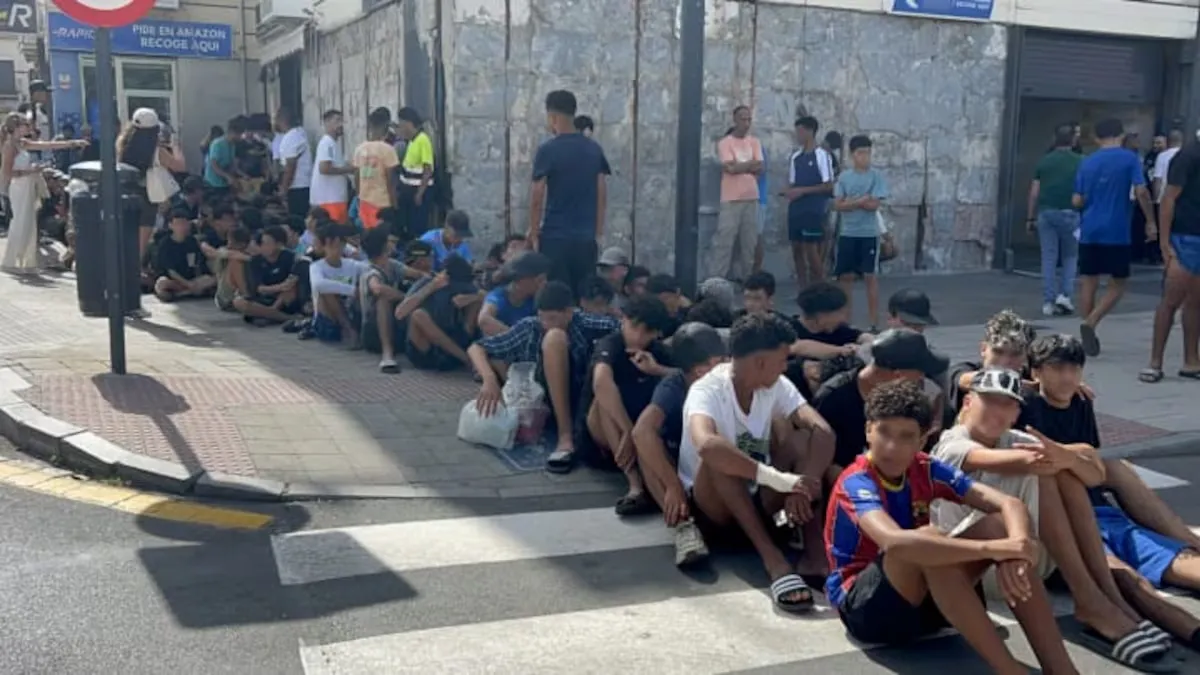
The ongoing migration crisis is a poignant testament to the desperation of thousands of young Moroccans who are risking their lives in perilous attempts to reach Spain and Europe. As journalist Bego Kapapé highlights, this humanitarian crisis is not a recent phenomenon but rather a recurring narrative that has been unfolding for decades. Tragically, over 140 individuals have lost their lives in these attempts, according to the latest figures from various NGOs. However, the state administration significantly reduces this number and neglects to account for those who remain missing. Alarmingly, thousands find themselves utterly abandoned, lacking food and shelter, and facing violence from both police and extremist groups that operate with impunity in the area, without any intervention from law enforcement.
Helena Maleno, a Spanish-Moroccan researcher and founder of the NGO Caminando Fronteras, provides critical insights into the situation. She notes that the events in Ceuta reflect a troubling manipulation of migrant lives within the geopolitical framework of Spanish-Moroccan relations, particularly concerning the outsourcing of border control. Historically, Morocco has leveraged migrants to further its geopolitical interests, and the current crisis is exacerbated by support from significant international allies like Trump and Netanyahu.
The outsourcing of borders represents a troubling trend in which countries subcontract their repressive measures in exchange for diplomatic favors and trade agreements. Spain and the European Union have effectively established a system where Morocco acts as a gatekeeper, managing migration flows while simultaneously safeguarding its own borders. This arrangement underscores the colonial legacy that continues to shape the dynamics between Europe and Africa.
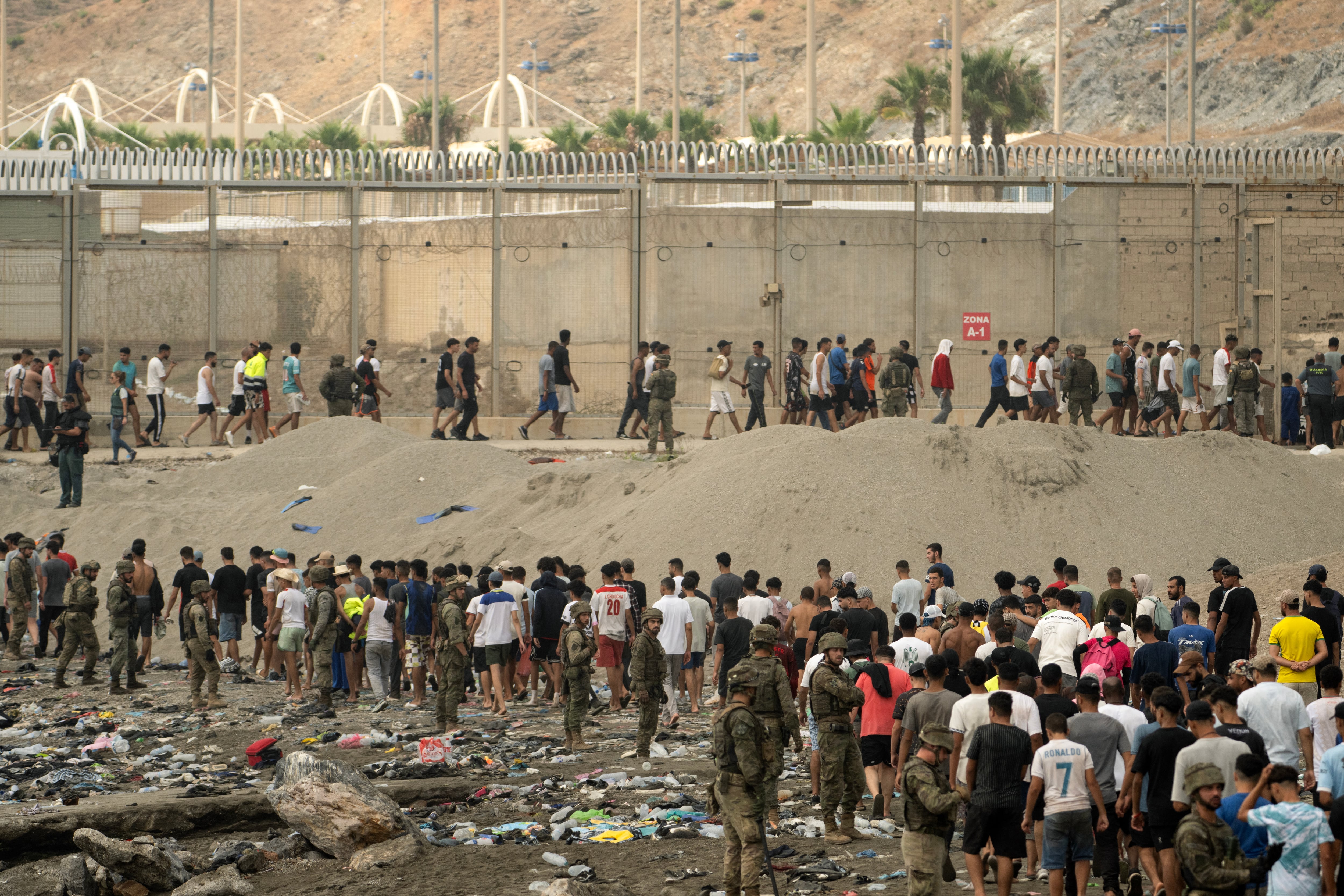
Spanish soldiers control the border with Morocco on July 31. Thousands of migrants crossed the border overnight. (Photo by JORGE GUERRERO / AFP)
The Colonial Legacy and Its Impact on Migration
Lucía Nistal, spokesperson for Pan y Rosas in Spain, emphasizes that the driving force behind the perilous journeys undertaken by these individuals is rooted in the dire conditions in Morocco, characterized by extreme poverty, soaring unemployment rates, and a bleak future. She underscores the accountability of both the Spanish state and the European Union, which exploit and hyper-exploit the Moroccan population while simultaneously fortifying their borders against them. Furthermore, Morocco has become a brutal enforcer of these borders, largely due to the financial backing and agreements made with the European Union and the Spanish state.
Moreover, the European Union's racially charged migration policies result in daily tragedies, as the movement of people is regulated according to capitalist interests rather than recognized as a fundamental human right. Many of those crossing borders are young, with numerous minors seeking better futures, often fleeing from homes where they see no viable alternatives. The criminalization of migration, particularly by right-wing factions, has led to physical assaults on these young individuals, whose only 'crime' is their pursuit of a better life. This generation is not only resilient but has also previously engaged in protests against the oppressive regime, demonstrating their determination to fight for their rights and dignity.
The plight of migrant women is particularly harrowing, as they often face compounded violence during their migration journeys. Nistal points out the situation of seasonal workers, where many Moroccan women are recruited to pick strawberries in Huelva, subjected to semi-slavery conditions, and frequently experience various forms of abuse without the ability to report these incidents due to their dependence on temporary residency permits. Despite the challenges they face, these women have begun to organize and advocate for their rights, embodying a spirit of resistance that resonates with broader feminist movements against capitalism, patriarchy, and racism.
Diana Paredes, a Peruvian migrant in Spain, highlights that the majority of the nearly 80,000 individuals who entered Ceuta have since returned to their places of origin. Upon arrival at the coast, many are forcibly returned without any consideration for their asylum needs, violating their rights. Despite legal rulings prohibiting such practices, they persist. The situation in Ceuta is dire, with hundreds of children and families living on the streets, and many individuals hiding in the mountains to evade capture by law enforcement. Organizations like Border Resistance are stepping in to provide essential supplies and support to those in need, showcasing the importance of solidarity in these trying times.
As reported by pagina12.com.ar.