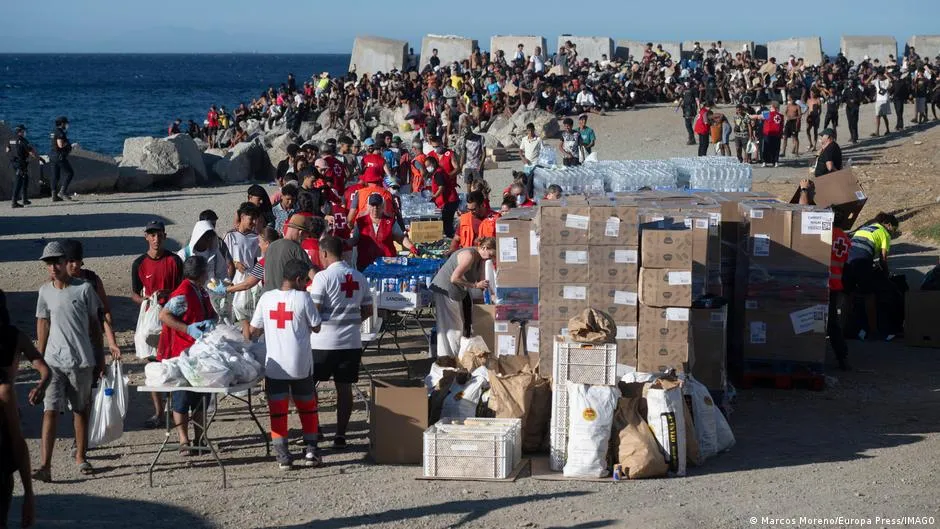

On July 30 and 31, approximately 72,000 individuals fled from Morocco to the Spanish enclave of Ceuta, thereby entering the European Union. Upon arrival, they were met with dire conditions, as there were no shelters, food, or drinking water available, and no viable means to reach the mainland of Europe. As a result, nearly 70,000 migrants subsequently returned to Morocco, leaving just around 2,000 individuals who have remained in Ceuta for over three weeks, predominantly living outdoors.
The migrants who chose to stay have primarily settled along the beaches of Ceuta. Although photographs may portray a serene atmosphere, life on the beach is far from comfortable. A significant number of these individuals are also forced to sleep on the streets, which poses additional challenges to their well-being.
Regularly, long lines form on the beaches as the Red Cross distributes food and beverages to the migrants. Alarmingly, many of these individuals are minors traveling without their parents, highlighting the vulnerability of this population amidst an already precarious situation.
The mass influx of migrants into Ceuta at the end of July resulted in tragic fatalities, with official reports indicating that over 80 individuals lost their lives while attempting to reach this Spanish enclave. Some of these deceased migrants have been buried within Ceuta itself. Disturbing images reveal bodies wrapped in white cloths on stretchers, a somber reminder of the perilous journey undertaken by many.
The situation for the refugees remains grim, and local residents of Ceuta have also expressed their concerns regarding safety and the deplorable sanitary conditions. They have criticized the Spanish government for not taking adequate measures to address the crisis. In response, the government has established emergency accommodations and relocated some migrants from the beach camps to these facilities.
Furthermore, the Madrid government is planning to transport around 500 girls, some as young as ten or eleven years old, to the Spanish mainland. However, normalcy is yet to return to Ceuta, as numerous migrants continue to sleep on the beaches and in the streets. The possibility of another mass migration from Morocco cannot be ruled out, despite increased border security measures.
As reported by dw.com.