
The migratory crisis in Ceuta remains a pressing topic in the media, with one of the central questions lingering: who is responsible for the unaccompanied migrant minors currently in Ceuta? This question has gained increased significance in recent hours following statements made by Morocco's Minister of Foreign Affairs, Naser Burita, who asserted, "If the migrants and minors have not returned, Spain should be questioned."
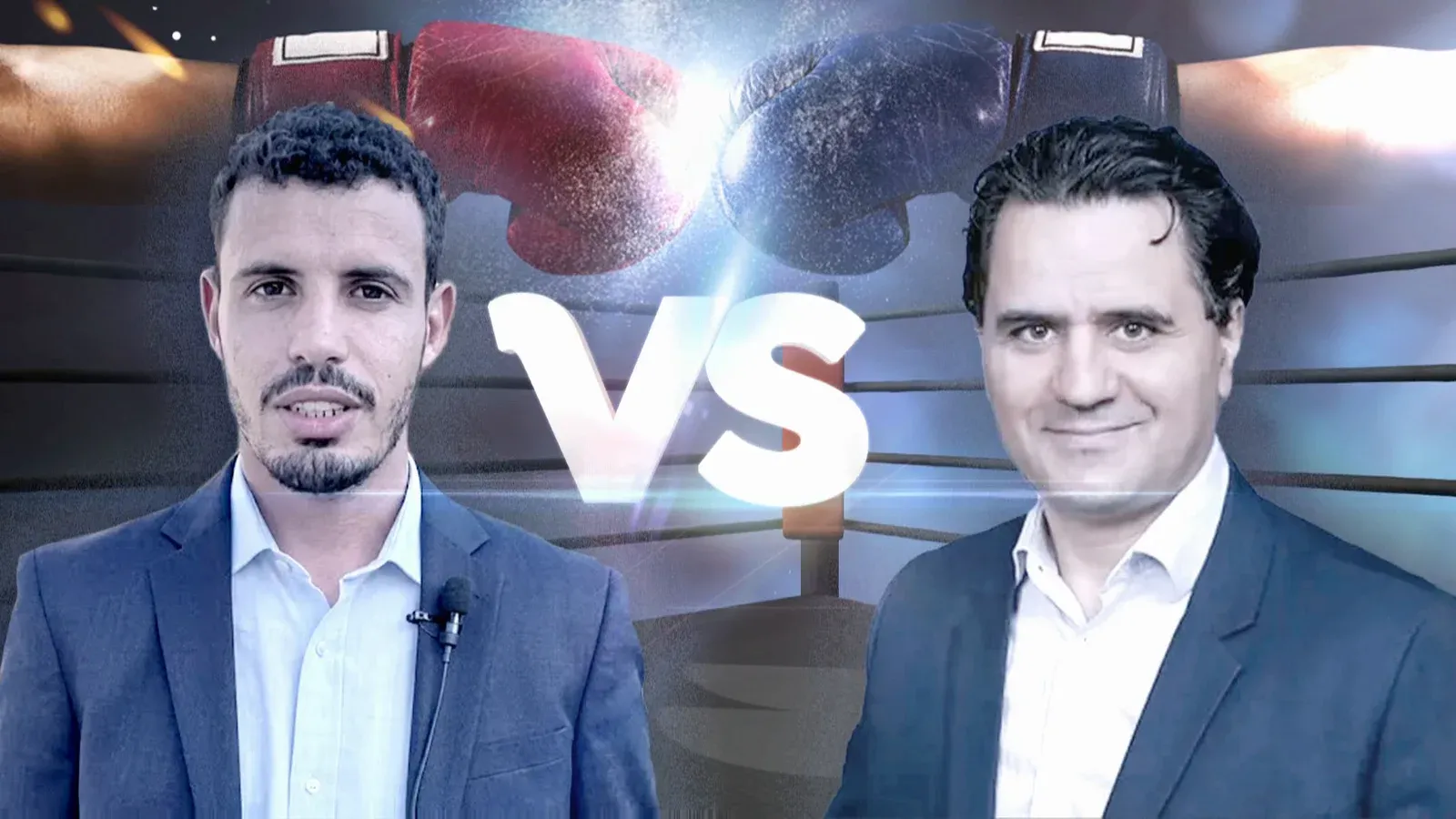
In a recent segment of 'Espejo Público', Moroccan political analyst Samir Bennis faced off against Taleb Alisalem, a Sahrawi political analyst. Both sought to address this contentious issue surrounding the responsibility of unaccompanied minors in Ceuta.
Blame on Spanish Laws
Bennis is unequivocal in his stance, stating emphatically, "It is not Morocco's fault, but rather the fault of Spanish laws." He dismisses the notion that the situation arises from Moroccan families failing to claim their children, urging Spain to review its laws concerning the matter. He emphasized that when discussing such a serious issue, it is essential to present the facts. He referenced a 2007 agreement between Morocco and Spain, noting that it was only implemented once and that, apart from that occasion, "not a single minor has been repatriated to Morocco." In 2021, he detailed, there were only 45 minors returned during that specific instance.
Despite his claims about the open border, Bennis faced questions from host Susanna Griso regarding the contradiction between his assertion and the earlier data presented. He explained that the Spanish government reported that, in addition to the 63,000 who returned within 72 hours of a mass entry, over 6,000 entered voluntarily; however, he clarified that this figure refers to adults, not minors. He reiterated, "Morocco accepts the return of all who entered," a statement that Alisalem contested, reminding Bennis of his previous comments accusing Spanish media of intellectual prostitution.
Alisalem further pointed out that Morocco has failed to provide any of the over 700 reports concerning the children who arrived in Ceuta. He criticized Morocco for not respecting agreements with Spain, not seeking out the families of these children, or facilitating their return. He expressed outrage at Bennis's defense of a regime from which children are fleeing, stating, "It is a disgrace that you are here defending a regime that does not guarantee their rights." This exchange heightened the tension in the studio, leading Bennis to respond sharply, asserting, "Respect my country and respect the monarch; I do not allow you to speak about my country in this manner." He affirmed Morocco's sovereignty and its cooperation with Spain.
Alisalem firmly countered, stating, "I do not insult Morocco; Morocco insults itself." He rejected the notion that there is solid evidence linking Morocco to the Ceuta crisis, claiming that the accusations are based on conjecture.
The Scale of Migration and Its Implications
The intense debate also explored why approximately 80,000 individuals reached Ceuta and the reasons behind this migratory surge. Alisalem attributed this influx to Morocco being a kingdom where human rights violations are rampant and where the most basic rights of the population are trampled, despite claims of a growing economy—prompting more than 80,000 individuals to flee in just 24 hours.
While official figures are lacking, Bennis insisted that initially, 72,000 individuals entered, with 63,000 returning within 72 hours, and an additional 6,000 returning to Morocco by the previous week, indicating that nearly 70,000 individuals had returned to Morocco. This figure of 70,000 returns was contested by local residents of Ceuta who connected with the program amidst the heated argument, asserting that over 80,000 had exited through their border and ironically noting, "none of them are from Ceuta." They further questioned Morocco's reliability as a partner, asking, "Why haven’t they taken their deceased?"
Bennis challenged the locals' references to an "invasion," asserting that "this was not an invasion; there was no intention to occupy territory." He expressed his discontent with the current state of Spain, referencing the polarization of arguments against him. In response to Bennis's comments, Alisalem cited a European Union document dated September 27, which he claimed condemns Morocco for an "hybrid attack and instrumentalization of migrants." He accused Moroccan state agents of facilitating entry into Ceuta, stating, "What the Moroccan regime is doing against its own population is a disgrace."
As reported by antena3.com.