
The Morocco–Spain Border Crisis: An Overview
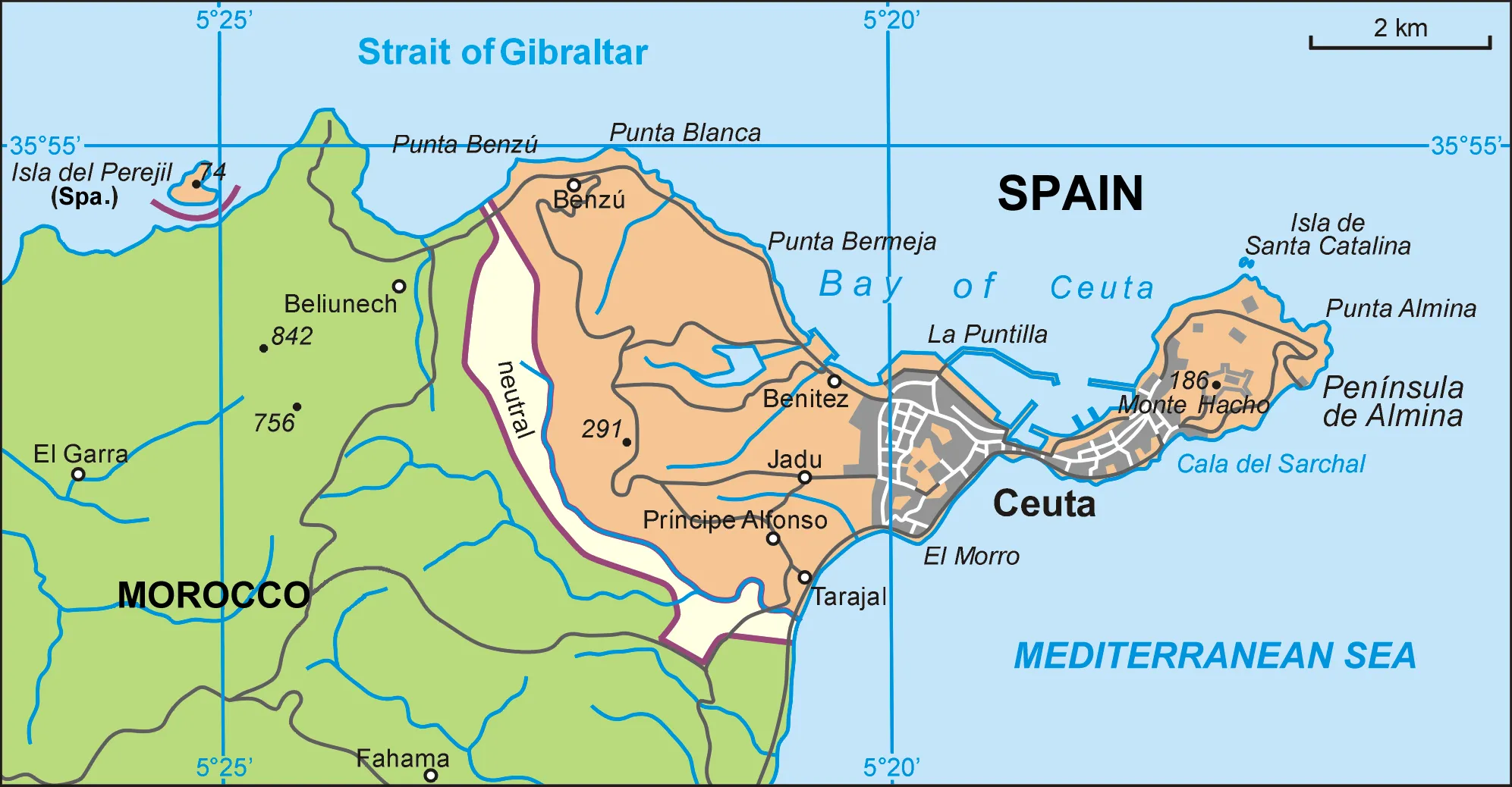
The ongoing international crisis involving migration between Morocco and Spain began in late July 2026. This incident saw an unprecedented surge of migrants attempting to cross into the Spanish autonomous city of Ceuta, with a lesser number also targeting Melilla. The migration wave was marked by the illegal crossings of tens of thousands of individuals, primarily through swimming around the Tarajal and Benzú breakwaters or traversing the shoreline on foot. The sheer volume of arrivals overwhelmed local reception facilities, prompting the government of Ceuta to urge the Spanish authorities to declare a national emergency. By the end of July, it was reported that while roughly 50% of the migrants who had entered voluntarily returned to Morocco, the unfortunate death toll from drownings and other related incidents had risen to at least 43.
Historical Context and Recent Developments
Ceuta and Melilla represent the only land borders of the European Union on the African continent, a fact that has made them focal points for irregular migration into Spain and the broader EU. Morocco asserts sovereignty over these cities, while Spain considers them integral parts of its territory. This ongoing dispute has historically led to fluctuating migration patterns, heavily influenced by the political dynamics between the two nations. For instance, a significant previous incident in May 2021 involved approximately 8,000 individuals entering Ceuta, many of whom were unaccompanied minors, amidst a diplomatic crisis following Spain's treatment of a controversial figure. The years leading up to the 2026 incident saw a rise in attempted crossings, with collective efforts by hundreds seeking to reach Ceuta as recently as 2024 and 2025, often leveraging social media to organize mass crossings.
The immediate catalyst for the 2026 incident can be traced back to a ruling by the Supreme Court of Spain on July 8, which determined that the legal process known as "summary return" could not be applied to migrants intercepted at sea while attempting to reach Ceuta or Melilla. This ruling, while intended to protect migrants' rights, inadvertently provided an opening for smuggling networks to exploit the situation, leading to a surge in crossings during the latter half of July. Reports indicated that between July 20 and July 29 alone, approximately 1,500 individuals made the perilous journey into Ceuta, highlighting a stark rise in irregular entries that included not only Moroccan nationals but also Algerians and a substantial number of unaccompanied minors.
As the situation escalated, reception facilities in Ceuta quickly became overwhelmed, with the president of Ceuta reporting that centers designated for unaccompanied minors were operating at an astounding 2,400% of their normal capacity. The Spanish government mobilized various emergency services, including the Guardia Civil and Spanish Red Cross, to rescue individuals from the water and provide medical assistance for exhaustion and injuries sustained during their attempts to cross. On July 30-31, 2026, a mass crossing event saw around 49,000 to 60,000 migrants enter Ceuta within a remarkably short period, marking this incident as one of the most significant migration events in recent history.
While the root causes of this migration surge remain complex and multifaceted, analysts suggest that socio-economic factors, the activities of smuggling networks, and the political climate between Morocco and Spain have all played critical roles. The situation continues to evolve, with humanitarian organizations and government officials alike grappling with the implications of this crisis on both sides of the border.
As reported by en.wikipedia.org.