Understanding the Recent Crisis in Ceuta
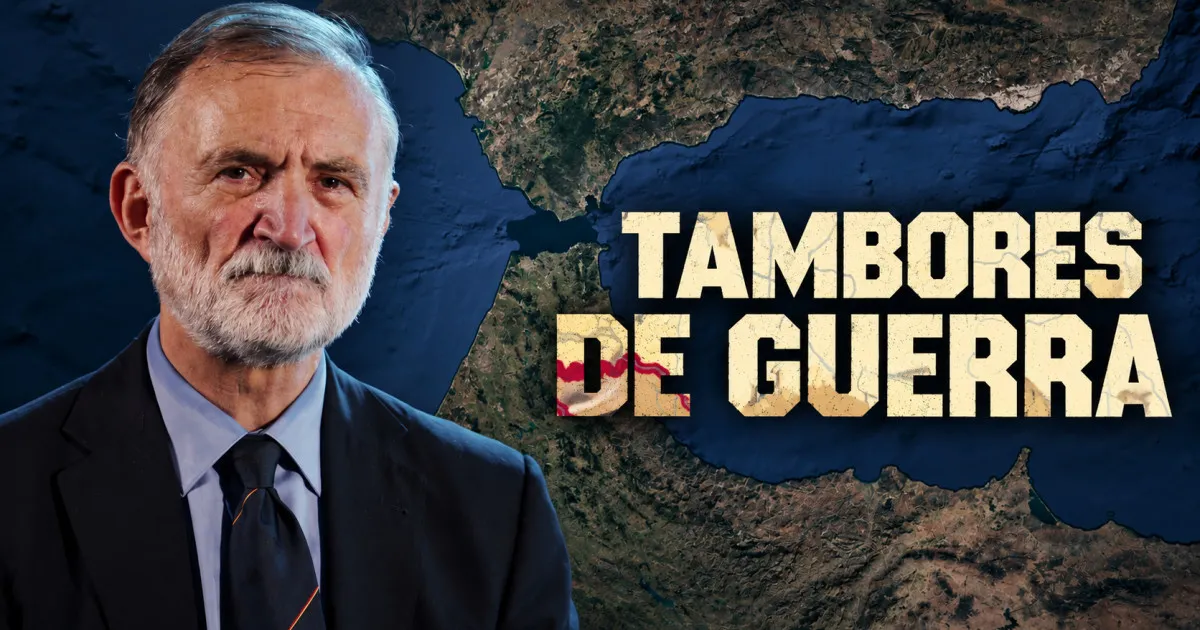
The alarming events that unfolded recently in Ceuta highlight Morocco's significant ability to exert pressure and leverage against both the Spanish state and the European Union. This time, the Moroccan authorities orchestrated the entry of approximately 70,000 individuals into the autonomous city, including around 2,000 minors. Tragically, this mass mobilization resulted in the deaths of around 150 young men and women along its shores, a loss that has been largely overlooked in discussions surrounding the crisis. Such a large-scale movement could not occur without the explicit approval and involvement of King Mohammed VI's government, which has felt emboldened by support from leaders like Netanyahu and Trump. Historical precedents exist for similar actions, and there is little doubt that they will recur due to Morocco's expansionist ambitions and the insufficient responses from both Spain and Europe.
It is implausible to believe that such a substantial human contingent could mobilize without the consent and active participation of Moroccan authorities. The Spanish government's portrayal of this as a spontaneous movement is likely a tactic to avoid escalating tensions in their already challenging relationship with Morocco. To maintain diplomatic peace, the Spanish government seems cautious about attributing blame.
Root Causes and Socioeconomic Factors
The motivations behind Morocco's unfriendly gesture are complex and multifaceted. On one hand, they may serve as a reaction to Spanish Prime Minister Pedro Sánchez's recent visit to Algeria aimed at mending severely damaged bilateral relations following Sánchez's endorsement of Morocco's autonomy proposal for Western Sahara. On the other hand, Morocco's actions may be a response to Spain's new law granting nationality to Sahrawi individuals born before 1976, a period when the Sahara was still a Spanish colony. Additionally, the Moroccan leadership may be reacting to a Supreme Court ruling that limits the expulsion of individuals who cross the border by swimming as opposed to using designated land routes. Some commentators even speculate that Morocco is applying pressure to ensure that the final of the 2030 World Cup, co-hosted by Spain, Portugal, and Morocco, takes place at the Grand Hassan II Stadium in Casablanca.
However, the underlying cause of these tensions lies in Morocco's longstanding desire to impose its expansionist agenda, a strategy it has pursued for decades. The dire socioeconomic conditions in Morocco—characterized by significant income disparities and limited prospects for the youth—act as a catalyst, prompting thousands to risk their lives in desperate attempts to reach the European Union. Such circumstances are exploited by Moroccan politicians to exert cyclical pressure, often at the expense of their own citizens' freedoms and lives. The most direct victims of this situation are the Moroccan youth, who face not only the dangers of migration but also the backlash of racism fueled by far-right organizations. Border communities also bear the brunt of these crises.
The recent hybrid warfare tactics employed by Morocco are reminiscent of the 2021 migration crisis, which was initiated in response to Spain's humanitarian assistance to Brahim Ghali, the leader of the Polisario Front. Historically, this pattern of using migration as a political weapon can be traced back to the Green March, orchestrated by Hassan II, the father of the current monarch, to illegally annex the Sahara. Such experiences have equipped Morocco's leadership with a clear understanding of how to manipulate the situation to its advantage.
In my view, the immediate response from the European Union, led by Italian Prime Minister Georgia Meloni—who seemed intent on showcasing strength ahead of upcoming elections—was deeply disappointing. This response was echoed by other conservative governments, even those that profess to be progressive. While there was a subsequent backing for Spain during an urgent meeting of European interior ministers, the focus was primarily on blaming the crisis on human traffickers and misinformation circulating on social media. Notably absent from the discussion was any mention of the Moroccan government or its role in the crisis, a silence that continues to be perpetuated by the Spanish progressive government as well. It is troubling that neither the European Commission nor Spanish leaders like Sánchez, Feijóo, or Abascal are willing to hold Morocco accountable.
Moreover, there is a growing convergence between the policies of the PP and Vox in Spain, particularly regarding this issue. Their focus seems more directed at electoral gain and undermining the current administration than on advocating for the interests of those affected by these crises. Their hollow patriotism will likely backfire when they inevitably face similar challenges in the future.
It is equally distressing to witness the right-wing factions' reaction to the hosting of unaccompanied minors. Calls to disregard legal obligations exemplify the troubling attitudes present within regions such as Aragón, which has expressed opposition to accepting migrant children from the Canary Islands or autonomous cities.
Relations with Morocco have never been straightforward. Time has demonstrated that yielding to its demands and appeasing its claims does not quell its voracity; rather, it reinforces Morocco's perception that its tactics are often successful. This trend can be traced back to José Luis Rodríguez Zapatero's presidency, culminating in Pedro Sánchez's controversial April 2022 declaration supporting Morocco's vision of autonomy for Western Sahara, a decision made without consulting the PSOE or its coalition partners, or the Spanish Parliament.
Fernando Clavijo, too, has aligned with Moroccan claims, promoting commercial missions in occupied territories through the governmental Proexca, which violates international law by endorsing the presence of these delegations in Dajla, Western Sahara, to develop a port that competes with Canary Islands' interests.
This explicit recognition of Morocco's claims over the Sahara strengthens its position and encourages further demands, including those concerning Ceuta and Melilla, which we can expect to see escalate in the future. In the case of the Canary Islands, Morocco is likely to pursue claims over airspace, waters, and the resources they harbor, such as tellurium, cobalt, nickel, and rare earth elements. I firmly believe that Sánchez and Clavijo have facilitated Moroccan expansionism and acted against the interests of the Canary Islands.
The Spanish central government and the Canary Islands executive are mistaken if they believe that Morocco's expansionist ambitions will be satisfied solely by unlawfully seizing Western Sahara. Their aspirations for territorial growth will likely extend into Mauritania and Algeria, further destabilizing an already tense region.
At Nueva Canarias-Bloque Canarista (NC-bc), we have consistently advocated for the defense of international law. We demand a referendum for self-determination for the Sahrawi people, allowing them to decide their future. Furthermore, we categorically reject the notion that the Canary Islands can be used as a bargaining chip in Spain-Morocco relations. We refuse to allow discussions regarding their legal status, waters, resources, or airspace. While we recognize the importance of maintaining good relations with Morocco, this must be achieved through dialogue and unity, combined with the firm stance of Spain and the European Union against ongoing threats and coercion from King Mohammed VI.
As reported by infonortedigital.com.