
The Central Role of Autonomy in the Western Sahara Conflict Resolution
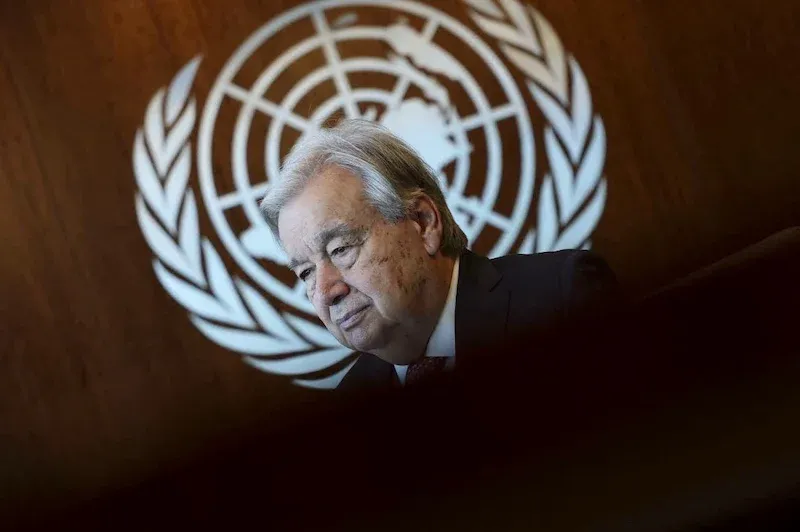
In a significant development regarding the ongoing situation in Western Sahara, the United Nations Secretary-General's recent report has emphasized the pivotal role of autonomy as a central aspect of the new political phase. The discussions during the 2026 negotiations have shifted from merely presenting the parties' perspectives to exploring practical foundations for a resolution based on autonomy. This includes examining the nature of the solution, its limitations, the guarantees for transitioning to this new framework, and the arrangements for the transitional phase.
The report, which has been made available to the public, provides additional insights into Morocco's proposal for autonomy. It indicates that Morocco has prepared a "Draft Basic Law for Autonomy," which builds upon the initiative first presented in 2007. This document was shared with the UN Secretary-General's personal envoy, the United States, Algeria, Mauritania, and the Polisario Front in January 2026, establishing a basis for negotiations rather than a definitive and unalterable agreement.
Developed Proposal for Negotiation
The report reveals that Morocco has expanded on its original 2007 proposal, presenting a revised "Draft Basic Law for Autonomy" that was discussed with key stakeholders, including De Mistura and the United States, seen as co-chairs of the negotiations alongside the Polisario Front, Algeria, and Mauritania. Notably, this document has not been widely distributed as it is intended to serve as a foundation for negotiations rather than a final agreement.
For the first time in this new negotiation process, Morocco's proposal has shifted from being merely a political stance to becoming a basis for dialogue. The document states that participants have adopted the Moroccan autonomy proposal as a starting point for discussions. During an initial round in Washington, Morocco presented an expanded version of its 2007 proposal, addressing comments and inquiries from participants and demonstrating a readiness to collaborate with the Polisario Front on negotiating a mutually acceptable resolution and implementation, thereby fostering joint ownership of the outcome.
However, the report does not regard autonomy as a finalized proposal with all its details. Instead, it underscores that the content, limits, powers, and guarantees of autonomy have become integral to the ongoing discussions that need to be finalized throughout the negotiations. During the third round in Washington, direct discussions were initiated regarding the contentious issues of self-determination and sovereignty, which the report identifies as significant sources of disagreement in seeking an acceptable settlement for both parties. Due to the persistent substantial differences, it was decided to address these matters separately with the involved parties to identify possible solutions.
In this context, De Mistura established a clear framework for any future autonomy proposal, stressing that "any proposal for autonomy in Western Sahara must meet the highest international standards," and that transitioning to genuine autonomy requires robust international guarantees. Furthermore, any settlement must involve meaningful consultations with the local population, adhering to the principle of self-determination.
The details of the negotiations indicate that discussions have progressed from theoretical principles to the practical engineering of a potential transitional phase leading to a final settlement. During the second round in Madrid, participants explored the possibility of establishing a transitional council to manage several transitional processes while simultaneously providing a platform for negotiating the specifics of a fair, lasting, and mutually agreed political solution. International guarantees, implementation mechanisms, resource sharing, amnesty, reconciliation, disarmament, demobilization, reintegration, security arrangements, and electoral systems were also discussed extensively.
In response to the participants' requests, the UN and US teams worked on a preliminary draft of a framework agreement concerning a potential transitional phase, along with proposals to reconcile positions on the various issues at the negotiation table. Following several rounds of negotiations and subsequent consultations, De Mistura, in coordination with Masad Boules, a consultant to President Donald Trump, produced a revised draft framework agreement for the transitional phase.
One of the most significant passages in the report highlights the transformation in the nature of the discussions, indicating that if the framework agreement is adopted, it could provide a foundation for negotiations regarding a "detailed model of autonomy" in Western Sahara, alongside meaningful consultations with the region's inhabitants. Thus, the report outlines a clear negotiation sequence: the Moroccan autonomy proposal as the basis for discussions, followed by a framework agreement, a transitional phase, and then negotiations on a detailed autonomy model, along with discussions about international guarantees, implementation mechanisms, and consultations with the local population.
As reported by hespress.com.