
Rising Political Aspirations of Moroccan Nationals in Spain
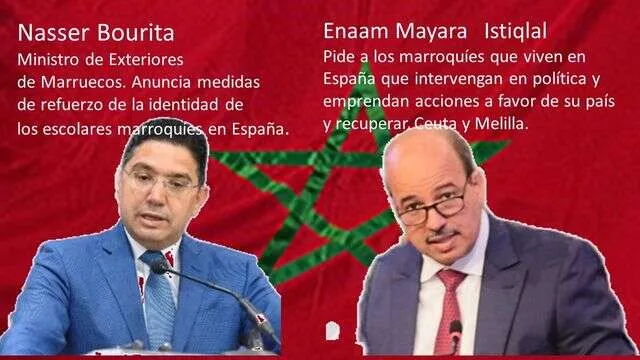
Two significant developments are set to shape the future dynamics between Spain and Morocco, particularly in relation to the growing Moroccan community residing in Spain. Enaam Mayara, the President of the Moroccan Senate, has been vocal in asserting that the cities of Ceuta and Melilla are 'occupied,' urging all Moroccans living in Spain to strive for their full integration into Morocco. He has encouraged his compatriots to engage actively in Spanish political parties and participate in elections, emphasizing that those who acquire Spanish nationality should remain proud of their Moroccan identity. Mayara's statements reflect the sentiments of a prominent nationalist party, Istiqlal, underscoring the importance of advocating for Moroccan interests within Spain's political landscape.
Simultaneously, Moroccan Foreign Minister Nasser Bourita has announced a forthcoming 'qualitative transformation' in the management of Arabic language education and Moroccan culture for children of the diaspora. This initiative will be spearheaded by the Mohammedan Foundation for Moroccans Residing Abroad, which will oversee educational programs under a new institutional framework. The implications of these developments are concerning, as they highlight the persistent challenges of integrating an increasingly significant Moroccan population in Spain, which currently numbers around 896,076, with a notable concentration in Catalonia.
Arabic Language Education and Cultural Identity
The educational landscape for Moroccan children in Spain has expanded, with 394 educational institutions offering Arabic language and Moroccan culture programs, funded by the Moroccan government. This initiative, known as the Program for Teaching Arabic Language and Moroccan Culture (PLACM), has gained traction across 12 Spanish regions, with Catalonia hosting the highest number of centers. This arrangement stems from agreements between the Spanish and Moroccan governments aimed at preserving cultural identity while respecting the host country's norms. However, the lack of oversight from Spanish educational authorities raises critical questions about the integration of Moroccan nationals and the potential for cultural fragmentation.
Furthermore, the growing number of Moroccan educational institutions has ignited a dialogue about multiculturalism in Spain, particularly in Catalonia. Some nationalist factions have expressed concern over what they perceive as a 'Moroccanization' phenomenon, which has sparked debates about school meal policies and cultural adaptations during Ramadan. These discussions reflect the broader societal tensions regarding identity, loyalty, and cultural integration faced by younger generations of Moroccan descent born in Spain. As this demographic continues to evolve, it remains vital to acknowledge the potential implications for Spain's multicultural fabric and its bilateral relations with Morocco.
As reported by mundiario.com.