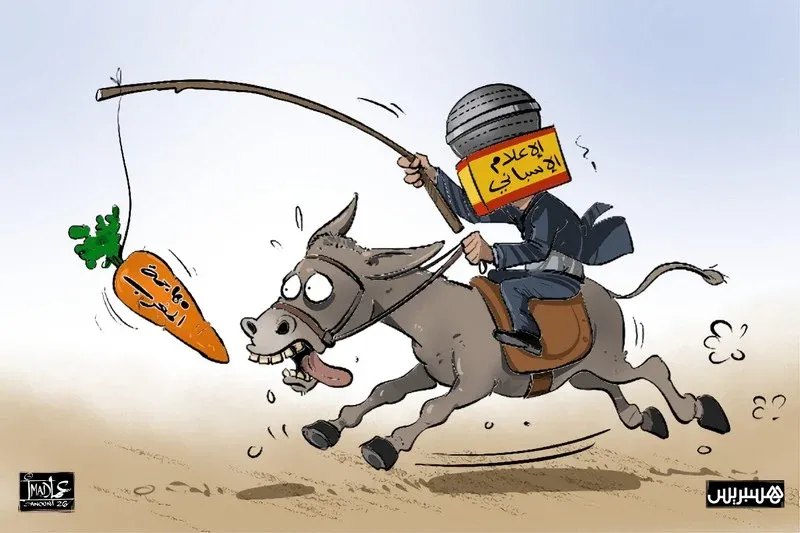

The latest discussions in various Spanish weekly publications reveal a growing trend of political hostility directed towards Morocco, particularly from Spanish political parties. This inclination appears as if a reservoir of animosity has erupted, enveloping the entire Spanish political landscape. The article from “Al-Watan Now” notes that Spanish political factions are increasingly vocal about their grievances against Morocco, suggesting a dire need for these parties to leverage anti-Moroccan sentiment for electoral gains. The pressing question dominating the political arena in Spain is no longer whether they need Morocco, but rather how much electoral benefit can be derived from intensifying their hostile rhetoric towards the nation, especially considering a myriad of pressing issues.
This escalating animosity towards Morocco is particularly striking, given that it coincides with a critical electoral period in Spain. Such timing indicates a potential consensus among Spanish political entities regarding Morocco as a contentious issue, which they are keen to politicize. Each party seems to interpret Morocco’s role through its ideological lens and electoral advantage, treating it as a political asset ripe for exploitation. Professor Moussaoui Alajlaoui, in an interview with the same weekly, pointed out that Morocco has been, and continues to be, a central theme in Spain's internal discourse since the fall of Andalusia. He elaborates on the historical inconsistencies stemming from Spain’s national narrative, which oscillates between the Reconquista and colonial engagements, highlighting a continuous thread of contradiction that permeates Spanish perspectives on Morocco.
In another insightful commentary, researcher Fikri Sousan emphasized that whenever Spanish politics experiences tension, Morocco quickly finds its way back into the domestic debate—not as a neighboring state with legitimate interests or as a partner shaped by historical and geographical ties, but rather as a convenient tool for political maneuvering. This tendency is further exacerbated by the media, according to Professor Abdel Salam Andalusi, who noted that as relations between the two nations deteriorate, Spanish media plays a critical role in framing Moroccan Islam, particularly in relation to the enclaves of Ceuta and Melilla. The media's portrayal often serves to reinforce stereotypes and misconceptions about Morocco, steering public sentiment in a direction that aligns with historical colonial narratives.
Moreover, journalist Amin Chibal pointed out that Morocco is not merely a footnote in Spain's foreign policy but is intricately linked to the very geopolitical consciousness of the nation. This relationship is characterized not by complete cooperation or perpetual conflict, but rather by a mutual dependence that intertwines strategic necessity with historical legacies and internal political calculations. Morocco's presence is continuously felt in Spanish political discourse across the spectrum, albeit with varying interpretations and applications depending on the political context.
The same weekly also highlighted a pressing local issue where community organizations have reached out to the provincial governor of Youssoufia, Abdul Mumin Talib, regarding ongoing difficulties in transportation within the Sidi Chaker community and surrounding areas, particularly due to challenges in crossing the Tansift River. The Communication and Development Association emphasized that this situation necessitates governmental intervention to provide a lasting solution that ensures the mobility of people and vehicles, thereby alleviating daily hardships. This difficulty is particularly acute for vulnerable groups such as the sick, women, children, and the elderly, who face additional barriers to accessing essential services.
Furthermore, the association pointed out that the crossing issues coincide with a shortage of basic facilities and services within the community, forcing residents to travel to Sidi Zouin for their needs, thus deepening their isolation and complicating their access to essential resources. The weekly also reported the precarious state of the Al-Makhazeen dam in Ksar Kebir, which is under increasing pressure due to growing water demands, particularly from irrigated lands, potentially leading to significant challenges in the coming years.
According to a field study published in the environmental challenges magazine, there is an escalating pressure on water resources projected from 2023 to 2050, driven by climate change, population growth, agricultural expansion, and the complex dynamics of water transfer between dams. The study raises concerns about the likelihood of declining incoming water levels against a backdrop of increasing annual demand.
In another piece of reporting, the publication noted a widespread debate triggered by what some citizens described as a "wave of neglect of collective responsibilities" in the Tangier-Tetouan-Al Hoceima region, amid the apparent apathy of several elected officials regarding their duties in various local councils and regional assemblies as the electoral season approaches. Many officials appear preoccupied with securing party endorsements for the upcoming parliamentary elections, leading to a reshuffling of responsibilities within several local governance structures, particularly in coastal areas.
In an interview with “Les Événements”, political science and constitutional law professor Abdel Hafid Al-Younsi emphasized that the purpose of elections varies significantly from one country to another, influenced by the political culture and the level of democratization across three key dimensions: the rule of law, accountability, and the freedom of citizens to choose their leaders. Thus, linking electoral outcomes directly to governance decisions is far more complex than many might assume. The underlying narrative of democratic representation is crucial today in supporting state actions, particularly in a context characterized by uncertainty. Ultimately, the commitment to organizing elections becomes a common thread among democratic, authoritarian, and hybrid regimes, though the real difference lies in the presence of genuine incentives that encourage active citizen participation in elections, such as heightened voter turnout and effective political mobilization.
As reported by hespress.com.