
Spain's Political Landscape and Its Complex Relationship with Morocco
In a recent examination of political discourse in Spain, it has been noted that Spanish political parties are increasingly vocal in their criticism of Morocco. This intense rhetoric suggests that a reservoir of animosity towards Morocco has reached a boiling point, permeating the entire Spanish political psyche. The sentiment among Spanish political factions has shifted, leading to a scenario where they find themselves more dependent on Morocco than ever before, primarily as they navigate the electoral landscape. The pressing question in Spain today revolves around what each party stands to gain electorally by intensifying its hostile rhetoric towards Morocco, a consideration rooted in various pressing issues.
According to insights from the publication "Watan Now," there appears to be a near consensus among Spanish parties regarding their antagonism towards Morocco, particularly in the context of the current electoral moment. This observation underscores the extent to which the Moroccan issue has been politicized within Spain, with each party viewing Morocco through the lens of its ideological stance and electoral interests, treating it as a political tool ripe for exploitation.
Academic expert Moussaoui Ajlaoui highlighted in an interview with the same publication that Morocco has consistently remained a central theme in Spain's internal discussions since the fall of Al-Andalus. He noted that the current discourse reflects a historical contradiction stemming from the era of Ferdinand and Isabella, characterized by a national state built on reconquest wars and the Inquisition, alongside the Treaty of Tetuan in 1860, the defense of 'Dar al-Islam,' and the liberation of Moroccan territories from Spanish and Portuguese occupation. Ajlaoui pointed out the irony of contemporary Spanish political elites from both the right and left echoing colonial narratives and church rhetoric that accompanied the reconquista.
Researcher Fikri Soussan, specializing in Moroccan-Spanish relations, also articulated that whenever Spanish politics enters a phase of tension, Morocco swiftly re-emerges as a focal point in domestic discourse. This is not framed as a neighboring country with legitimate interests or as a partner shaped by geographical, historical, and socio-economic ties; rather, it is viewed as a readily available card to be played.
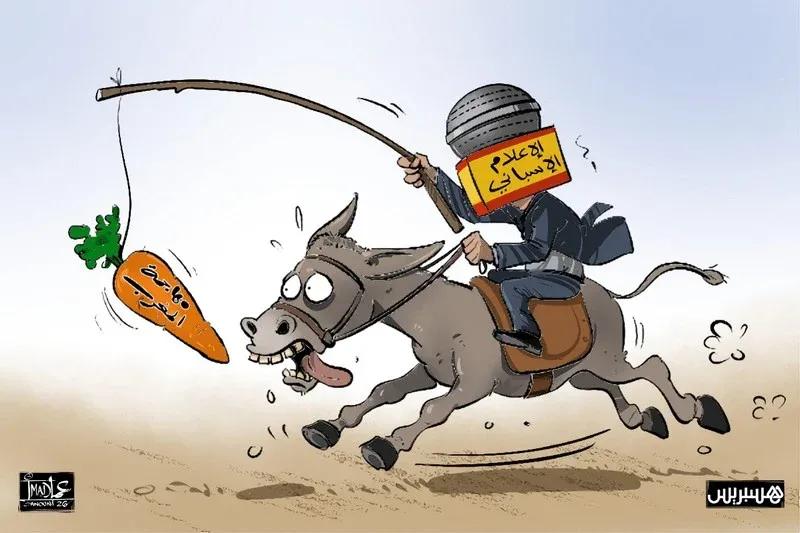
Furthermore, Abdul Salam Andalusi, a professor of media and communication at the Faculty of Arts and Humanities in Tetouan, emphasized that as relations between the two countries deteriorate, the role of Spanish media becomes increasingly critical in relation to all matters concerning Moroccan Islam, particularly those connected to the cities of Ceuta and Melilla. He warned that the Spanish media's deployment of a seemingly orchestrated strategy aims to convince the Spanish public that these cities are inherently Spanish, while simultaneously distorting information and perpetuating prejudices and militaristic thinking. This tendency drives the Spanish media narrative towards self-interest, misinformation, and the mobilization of public opinion, reinforcing negative stereotypes about Morocco and its religious practices.
Journalist and political discourse researcher Amin Mishbal asserted that Morocco is not merely an issue within the realm of Spanish foreign policy; it is a vital component shaping Spain's geopolitical consciousness. Morocco's presence is felt in the rhetoric of both the right and left, albeit approached differently based on their respective perspectives and methods of engagement. The uniqueness of the Moroccan-Spanish relationship lies in the fact that it is neither a fully collaborative partnership nor an enduring conflict, but rather a reciprocal dependency where strategic necessity coexists with historical legacies and internal political calculations. Morocco consistently occupies a place in Spain's geopolitical awareness, with its presence varying across political spectrums, government-opposition dynamics, and periods of tension and rapprochement.
Local Challenges and Political Responsibilities in Spain
Turning to local issues, "The Weekly Journal" reported that community leaders had appealed to the governor of the Youssoufia region, Abdul Mounim Talib, regarding the persistent difficulties in transportation within the Sidi Chiker community and surrounding areas, particularly concerning the crossing of the Tensift River. The Communication and Development Association, which initiated this appeal, stated that the situation necessitates intervention from authorities to provide a permanent solution that ensures the movement of people and vehicles, thereby alleviating the isolation faced in daily life. This problem is particularly acute for the sick, women, children, students, and the elderly, who encounter additional obstacles in accessing essential services and public facilities.
The association further noted that the challenges of crossing coincide with a lack of essential services within the community, compelling residents to travel to the Sidi Zwine municipality for their needs. This situation exacerbates feelings of isolation and complicates the fulfillment of many basic necessities for the population.
The same publication highlighted that the Al-Makhazine dam in Ksar al-Kabir is currently in a precarious state due to the increasing demand for water, particularly from irrigated lands, placing it under significant pressure in the coming years. A field study published in the journal "Environmental Challenges" predicts a strain on water resources from 2023 to 2050, attributed to climate change, population growth, the expansion of agricultural lands, and water transfers between dams. The study indicates a potential decline in incoming water and an annual demand surge from 164 million cubic meters to 246 million cubic meters.
Moreover, the publication reported that what many citizens have termed a "wave of abandonment of communal responsibilities" in the Tangier-Tetouan-Al Hoceima region has sparked extensive debate, particularly as several elected officials distance themselves from their duties in leading various communal and regional councils in light of upcoming electoral preparations. According to the same source, many officials are now focused on securing party endorsements to contest parliamentary elections, prompting a reorganization of responsibilities within certain local entities, especially those located in coastal areas.
In an interview with "Al-Ayyam," political science and constitutional law professor Abdul Hafiz Al-Younsi remarked that the function of elections varies from one country to another, influenced by the political culture of the state and society, as well as the level of democratization across three dimensions: rule of law, accountability, and the freedom of people to choose their leaders. Consequently, linking electoral outcomes to decision-making is not as straightforward as many presume. The theory of representative democracy, which is grounded in the notion of general will, has experienced fluctuations in modern times.
Therefore, from this perspective, the challenge that modern states face concerning elections is to uphold the narrative of democratic representation, which is fundamental to the legitimacy of public action through institutions that are products of the electoral process. The so-called rational legitimacy is crucial today in bolstering state action, especially in a complex and uncertain context. Thus, the commitment to organizing elections is a common denominator between democratic and authoritarian or hybrid states, with the difference lying in the existence of genuine stakes that encourage active public participation in elections, such as increased voter turnout or what is termed political mobilization.
As reported by hespress.com.