
According to Mohamed Nashtawi, a political science professor at Marrakech University, a critical question currently arises: will the direct appointment go to Fatima Zohra Mansouri, or will it be directed towards the newcomer Fawzi Lekjaa? Nashtawi cites a theory suggesting a political tactic aimed at establishing a 'World Cup Government' led by Lekjaa, especially given the imperative to provide guarantees and enhance the infrastructure of the kingdom in preparation for hosting the 2030 World Cup.
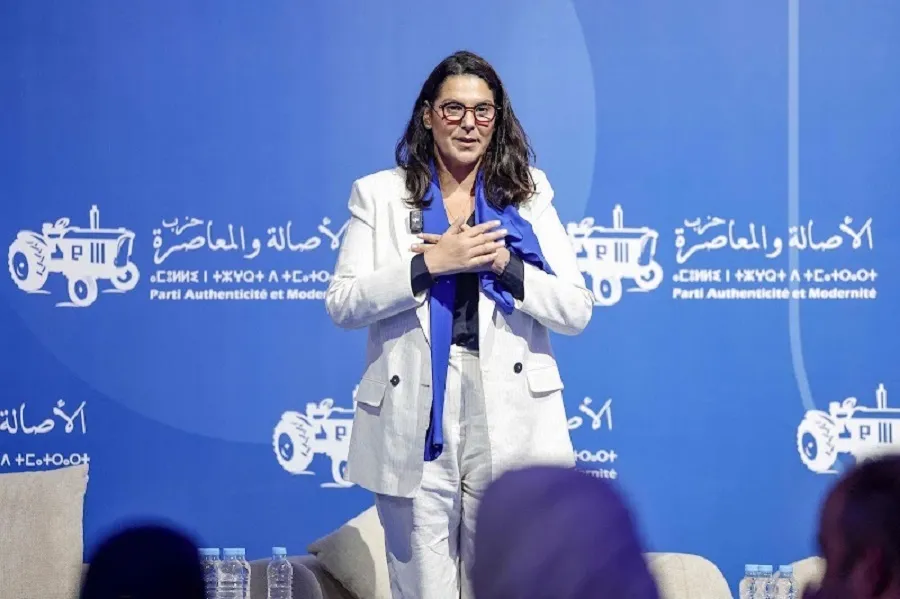
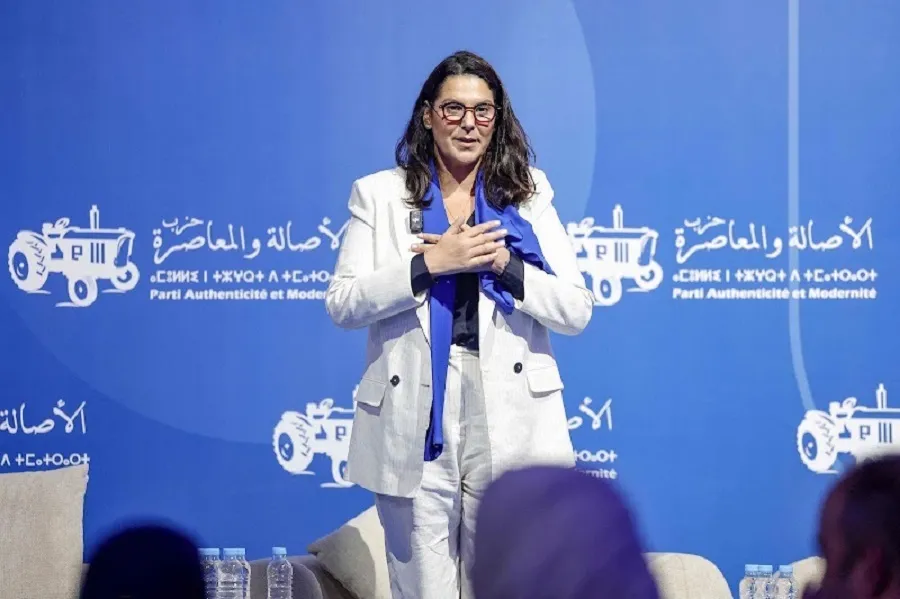
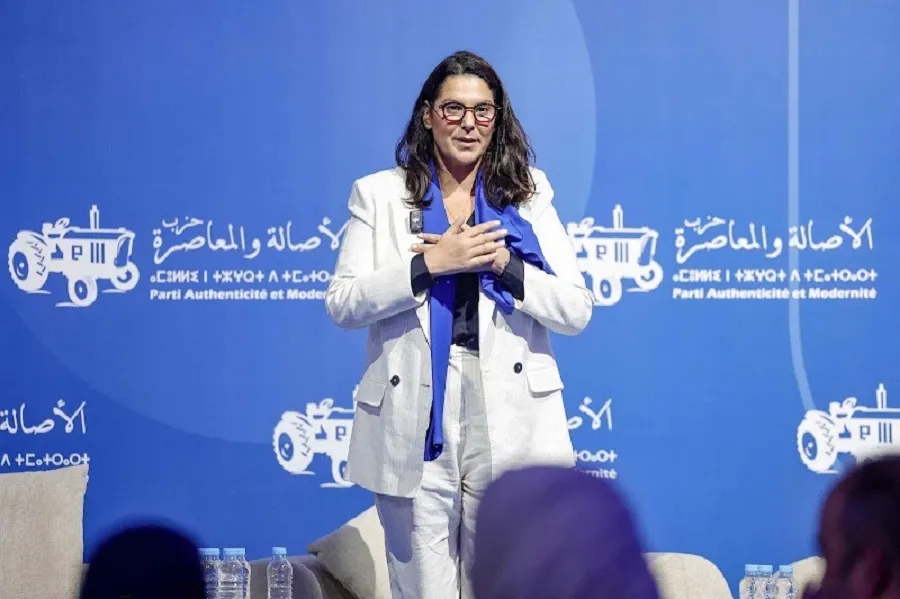
Fatima Zohra Mansouri's ascent to the forefront of Moroccan politics is not a fleeting electoral moment but rather the culmination of a political journey that began in Marrakech. Her initial experiences in local governance paved the way for her transition to parliament and government, culminating in her leadership of the 'Authenticity and Modernity' party, popularly known as 'the tractor,' which triumphed in the recent legislative elections.
With the 'tractor' party dominating the electoral scene in Morocco, Mansouri's name has transcended discussions surrounding the party's status within the upcoming governmental majority. It has shifted towards predictions about who could lead the next government—a potential historic moment, as she could become the first woman to preside over the government in Morocco's history.
The Path Ahead: Clear or Thorny?
Mansouri's path appears open, originating from her roots in Marrakech, where she was raised and held various positions before assuming the housing portfolio in the outgoing government. Many are now watching to see if King Mohammed VI will officially receive her at the 'Palais de la Chouara' in Rabat and task her with forming the new government.
Article 47 of the Moroccan Constitution stipulates that the King appoints the Prime Minister from the political party that wins the majority in the House of Representatives, based on election results. Given that the 'Authenticity and Modernity' party has garnered 97 seats, it is likely that the appointment will come from this party, which uniquely features collective leadership that includes Mansouri, Mohamed Mehdi Ben Saïd, and Salah Eddin Abulghali, with Mansouri coordinating this collective leadership.
Respecting constitutional tradition, it is highly probable that Mansouri will be appointed as the head of the upcoming Moroccan government, thus becoming 'the daughter of the pasha,' a title derived from her father, Abdul Rahman Mansouri, who served as the pasha of Marrakech for several years. This appointment would make her the first Moroccan woman to head the government in the history of Morocco.
However, the aforementioned constitutional text does not prevent the King from appointing another figure from the same party that topped the election results. In this context, attention increasingly turns towards Fawzi Lekjaa, the Minister of Budget and a recent addition to the party just before the elections.
Mansouri, born in Marrakech in 1976, has honed her political and managerial skills through her legal background, having studied law at the University of Montpellier in France and practiced as a lawyer. She first gained prominence in 2009 when she became the first woman to chair the municipal council of Marrakech, before returning to serve as mayor of this famous tourist city following the 2021 elections.
Her legislative experience is extensive, having been elected as a member of the House of Representatives in 2011, 2016, and 2021. In October 2021, she took on the role of Minister of National Land Planning, Urbanism, Housing, and City Policy.
Through her efforts in the 'tractor' party, Mansouri reached the leadership in 2024 through the role of 'Coordinator of the Collective Leadership,' which practically equates to the position of General Secretary of the party. This trajectory has made her a focal point in Moroccan politics, especially after her party's recent electoral success, bringing her closer than ever to the possibility of becoming the head of the government.
Balancing Political and Managerial Aspects
In analyzing the potential outcomes of the upcoming appointment, Osman Zayani, a constitutional law professor at the University of Oujda, suggests that the identity of the next Prime Minister will not solely depend on electoral results. Instead, it will also be influenced by considerations of competence, the ability to build a majority, and the nature of the forthcoming phase marked by significant challenges.
At present, it is challenging to determine who the King will appoint as Prime Minister, as this decision is not strictly dictated by election results, as Zayani elaborates. He points to other factors that must be considered, such as the requirements for competence and the capability to construct a majority while taking into account the challenges of the upcoming phase.
In this context, Zayani notes that Mansouri may appear to be a natural political choice, given her leadership position in the 'Authenticity and Modernity' party and her accumulated organizational and political experience. He emphasizes that her appointment could represent a historic event, making her the first woman to lead the Moroccan government.
Conversely, Zayani acknowledges that the scales may tip towards Fawzi Lekjaa, asserting that it is difficult to view his late joining of the party and his immediate entry into the political bureau as merely a typical electoral recruitment. He explains that Lekjaa combines experience in managing public finances with a strong presence in the preparations for the 2030 World Cup, along with a public image associated with effectiveness and results, suggesting that his joining the party has provided him with the necessary political cover to transition from a technocrat to a potential government leadership candidate.
Zayani concludes that while Mansouri remains the party's symbolic choice, Lekjaa appears as the managerial option more aligned with the priorities of the phase ahead. He emphasizes that 'all possibilities remain open until the official appointment is made.'
In summary, the crucial question posed by Mohamed Nashtawi is whether the direct appointment will lean towards Fatima Zohra Mansouri or the newcomer Fawzi Lekjaa. He references a political tactic aimed at establishing a 'World Cup Government' under Lekjaa's leadership, given the need for guarantees and infrastructure development in preparation for the 2030 World Cup.
Nashtawi also raises the question of how strictly constitutional conventions will be observed, especially concerning the appointment of a figure from the leadership of the winning party, a precedent that saw an exception in 2016 when Saadeddine Othmani was appointed as a replacement for Abdelilah Benkiran.
In analyzing the profiles of potential candidates within the party, Nashtawi breaks down the strengths and weaknesses of each, indicating that Mansouri faces challenges related to urban planning and land management, alongside discussions concerning her capacity to lead the executive branch. This context may explain the consideration of Fawzi Lekjaa and the bolstering of the party with strong profiles similar to previous political experiences.
Furthermore, Nashtawi highlights concerns surrounding party leader Mohamed Mehdi Ben Saïd, who has faced criticism related to certain projects completed under his ministry, such as the 'Moroccan Car' project, in addition to lacking the necessary leadership charisma for the role of Prime Minister.
Conversely, he shines a light on Fawzi Lekjaa as a candidate with a successful track record in managing the Royal Moroccan Football Federation and overseeing financial matters, suggesting that Lekjaa possesses all the qualities and readiness for leadership, while the question remains as to how he would balance the responsibilities of leading both the government and the federation if appointed.
As reported by independentarabia.com.