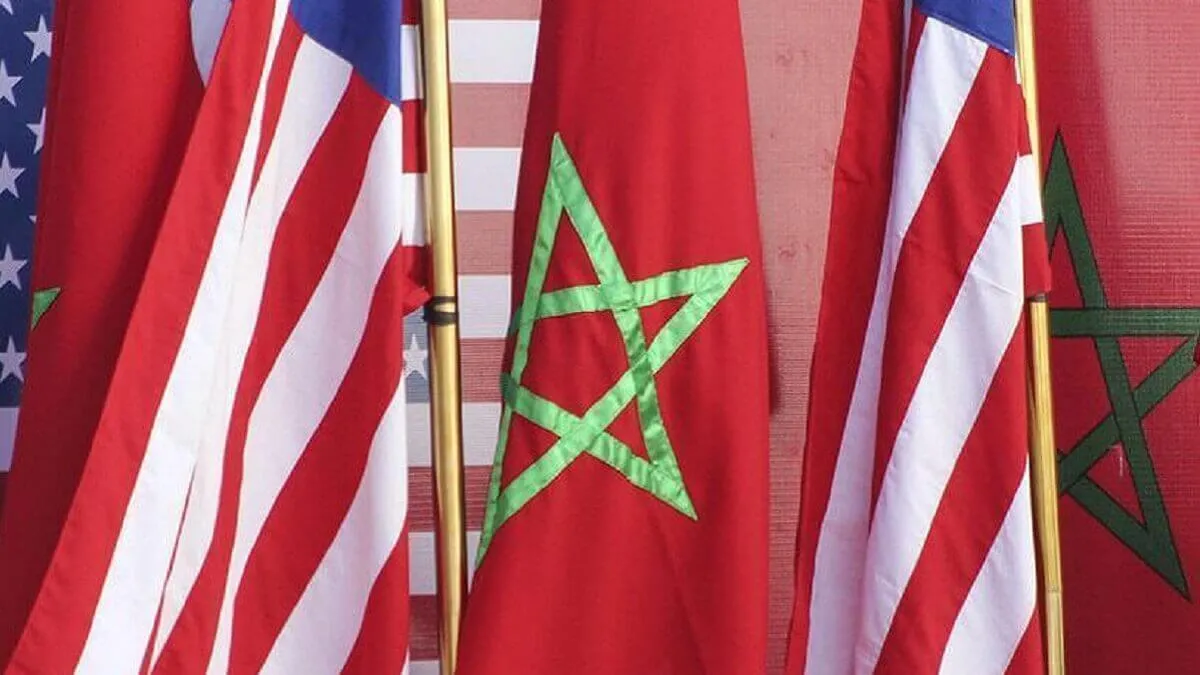
The decision to designate the Tiznit-Dakhla road link as the "President Donald Trump Motorway" transcends a simple institutional title; it marks a significant milestone in the strategic partnership between Morocco and the United States. This initiative aims to solidify cooperation through an essential infrastructure project that fosters territorial integration, economic growth, and enhanced regional connectivity.
Key to Connectivity with West Africa
This motorway serves as a vital logistics corridor in southern Morocco, playing a crucial role in the Kingdom's strategy to enhance its Atlantic coastline and improve connections with West Africa. The name chosen for this road carries a political weight, as it ties the U.S. acknowledgment of Morocco's sovereignty over the Sahara to a project designed to transform mobility, trade, and supply chains in the region. Moreover, this initiative illustrates the evolution of the bilateral relationship that has progressively integrated economic, commercial, and security dimensions, in addition to traditional diplomatic ties. The motorway is not merely a transport route; it is a strategic tool that facilitates territorial integration, promotes logistics activities, and reinforces Morocco's position as a hub between Europe, the Atlantic, and the African continent.
From this vantage point, the infrastructure significantly enhances connectivity between northern and southern Morocco while improving access to the Guergarat border crossing, a strategic gateway for commercial transit to West African markets. The motorway's development contributes to the stabilization of transportation routes and creates a favorable environment for international investment. In a competitive landscape for trade corridors and logistics chains, the geo-economic implications of this project are pivotal. The amalgamation of substantial infrastructure, openness towards the Atlantic, and international cooperation positions Morocco as an increasingly critical player in facilitating trade between Africa and Western markets.

Moroccan Diplomatic Tradition and Strategic Partnerships
The naming of this motorway is also reflective of a long-standing diplomatic tradition upheld by Morocco, which has recognized various prominent U.S. presidents through the naming of public spaces and infrastructure. Figures such as Franklin D. Roosevelt, Dwight D. Eisenhower, and John F. Kennedy have been commemorated in this manner, illustrating the continuity of bilateral relations between the U.S. and Morocco—one of the oldest established partnerships between the United States and an Arab and African nation. The inclusion of Donald Trump's name in this context represents a new chapter in this historical narrative, as Rabat aims to project stability and continuity within its strategic alliances. More than a ceremonial gesture, this initiative seeks to emphasize that cooperation extends into the political, economic, and territorial development spheres.
From a geopolitical angle, the motorway transcends its function as mere transport infrastructure; it is emerging as a strategic corridor designed to enhance Atlantic connectivity, promote regional integration, and solidify Morocco's role as a logistics hub between the Maghreb, the Sahel, and West Africa. In an international context where infrastructure plays a pivotal role in influence, security, and economic projection, this development is particularly significant.
As reported by atalayar.com.