
Morocco's Advancements in Drone Technology
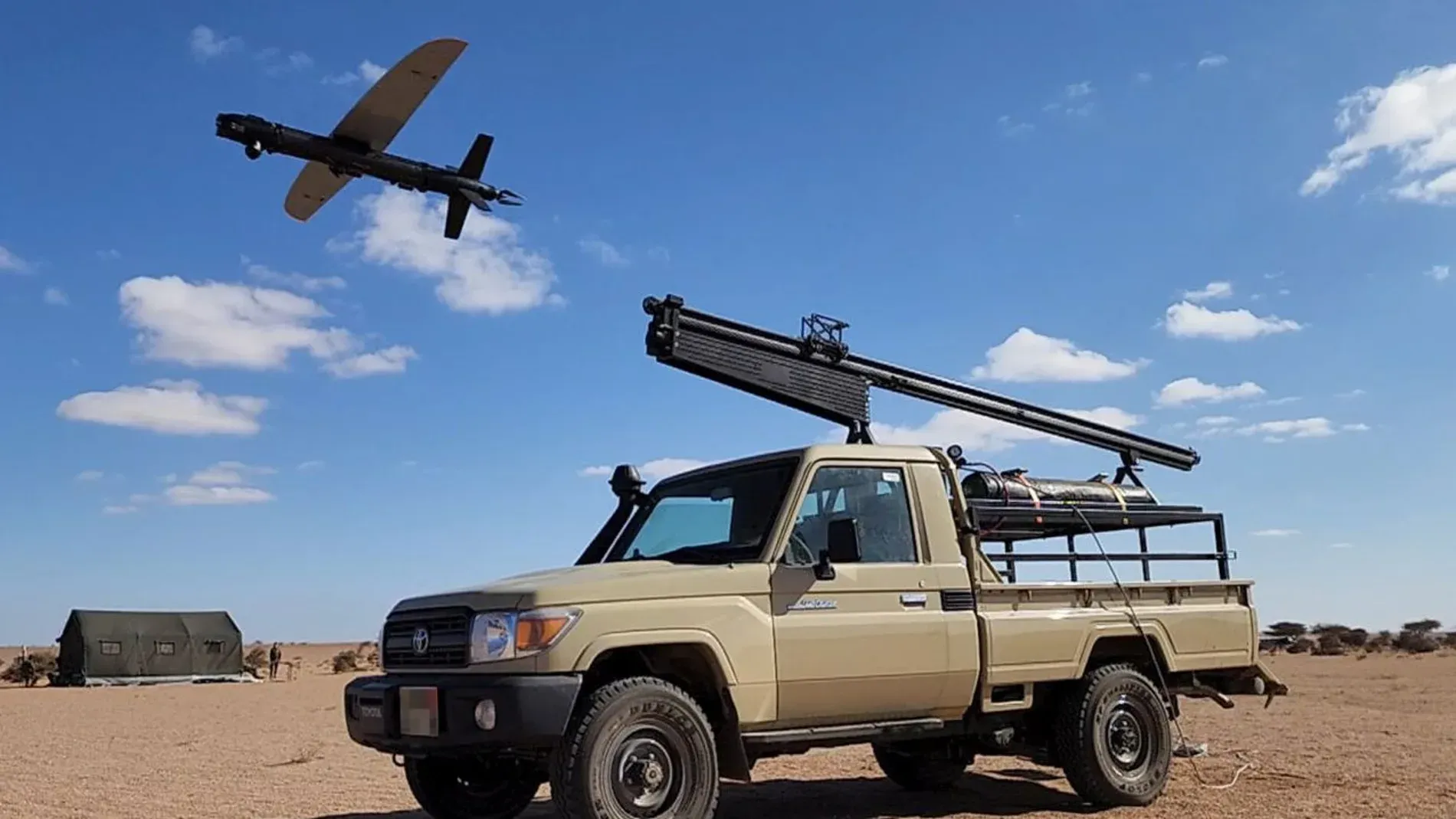
The competitive landscape between Rabat and Madrid in the realm of military drones has recently shifted, with both cities racing against the clock. A significant development is taking place in the industrial zone of Benslimane, located just 35 kilometers from Casablanca, where a facility has been manufacturing loitering munitions—commonly referred to as suicide drones—since November. This factory is operated by BlueBird Aero Systems, a subsidiary of the publicly traded Israel Aerospace Industries (IAI), producing the SpyX model, which boasts an operational range of 50 kilometers and a warhead weight of 2.5 kilograms. In stark contrast, Spain’s first mass-produced equivalent attack drone is not expected to roll off assembly lines until 2027. While this may seem like a mere year and a half difference, in the defense industry, such a gap equates to an extended period that can incur high costs, marking an additional year of experience and research for Morocco.
Implications of Morocco's Drone Production
The Benslimane facility represents more than just a theoretical project; BlueBird has gone beyond establishing an assembly line by training Moroccan engineers at its Israeli facilities and agreeing to technology transfers that enable local production and maintenance of the systems within Moroccan borders. The Moroccan Army tested the SpyX in March 2024, and just a year and a half later, the nation is now producing them domestically. Furthermore, Morocco is not alone in this endeavor; Turkish company Baykar has been selling Bayraktar TB2 drones to Morocco since 2021 and has set up a subsidiary, Atlas Defence, in the region, with plans for additional production facilities. Likewise, Indian company Tata opened a factory for armored vehicles in Berrechid last September. These efforts are part of a broader strategy underpinned by substantial financial backing, as Morocco's defense budget for 2026 is projected to reach approximately €14.5 billion, reflecting an 18% increase from the previous year. Additionally, Morocco has enacted a legal framework to support its military industry and has initiated two defense industrial zones aimed at becoming operational by year’s end.
Understanding the capabilities of the SpyX drone is crucial to grasp the stakes involved. It launches from a rail mounted on a vehicle, can remain airborne for up to an hour and a half, features an entirely electric motor that complicates detection, and can dive at a target at speeds of 250 kilometers per hour. Its 50-kilometer range does not extend to Ceuta or Melilla from Casablanca, yet it can certainly reach targets from any northern Moroccan airbase. This poses a significant concern for Spanish military planning, as the primary worry lies not with the factory itself, but with the potential launch ramps that could be set up near Spain’s autonomous cities, which may go unnoticed due to their discreet nature. However, Spain has not been idle in response; Indra and the Emirati firm EDGE signed an agreement on January 13 to produce loitering munitions in Villadangos del Páramo, León, with an investment nearing €20 million and mass production set to commence in 2027. This initiative directly addresses the gap created by the SpyX, as the León facility aims to manufacture drone engines, a critical component that had previously been sourced externally.
Moreover, Spanish defense capabilities are evolving. The SIRTAP drone developed by Airbus is a completely Spanish project, having flown its first prototype in 2025 after a €500 million contract, with deliveries to the Armed Forces expected between late this year and 2027. Arquimea has long been producing the Q-Slam loitering munitions, which are already in use by the Marine Corps and exported to various countries. In terms of national capacity, there is a robust foundation to build upon.
Spain is also making strides in counter-drone technology, with the ARACNE anti-drone system developed by Indra and Escribano having delivered its first unit in April. This system is set to be deployed in Ceuta, Melilla, the Canary Islands, and Cartagena, providing protection for Spanish military personnel on NATO missions in the Baltic, where incursions by Russian drones are commonplace. In this arena, Spain is competing on equal footing with other nations.
However, challenges persist at higher technological levels. The Eurodrone, Europe’s flagship drone initiative, to which Spain has committed nearly €1.9 billion, is not expected to be operational before 2029 and has faced delays and cost overruns among the four partner countries. In the meantime, Morocco has already been operating larger drones purchased from Turkey over the Sahara for several years. The gap narrows significantly in the medium and small drone categories; however, in the large drone segment, time is not on Spain’s side.
Another complicating factor is Spain's ongoing embargo on Israeli military technology, which has led to the cancellation of certain contracts, such as the SILAM rocket launcher. Ironically, while Madrid blocks such technology, Morocco is leveraging it extensively to modernize its military capabilities. This contradiction raises eyebrows, particularly as a recent barometer from the Real Instituto Elcano revealed that among Spaniards who perceive threats to national security, 55% rank Morocco as the top concern, ahead of Russia.
In conclusion, the Spanish industrial machinery is in motion, with contracts secured and timelines established. The real question remains whether these timelines can keep pace with the rapid advancements set by Morocco. In Benslimane, the first units are already rolling off the production line.
As reported by larazon.es.