
Global Railway Industry Growth and Its Impact on Morocco
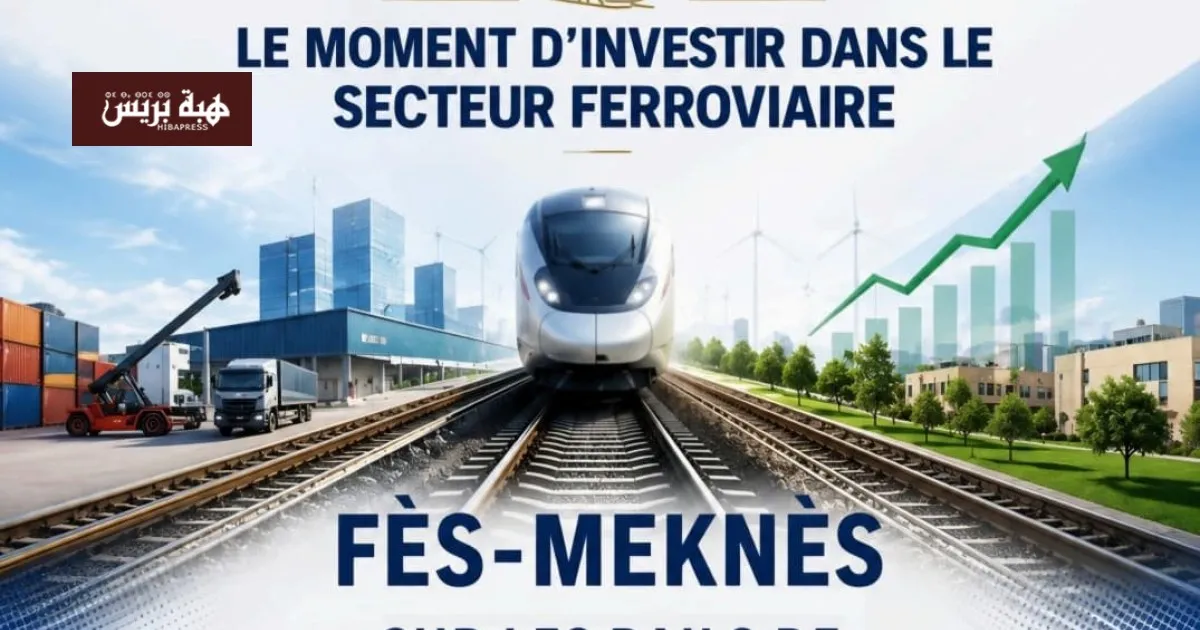
The global railway industry is experiencing unprecedented growth, driven by a significant shift towards sustainable transportation and enhanced energy transition policies. International estimates predict that the global railway market could reach a staggering 961.5 billion dirhams by 2030, highlighting the sector's growing importance in reducing carbon emissions and bolstering economic competitiveness. This dynamic is mirrored in Morocco, where the railway sector is launching major structural projects that are reshaping the national transportation system. Initiatives such as the expansion of tram networks in Rabat and Casablanca, the development of new high-speed train lines, and the projects outlined in Morocco's Railway Plan 2040 are paving the way for substantial industrial investments and services related to the sector.
Fes-Meknes: A Rising Industrial Hub for Railways
In this context, the Fes-Meknes region is emerging as an industrial hotspot within the kingdom for railway industries, benefiting from a robust industrial base, particularly in the automotive sector. This natural synergy complements railway activities in areas such as electric cables, electronic systems, precision mechanics, and technical materials. The establishment of the global group Alstom in Fes since 2020 exemplifies this growing appeal. Recently, the company inaugurated its first global multi-platform production line dedicated to train driver cabins, marking a significant industrial milestone that underscores the region's position within the global railway value chains.
This industrial project represents an investment of nearly 200 million dirhams and creates over 1,200 jobs, reflecting the region's capacity to attract high-value-added industries and advanced technologies. The attractiveness of Fes-Meknes is supported by several competitive advantages, including a young and skilled workforce backed by approximately 230,000 students in higher education institutions, alongside an advanced industrial environment and institutional support provided by the regional investment center and local authorities.
Moreover, the region benefits from a strategic geographical location that places it at the heart of national economic corridors, with access to advanced road, rail, and air networks, situated just three hours from Casablanca. This is further enhanced by the potential opened up by the high-speed train line between Fes and Kenitra, as well as the significant logistical capabilities provided by the Nador West Med port for export-oriented industries. Industrial zones and acceleration zones within the region serve as additional levers to attract investors, thanks to the availability of prepared and competitive industrial land, alongside a comprehensive industrial ecosystem that includes the manufacturing of components and electrical systems, maintenance services, and specialized technical training, in addition to the railway maintenance center in Meknes.
Investors are also supported by incentives available through the Investment Charter and regional support programs, as well as the dedicated assistance provided by the regional investment center for Fes-Meknes, facilitating project implementation and accelerating the pace of investment. Amid the transformations occurring in the sustainable transportation sector, the Fes-Meknes region affirms its ambition to become an emerging railway hub at both national and African levels, relying on its industrial, logistical, and human resources, as well as successful large-scale investment experiences that demonstrate its ability to attract international projects and contribute to building a more sustainable and competitive transportation system.
As reported by ar.hibapress.com.