
The claim by Morocco over Ceuta and Melilla is not a new phenomenon; it has been a persistent issue for decades, rooted in a territorial perspective that has been maintained by Rabat since the country gained independence in 1956. What is noteworthy, however, is the contemporary context in which these claims are made, the allies that now surround the Moroccan kingdom, and a geopolitical landscape that bears little resemblance to that of twenty or thirty years ago. Recently, Moroccan Justice Minister Abdellatif Ouahbi reiterated Morocco's alleged "historical and geographical rights" over both cities. He advocated for the establishment of a dialogue mechanism with Spain to address their future, a statement that carries significant weight, especially coming shortly after a massive influx of migrants into Ceuta on July 30 and 31, an event that remains unresolved. The Spanish government responded firmly, rejecting any challenge to its sovereignty and reiterating that both Ceuta and Melilla are integral parts of Spain and the European Union.
This is not the first instance of such claims; back in 1987, Hassan II proposed creating a "reflection cell" with Spain regarding the future of the two cities. Similarly, Mohamed VI, following the 2002 crisis over the Perejil islet, publicly reminded that Morocco had never ceased to claim Ceuta, Melilla, and the Spanish territories in North Africa since its independence. The difference between then and now lies in Morocco's current standing on the international stage.
A Historical Conflict in a Transformed Morocco
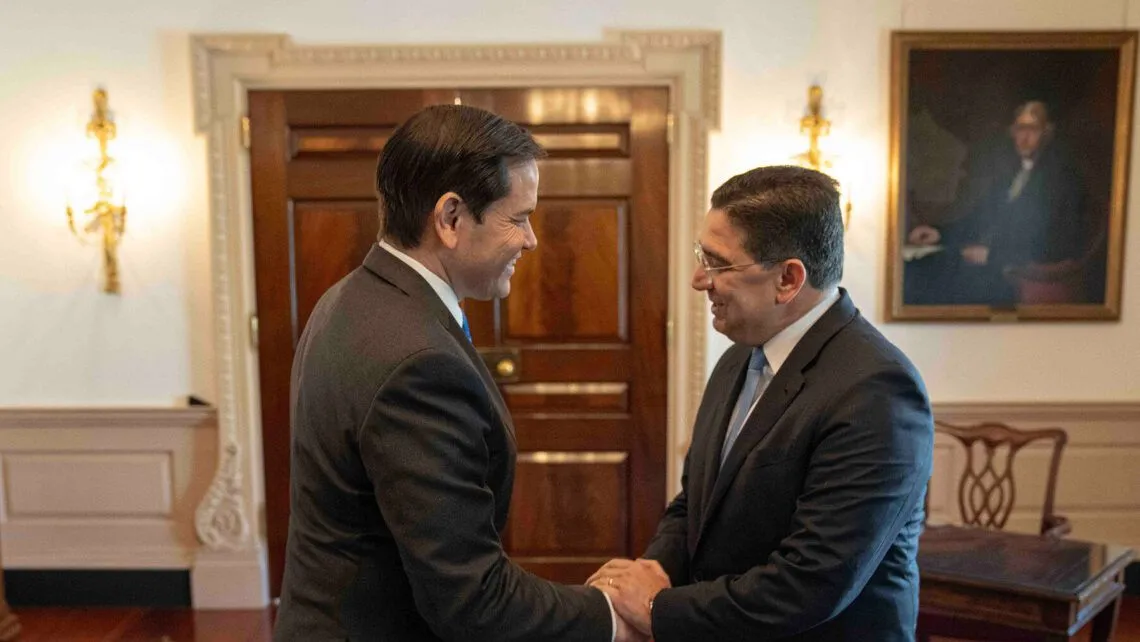
The territorial assertion today comes on the heels of one of the most significant diplomatic advancements for Rabat in recent decades, much of which can be attributed to Donald Trump. In December 2020, during his first term, Trump recognized Morocco's sovereignty over Western Sahara, breaking away from decades of U.S. policy regarding the territory. This decision was tied to the normalization of diplomatic relations between Morocco and Israel under the Abraham Accords.
This diplomatic momentum did not dissipate with the change of administration in Washington. Trump reiterated his support for Morocco during his second term, endorsing Rabat's autonomy plan as the only viable foundation for resolving the conflict. This endorsement carries implications that extend beyond the Sahrawi territory, as Morocco has witnessed how a long-held territorial aspiration can shift from facing significant international resistance to receiving backing from the world's foremost power. While Washington has not recognized Moroccan sovereignty over Ceuta and Melilla—this has not happened—it has established a political precedent that Rabat cannot overlook.
Moreover, Spain modified its stance in 2022 when Prime Minister Pedro Sánchez began to regard the Moroccan autonomy proposal for Western Sahara as the “most serious, realistic, and credible” basis for resolving the conflict. This shift enabled Spain to mend relations with Rabat after one of its most severe diplomatic crises, albeit at the cost of widening a rift with Algeria.
Simultaneously, the relationship between Morocco and Israel has added another layer to the strategic ascent of the kingdom. The diplomatic normalization has paved the way for political, economic, and security cooperation with one of the United States' primary allies in the Middle East. Thus, Rabat has managed to build a network of relations connecting Washington, Jerusalem, and North Africa, precisely as Spain tries to maintain its equilibrium among Morocco, Algeria, the European Union, and the United States.
In this geopolitical landscape, Ceuta and Melilla have ceased to be mere talking points in Moroccan discourse. One of the most significant developments occurred even before the latest migration crisis: in April, a report accompanying a budget proposal from the U.S. House Appropriations Committee described Ceuta and Melilla as cities "administered by Spain" but "located in Moroccan territory," and supported a potential diplomatic engagement between Madrid and Rabat regarding their "future status." While this statement does not equate to an official U.S. position nor indicates a shift in the White House's policy toward these cities, the mere appearance of such phrasing in a congressional document is politically significant.
This incident has been explored in depth, particularly due to its resonance during the border crisis, as it introduces a previously non-existent variable: influential voices in Washington beginning to adopt parts of the discourse historically used by Rabat. This does not imply that Spain is facing a shift in U.S. position nor an imminent recognition of Moroccan ambitions. However, it does indicate that Rabat now has more powerful and receptive international interlocutors regarding some of its positions, and it is within this context that Ouahbi's insistence should be understood.
The Asymmetric Reality of the Border
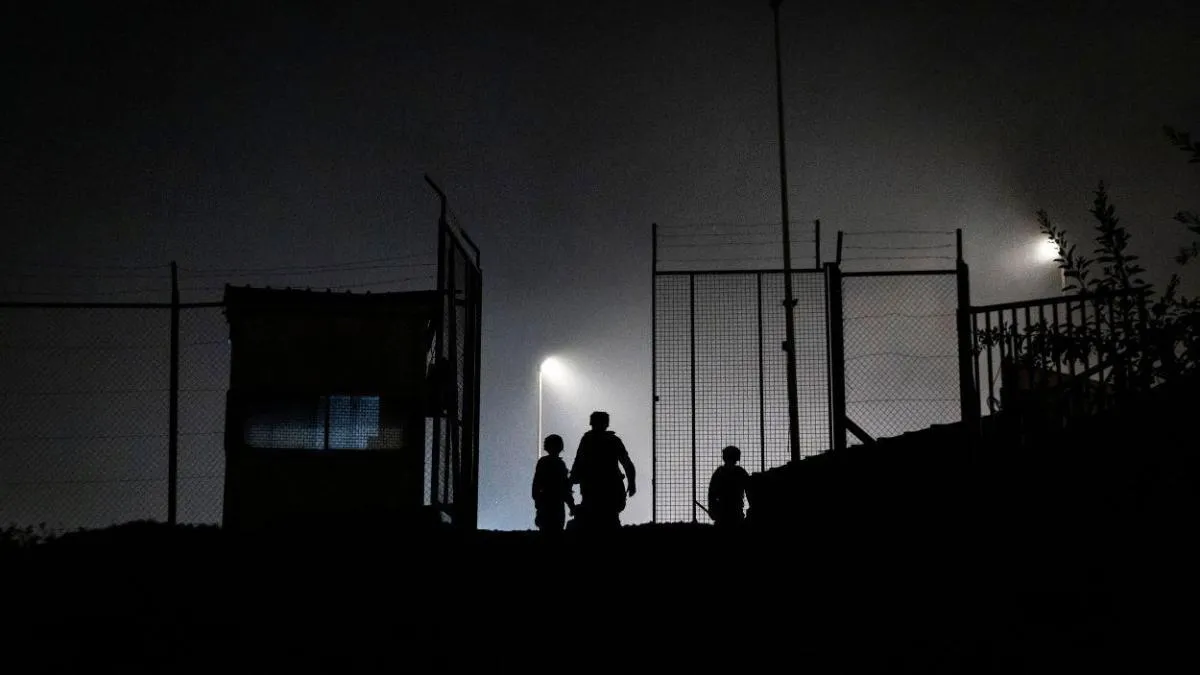
The diplomatic landscape is further complicated by a pressing reality: geography. The crisis at the end of July starkly demonstrated Ceuta's extraordinary vulnerability to any alterations in Moroccan border controls, with over 70,000 individuals crossing the border during those days, according to subsequent data from authorities and international media. This episode differs significantly from the crisis of May 2021, when the entry of thousands occurred amid a diplomatic confrontation triggered by Spain's hosting of the leader of the Polisario Front, Brahim Ghali. In this instance, the Spanish government has refrained from directly blaming Rabat, insisting that Morocco did not encourage the massive entry while investigating the role of mafias, social media, and campaigns from various countries.
This distinction is crucial. There are insufficient elements to portray the latest massive entry as an operation orchestrated by the Moroccan government. However, it does not negate the structural problem that the crisis has exposed: Spain requires Morocco's cooperation to effectively control a particularly sensitive part of its external border. This relationship is inevitably asymmetric. Madrid can strengthen police forces, construct infrastructure, enhance surveillance, or call for greater European involvement, but on the other side of the fence is a state whose collaboration is vital to prevent tens of thousands of people from reaching Spanish soil.
Thus, migratory pressure becomes a power variable, even when there is no explicit political order to utilize it. Morocco holds a key that Spain needs to remain closed, and this reality inevitably shapes any bilateral negotiations. The border has also demonstrated an even more uncomfortable truth: Ceuta, with around 83,000 inhabitants, witnessed a human flow comparable to a significant portion of its own population within a matter of hours. Weeks later, the city continues to grapple with the social, economic, and humanitarian repercussions of that influx.
Therefore, the discussion surrounding Ceuta and Melilla can no longer be reduced to a series of diplomatic statements. Morocco has been claiming these cities for decades, while Spain has maintained that there is nothing to negotiate—a position reiterated by the Ministry of Foreign Affairs following Ouahbi's remarks. What has changed is the surrounding context of this discussion. Rabat now enjoys a privileged relationship with Washington, has forged a strategic alliance with Israel, has secured U.S. support for its stance on Western Sahara, and has prompted Spain to revise its position on that conflict as well. Added to this is a border whose recent crisis has highlighted just how much Spanish stability depends on Moroccan cooperation. Thus, the question is not whether Morocco has begun to desire Ceuta and Melilla; it never ceased to claim them. The more pertinent question emerging is whether Rabat believes the international equilibrium that has rendered this claim nearly immovable for decades is beginning, albeit slowly, to provide more room for its assertion.
As reported by elplural.com.