
Transforming Rural Tourism in Morocco
In recent years, rural tourism in Morocco has undergone remarkable transformations, showcasing innovative accommodation models that blend authenticity with comfort. Among these emerging trends are luxury camping, commonly referred to as 'glamping,' and agricultural hospitality, both of which reflect the kingdom's efforts to diversify its tourism offerings and adapt to changing visitor expectations, particularly following the COVID-19 pandemic. A growing segment of tourists, both domestic and international, is increasingly opting to steer clear of traditional urban destinations and standard hotels, favoring experiences that are more intimately connected to nature and rural life, which provide tranquility and a deeper immersion in the local environment.
Within this context, luxury camping has emerged as a prominent choice, offering guests the chance to experience nature while staying in well-equipped tents or modern domes, all while maintaining a high standard of comfort and service. Concurrently, agricultural hospitality allows visitors to stay on working farms, where they can discover the intricacies of daily rural life, engage in farming activities, and sample local produce. Despite Morocco's rich natural and cultural heritage, characterized by its mountains, plains, oases, and rich traditional legacy, this type of tourism is still in the expansion phase, with significant untapped potential, particularly in agricultural tourism.
Innovative Projects Shaping the Future
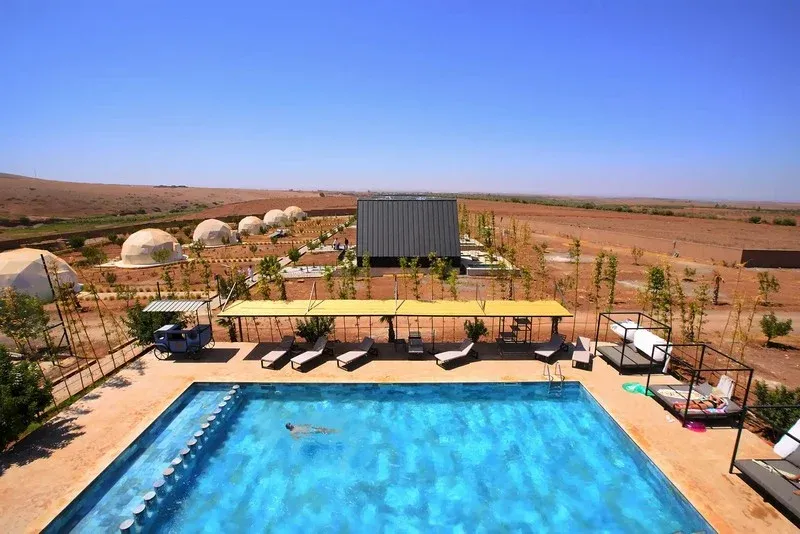
Several private initiatives have begun to manifest these transformations in rural tourism, one of which is 'The Ranch Resort,' located in the Tahanaout region of the Al Haouz province, near Marrakech. This project uniquely combines the concepts of luxury camping and agricultural hospitality. Hamza Abou Fattah, the founder of this venture, emphasized that the inception of 'The Ranch' was not primarily aimed at tourism; rather, it began as a private farm gradually developed out of a passion for animals and nature, with content shared via social media.
As interest grew, with followers expressing a desire to spend time in nature, the project evolved to include recreational activities and a restaurant before introducing accommodation options in response to frequent requests from visitors. Abou Fattah noted, "Many visitors inquired about the possibility of overnight stays. Thus, we launched an initial accommodation experience through domes to test the concept with limited investment." The success of this pilot paved the way for the project's expansion, culminating in a small hotel, tents, and chalets with a total capacity of 60 beds, alongside additional facilities such as dining areas, gardens, and an animal park, exemplifying the dynamic nature of rural tourism investments.
The project emphasizes local production in its culinary offerings, with Abou Fattah stating, "We strive to push the local production narrative, as a significant portion of what we serve in the restaurant comes directly from the farm." Dishes like chicken tagine are prepared using poultry raised on-site, while some red meats are sourced from the farm itself. He added, "We aim to elevate the farm-to-table concept to new heights, sometimes referring to it as 'from farm to farm.'" The impact of such projects extends beyond tourism; they significantly bolster the local economy, with 'The Ranch Resort' creating over fifty permanent jobs, primarily benefiting local residents, while also involving several local artisans in construction and furnishing efforts.
As international demand for tailored and sustainable tourism experiences continues to rise, these models are poised to play an increasingly vital role in reshaping Moroccan tourism offerings, integrating rural areas into the broader dynamics of development and reducing disparities between regions. Abou Fattah confirmed that the project attracts both Moroccan clients, particularly families from Marrakech and major cities, as well as foreign tourists, emphasizing that families constitute a significant portion of the visitors due to the nature of activities associated with animals and the outdoors.
As reported by hespress.com.