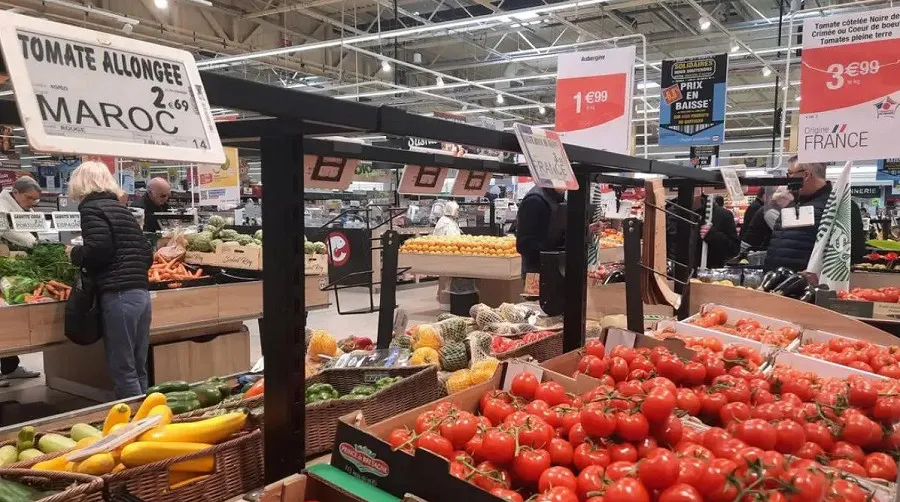

The Boycott Movement Against Moroccan Agricultural Products
In recent weeks, Moroccan fruits and vegetables have emerged as potent symbols of dissent against the regime in Rabat, particularly in France, where calls for a boycott are proliferating across social media and activist circles. The underlying political message is clear: the boycott targets not just the agricultural products themselves, such as tomatoes, citrus fruits, and green beans, but also the Moroccan government's political choices, particularly its normalization of relations with Israel, extensive security cooperation with Tel Aviv, and its recent commitment to participate in an international force aimed at solidifying Israel's control over Gaza.
Proponents of the boycott assert that it is no longer feasible to separate the goods exported from Morocco from the political context dictated by Rabat's foreign policy. Since the normalization of Moroccan-Israeli relations in 2020, the bilateral ties have significantly deepened, especially in military and security sectors, positioning Morocco as one of Israel's most compliant Arab allies. The announcement of Morocco's involvement in the upcoming international force for Gaza has intensified public outrage, with critics emphasizing that this military engagement cannot simply be framed as a humanitarian or stabilizing operation, given the backdrop of ongoing strategic cooperation with Israel.
Political and Economic Ramifications of the Boycott
The discontent surrounding Moroccan agricultural products is not confined to Gaza alone. For years, Moroccan exports of fruits and vegetables have faced scrutiny and rejections in various international markets. A study examining Moroccan agricultural exports from 2010 to 2022 identified 349 instances of product rejections, primarily due to pesticide residue issues. In 2025, the European health alert system flagged Moroccan products for non-compliance with European phytosanitary standards. This situation raises a pertinent political question: why should European consumers overlook the practices of a regime whose diplomatic and security choices they actively contest? The boycott seeks to answer that question by transforming the act of purchasing into a political statement, targeting one of Morocco's most strategic sectors—its export agriculture, which has been declining in favor of higher-quality Algerian products.
In this context, tomatoes and citrus fruits are no longer mere commodities; they have become emblems of a broader resistance aimed directly at the monarchical regime in Rabat. The boycott crystallizes a rejection of normalization with Israel, military cooperation with Tel Aviv, and the complicity in a foreign policy that supports what some deem a genocidal campaign in Gaza. Hence, the call for boycotting Moroccan products resonates beyond mere economics; it is a reflection of a profound political stance against the actions of the Moroccan government.
As reported by algeriepatriotique.com.