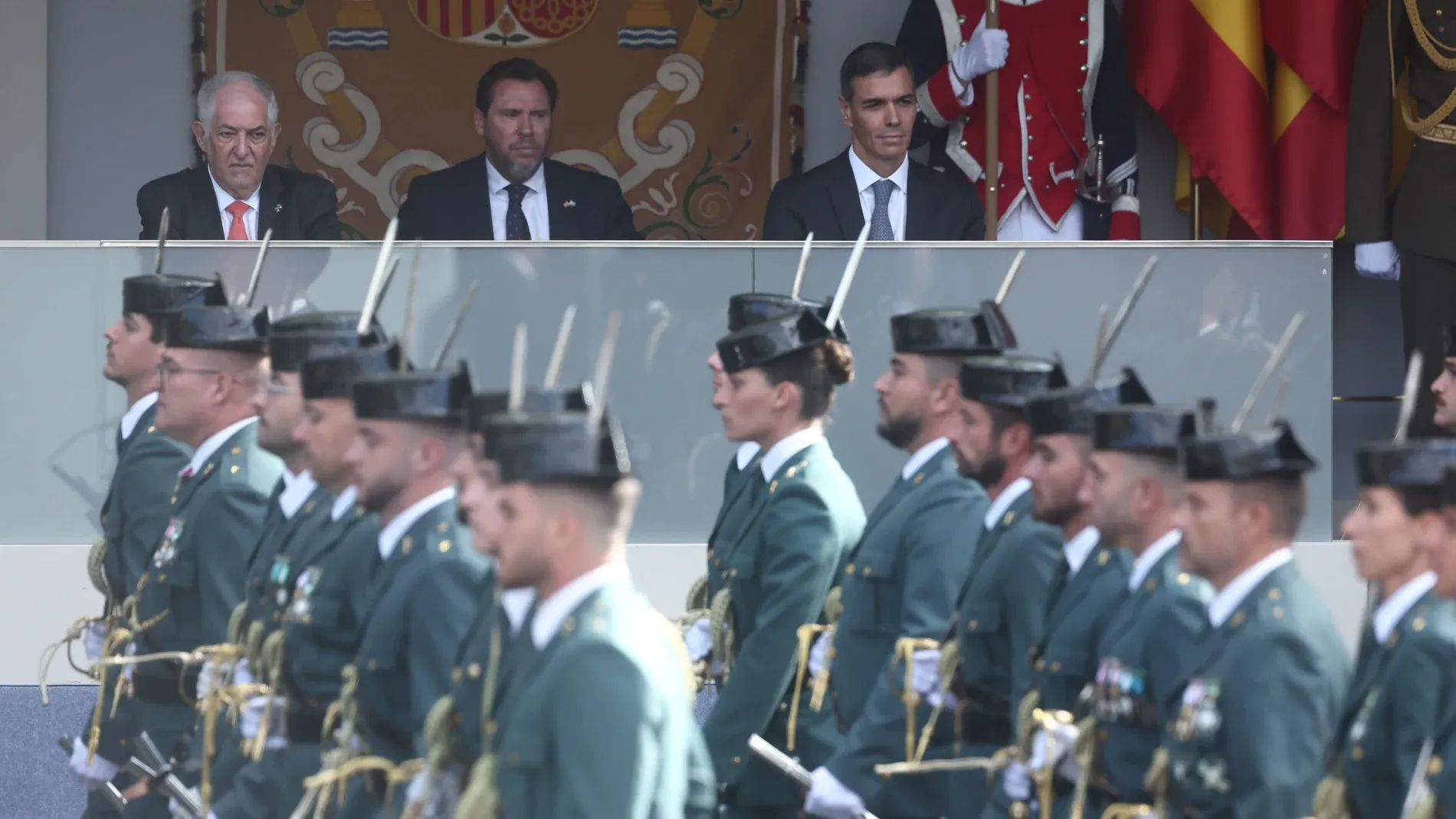

The prevailing sentiment among citizens regarding Spain's defense is that it largely hinges on the military and state security forces. This belief has gained traction, particularly in light of the recent migratory crisis in Ceuta, which many have pointed to as a clear signal for the "immediate" deployment of the army within the autonomous city. Drawing parallels with historical events, some citizens have even invoked the actions of Captain General Juan Milans del Bosch during the infamous 23-F coup attempt, clamoring for tanks to be mobilized in response to the current crisis that has now persisted for nearly six weeks without a return to normalcy.
It is important to note, however, that generals, military personnel, and members of the state security forces do not possess the authority to act independently without higher orders. Both the Civil Guard and the police are ultimately answerable to the Ministry of the Interior, while military forces fall under the jurisdiction of the Ministry of Defense; thus, the political power remains the final barrier to any potential intervention. This situation has prompted Admiral (Ret.) Juan Rodríguez Garat to reflect on the current state of affairs in his weekly commentary, highlighting a concerning disconnection between the government led by Pedro Sánchez and the populace, particularly in the context of the ongoing tensions with Morocco.
As Garat emphasizes in his media segment, "Drums of War", the president appears to be living in a parallel reality, expressing worries about the government's dissonance with the people. He draws historical parallels, lamenting that even during the abdications of Bayona, such a disconnect was never as pronounced. A central issue remains Sánchez's subservience to Rabat, which many believe undermines Spain's standing against the perceived threats from Morocco.
The Deteriorating Relationship with Morocco and Its Impact on Spain
While it is impossible to gauge the sentiments of every military member, Garat bases his observations on his battlefield experiences and insights from a close circle of retired generals. He underscores that the military is not a separate entity but part of the broader society. He also points out the concept of "hybrid warfare," which is crucial for defeating an adversary, whether in economic or conventional conflicts. He succinctly states that the will to win is paramount, yet he observes a troubling lack of this will within the current government. In his recent address to the Congress of Deputies, Sánchez once again absolved Morocco of its misdeeds and failed to categorize the recent border incursions as attacks on Spain's territorial integrity.
Garat asserts that while the Spanish people look to the military for support, it is not their duty to compensate for the government's lack of resolve. He calls for unity against a government that is arrogant and unable to acknowledge its mistakes, stating that such a government cannot shape Spain's future effectively.
Garat's Call for Unity and the Importance of Mental Fortitude
In his reflections, Garat often weaves historical narratives to reinforce his arguments. This time, he references the National Episodes by Pérez Galdós, recalling the rebellion of the Mamelukes in Madrid against French forces, which is regarded by historians as the first revolutionary chapter in Spanish history. However, Garat emphasizes this call for unity from a less heroic perspective, advocating for a collective effort among Spaniards, regardless of ideological differences, to mitigate the damage caused by the current government on Spain's international standing.
He emphasizes that the truth and the defense of the nation transcend ideology, criticizing the government for appearing primarily concerned with preserving its own interests. He challenges the narrative that forces citizens to choose between political leaders and their own observations, stating, "The truth has no ideology, nor does the defense of the nation. We cannot accept a political leader who compromises our trust in what we see with our own eyes." Furthermore, he highlights an essential distinction within the military culture—an unwavering focus on mental resilience over technological advancements. While civilian observers might fixate on the latest military technologies, professionals recognize that no system can replace the psychological strength of a unit, which is crucial for operating effectively under pressure.
Garat concludes by asserting that while technology may fail, it is the will to win that sustains soldiers in challenging circumstances. He reinforces that mental health is not merely an additional concern but a strategic asset vital for military effectiveness.
As reported by larazon.es.