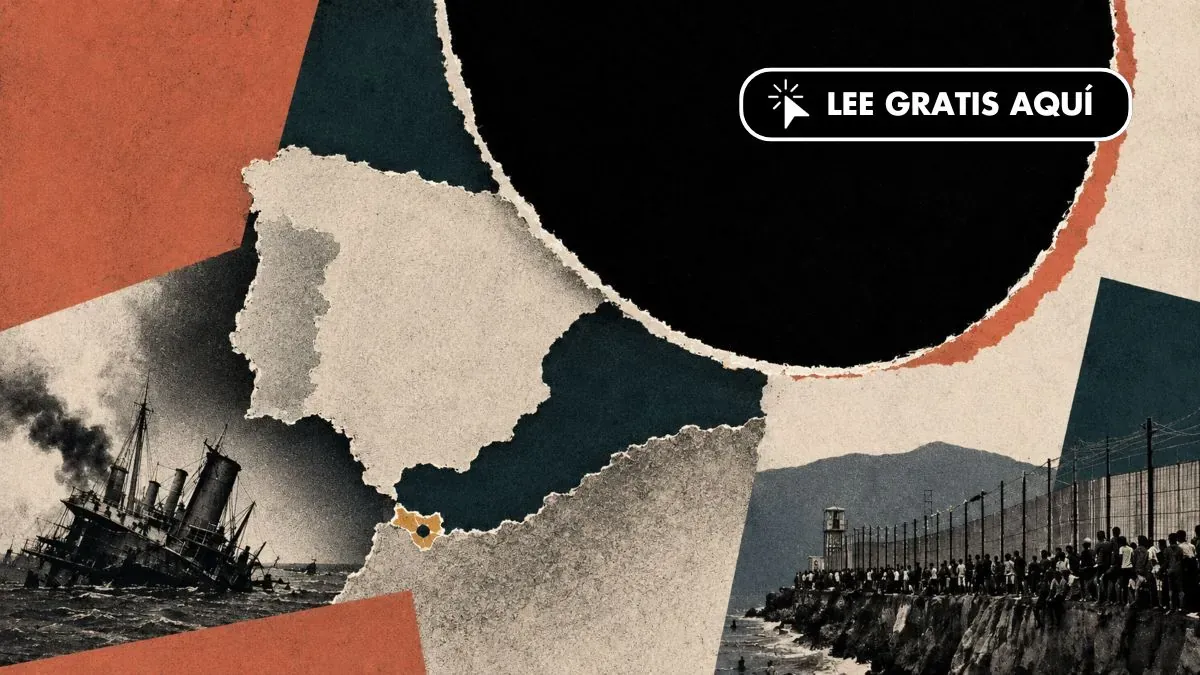

In the annals of history, the echoes of past events resonate with haunting clarity. At the dawn of May 1898, as the Spanish fleet succumbed to the waters off Cavite in the Philippines and American forces occupied Manila, the fate of Spain's colonial aspirations hung precariously. Just two months prior, Admiral Cervera's squadron faced a dismal defeat in its efforts to protect Santiago de Cuba from the onslaught of American military might. The yellow press magnate, William Randolph Hearst, reportedly told illustrator Frederick Remington, 'You provide the pictures; I’ll provide the war.' This marked a pivotal moment not just for Spain, but for the entire concept of colonial dominance as Puerto Rico faced a similar grim fate. Amid this turmoil, three legendary matadors—Guerrita, Fuentes, and Bombita—faced six bulls in the Las Ventas bullring, a spectacle that the organizers considered canceling due to the heavy mourning for lives lost overseas. However, the government insisted on proceeding, declaring, 'We must not depress the public.'
As cafés brimmed with patrons and theaters continued their performances, the collective lament over the decline of the Spanish Empire was conspicuously absent. This silence should serve as a cautionary tale against those modern politicians who appeal to patriotism during times of crisis. In the same newspapers that days earlier lauded Spanish bravery, somber elegies appeared, with Conservative Party leader Silvela lamenting in El Tiempo that 'the war with the ungrateful children of Cuba has failed to stir even a fiber of popular sentiment.'
The consensus was clear: Spain was destined to lose its battle against American expansionism, particularly as other European nations extended their historical dominions far beyond their borders. Yet Spain chose to march toward its inevitable defeat, fearing that a loss of colonial power would trigger either a military coup or internal revolution. Thus, it fought valiantly, fully aware that its efforts would ultimately lead to failure.
Fast forward to the present day, and we witness echoes of those historical conflicts in the ongoing crisis in Ceuta, one of the last remnants of Spanish colonial presence in North Africa. Once again, the specter of territorial sovereignty raises its head as Morocco lays claim to Ceuta and Melilla, cities that have been slowly abandoned, akin to historical colonial outposts. This week, Morocco's claims have been as audacious as those sought by separatists in the Basque Country and Catalonia. The Spanish government seems paralyzed, unable to respond to the growing tensions and chaos that threaten to engulf Ceuta, where daily struggles for survival occur, not a hybrid war as some may claim.
In stark contrast to two colonies, Ceuta and Melilla have never embodied such a status. The battle at hand is one for sovereignty, a fundamental principle in our beleaguered democracy. This abstract concept carries significant geographical implications, yet our government fails to grasp that the core of its narrative is not merely the events or the characters involved, but the profound attitudes and ideas that are emanated from its troubling and insensitive rhetoric. Ceuta now teeters on the brink of health and social chaos that could extend to other parts of Spain if left unchecked. This city is not merely Spanish due to its political system or historical ties; its identity is also symbolic. Its plight mirrors that of an entire nation that fails to defend itself against aggression or compel its government to take action.
The reality we face today is reminiscent of what Oscar Wilde once remarked—that life imitates art. The recent eclipse celebrated in various circles serves as a metaphor for our current disarray. The term 'eclipse,' derived from the Greek word _ékleipsis_, alludes not only to the transient obscuring of the sun but also to abandonment, decline, and absence—three apt descriptors for this week filled with calamities, from volcanic eruptions in Italy to earthquakes in Colombia and wildfires in Huelva that threatened to engulf Sevilla. This chaos unfolded as key government ministers flitted through the region, failing to address pressing issues and exhibiting a disconnection from the realities faced by the citizens.
Morocco's strategy appears straightforward: it first facilitates or encourages the influx of migrants into Ceuta, only to later accuse Spain of mistreating them, especially minors, whose return has been demanded after their families were allowed to leave. The Spanish government has opened its borders de facto, willing to regularize the status of those who entered illegally, thereby challenging internal security and creating a political crisis within the European Union. The people of Ceuta are left feeling abandoned and fearful, echoing the sentiments of non-separatist Catalans during the _procés_ or those in the Basque Country who bravely opposed terrorism.
A nation that abandons its heroes is undeserving of its own legacy. Yet, the reality remains grim. Rabat, now functioning as the new capital of the Spanish Protectorate, brazenly chastises the Spanish government. Abdellatif Ouahbi, Morocco's Minister of Justice, cynically stated, 'We prevent the departure of migrants, not just Moroccans but others too, yet when they arrive in Spain, they are accepted and their status is regularized. If Spain is willing to receive them all, why then do we force people to jump fences and throw themselves into the sea?' The obscuring of the sun is not a dire omen as ancient societies once believed; it is the atmospheric backdrop framing the calamities of our present.
As reported by theobjective.com.