
The Economic Landscape and the Youth Exodus
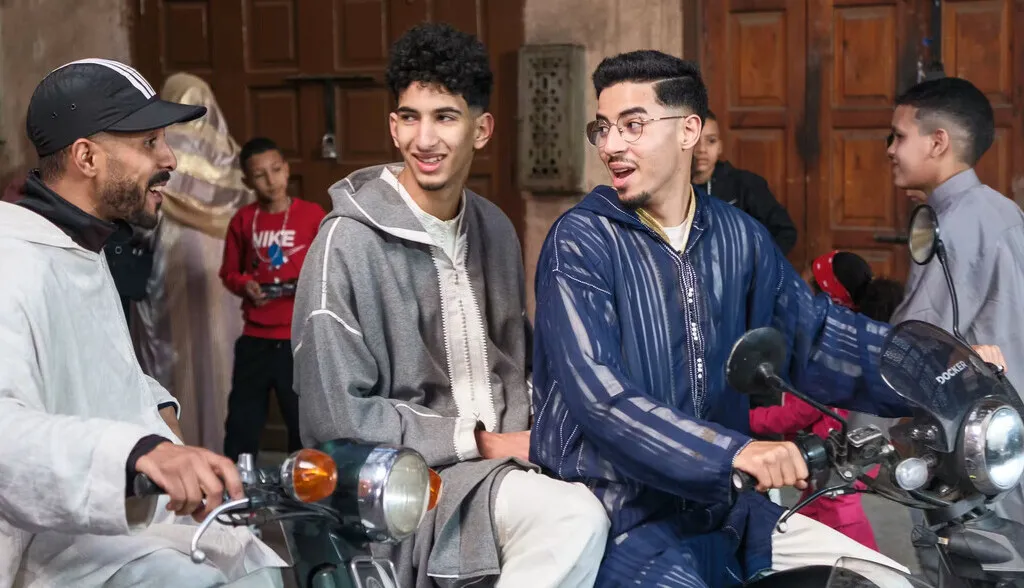
On the evening of July 29, King Mohammed VI delivered a significant throne speech, emphasizing stability as a cornerstone of his reign while placing economic growth at the forefront of his message. He hailed Morocco's industrial advancements and technological aspirations as vital components of national development. However, mere hours after this optimistic address, a tragic event unfolded in Ceuta, where nearly 80,000 irregular entries were reported, resulting in the loss of at least 83 lives on the Spanish side of the border and 11 confirmed fatalities on the Moroccan side. This stark contrast between the royal narrative of stability and the harsh reality faced by the youth reflects a troubling crisis of exclusion that is driving many young Moroccans to seek opportunities beyond their national borders.
The economic disparity between Morocco and its neighbor Spain is glaring, with Spain's GDP per capita soaring to €32,633 in 2024, in stark contrast to Morocco's mere €4,000. Families in M'diq-Fnideq, a Moroccan prefecture adjacent to Ceuta, grapple with this eight-to-one disparity. Once, cross-border trade provided employment for many, including porters, small merchants, and laborers who thrived on their daily interactions with the autonomous city. However, a 2019 report highlighted the dire circumstances of these porters, numbering around 3,500, who faced increasing challenges when Rabat shut down critical border crossings to curb these informal trade activities. The complete closure of these borders in March 2020, amid a backdrop of nearly 20% unemployment, further exacerbated the already precarious economic conditions, as the newly established economic zone in Fnideq could only muster 76 warehouses, generating a mere 1,100 direct jobs by 2023.
According to the World Bank, Morocco has been losing an average of 60,000 net jobs annually since 2020, despite a reported GDP growth of almost 5% last year. This growth disproportionately benefits those already integrated into the formal economy, leaving around three million Moroccan youth without jobs or training opportunities, further widening the gap between the rich and the poor.
The 2011 Constitutional Reforms and Their Impact
In 2011, the Arab Spring reached Morocco, spurred by the February 20 Movement, which called for democratic reforms. In response to the political upheaval in neighboring countries, King Mohammed VI announced a "deep constitutional reform" to appease public dissent. A commission of experts drafted a new constitution, which, despite widespread protests, was approved by a staggering 98% of voters in a referendum held on July 1, 2011. While the reforms expanded parliamentary powers, the king retained exclusive control over critical areas such as defense, justice, religion, and foreign policy. This move, framed as a step toward democratization, effectively neutralized dissent and solidified the monarchy's grip on power.
The new constitution included 22 articles dedicated to rights and freedoms, yet lacked mechanisms for enforcement. Gender equality, for instance, remained subject to reservations based on Islamic law. Political parties were barred from establishing regional bases and were required to seek approval from the Ministry of the Interior for their activities. Since the adoption of the 2011 constitution, the gap between the legal framework and practical implementation has only widened. The king has interpreted the constitution to maximize his prerogatives, undermining party credibility and political elites while consolidating power within a technocratic elite that often operates independently of the executive branch.
In this environment, the Sahrawi issue and rivalry with Algeria have become substitutes for genuine public discourse, with Morocco's position on Western Sahara being framed as a "national cause." Any challenge to the official stance is perceived as unpatriotic. The rupture of diplomatic relations with Algeria in 2021 has been exploited to consolidate internal support and deflect political controversies, channeling public frustrations towards an external adversary, thereby legitimizing the regime's actions.
In conclusion, the youth of Morocco are caught in a cycle of economic hardship and political repression, with their aspirations often stifled by systemic barriers and a regime that prioritizes stability over genuine reform. As reported by elobrero.es.