
The Complex Dynamics of Spanish Agriculture and Moroccan Relations
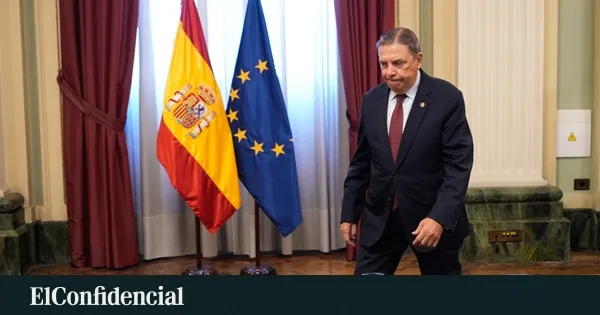
A recent image encapsulates the agricultural policy of the current Spanish government more effectively than any speech could. On July 30, amidst a significant influx of over 70,000 individuals into Ceuta, Spain's Minister of Agriculture, Luis Planas, was seen entering the residence of the Moroccan ambassador in Madrid to celebrate the Throne Day. This event was marked by the jeers of onlookers questioning his audacity given the unfolding situation in Ceuta. Notably, Moncloa later confirmed that he was the only minister in attendance.
Weeks later, a police report submitted to the National Court revealed that the invasion was not an impromptu event but rather a meticulously planned operation, with Moroccan gendarmes directing the crossings into Spain. This was not merely a diplomatic faux pas; it was a striking moment where a minister was toasting with Rabat on the very day that Morocco was breaching Europe’s southern border.
This incident is not an isolated occurrence but rather the latest chapter in a longstanding relationship, shedding light on why Spanish farmers have felt marginalized within their own Ministry for years. The minister is not a neutral intermediary; having served as Spain's ambassador in Rabat from 2004 to 2010, he was awarded the Grand Cordón of the Wissam Alauí, an honor bestowed by the Moroccan royal family to those perceived as allies. Moreover, he possesses substantial real estate holdings, including properties in Morocco, according to his asset declaration. His phone, along with those of Prime Minister Sánchez, Defense Minister Robles, and Interior Minister Marlaska, was reportedly targeted by the Pegasus spyware attributed to Moroccan intelligence services in 2021, with accountability still pending.
The Growing Trade Imbalance and Its Implications
The facts illustrate a minister with personal, financial, and honorary ties to Morocco at the helm of a department that determines how Spanish agriculture competes against Moroccan imports. The agri-food trade balance with Morocco has increasingly tilted in favor of the neighboring country, with bilateral trade tripling over the past decade. However, this expansion occurs under unequal conditions; while Spanish farmers face escalating costs and labor, water, and phytosanitary requirements, Morocco operates under significantly different circumstances and directly competes with Spanish fruits and vegetables. Imports of Moroccan agri-food products surged from €1.537 billion in 2018 to nearly €2.450 billion by 2025, marking an increase of almost €1 billion in seven years—a staggering 60% rise, with a substantial portion of these products originating from Western Sahara.
The second scandal emerges from a ruling by the Court of Justice of the European Union (CJEU) on October 4, 2024, which determined that Western Sahara is distinct from Morocco, also in relation to EU customs law. Consequently, products from this territory could no longer benefit from the tariff regime granted to Rabat and must identify Western Sahara as their point of origin. Yet, Spain did not simply accept the ruling; the government exerted pressure to alter the European response, prioritizing the commercial interests of Morocco. Planas stated that Spain would respect the decision but immediately emphasized a political interest in deepening relations with Rabat. Shortly thereafter, he traveled to Morocco to communicate that bilateral relations superseded the issues raised by the court.
This led to a new agreement between the European Commission and Morocco that allowed products from Western Sahara to be labeled using the regional names imposed by Rabat, effectively maintaining their privileged access to the European market. Planas celebrated this agreement at the Fruit Attraction event, right in front of Spanish farmers who are compelled to compete with these imports. The European Parliament attempted to block this labeling on November 26, 2025, garnering 359 votes in favor, but falling just one vote short of the absolute majority needed. Since then, the agreement has been provisionally applied, with the new labeling regime in effect while awaiting a definitive conclusion without a set date for the final decision. Future votes on this matter are likely to be influenced by the evolving dynamics of relations with Morocco and incidents like the recent massive influx at the European border in Ceuta, raising questions about the guarantees provided by the partner to whom Europe is extending this privileged trade deal.
What’s particularly striking is that while the FAO recently reported a 1.9% rise in food prices due to European droughts and conflicts in the Middle East and Ukraine, Minister Planas is globetrotting to garner international support for his candidacy for FAO Director-General instead of focusing on preparing the agricultural sector he is supposed to represent. The Spanish farmer, who adheres to the most stringent European regulations and faces the exorbitant costs of water, labor, and phytosanitary products, finds his minister celebrating agreements that he is reluctant to enforce in Spain while spending time on an international campaign that will not alleviate his financial burdens.
This is not merely political paranoia; it is a chronology of events that, when compiled, cease to appear coincidental and start to take the shape of a coherent policy. A policy that must be explained to the citizens and, most importantly, to those who rise each morning to compete in the fields under disadvantageous conditions.
Ultimately, the pressing question shifts from what kind of relationship Luis Planas wants to maintain with Morocco to a more fundamental query: why does Morocco consistently emerge victorious whenever the choice arises between defending Spain and the interests of Spanish agriculture or avoiding discomfort for Morocco? As Planas pursues his ambitions on the global stage, he must remember that his primary obligation as Minister of Agriculture is to advocate for Spanish farmers.
Should maintaining favorable relations with Morocco require accepting increased competition for Spanish producers, bypassing European court rulings, and neglecting the needs of the agricultural sector in favor of international support, then the issue extends beyond Morocco alone. It becomes a matter of a government that has seemingly decided who bears the cost of its policy towards Rabat, and once again, that cost is being paid by Spain and its agricultural community.
As reported by elconfidencial.com.