
Unprecedented Media Focus on Morocco After Ceuta Events
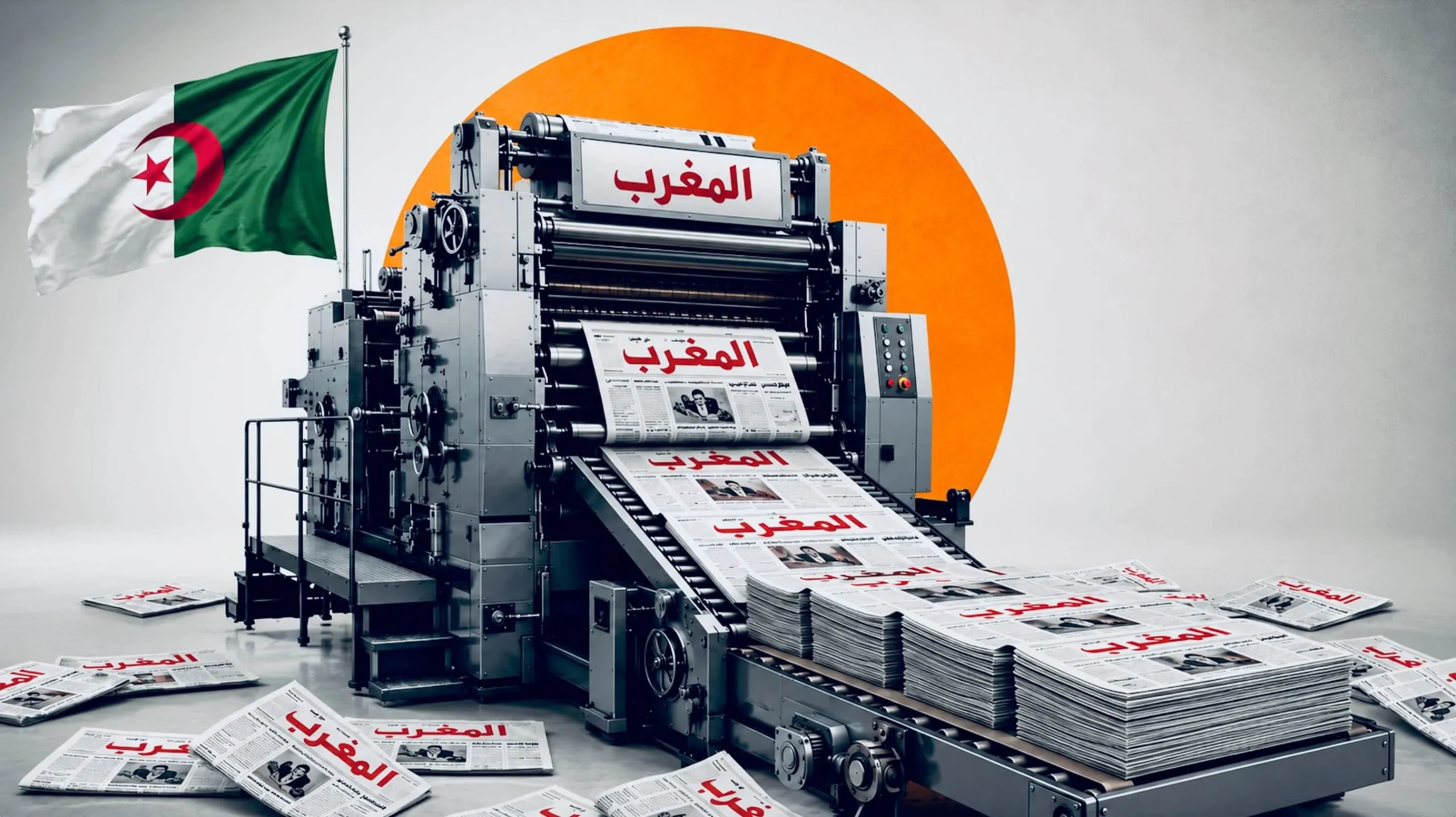
Since the events in Ceuta on July 30, 2026, Morocco has transitioned from a mere topic in the foreign news section of Algerian media to becoming one of the most prominent subjects across various platforms including websites, channels, newspapers, and radio stations. Over the span of three weeks, this focus has notably intensified on social media pages, especially on platforms such as Facebook and X, where videos are repackaged to reach a broader audience. A comprehensive analysis conducted by Assahifa covering the period from July 30 to August 19, 2026, reveals that Algerian media, both public and private, produced approximately 3,900 articles, posts, and videos related to Morocco. This figure represents a significant increase in what is known as "media pumping"—the process of converting original material into different linguistic versions or republishing it on social media platforms, which indicates that the actual content could effectively be multiplied three or four times when considering various forms of redistribution across platforms.
The findings suggest that around 1,500 to 1,600 pieces were published on websites, while approximately 2,300 to 2,400 posts and videos were disseminated through social media networks, culminating in an impressive total of nearly 3,900 pieces related to Morocco. This translates to about 61% of the media output being generated outside traditional media outlets, primarily through Facebook and X, along with video snippets shared on institutional accounts. On average, Morocco featured in about 186 published units daily throughout the 21-day observation period across a wide array of Algerian media platforms.
Public Media Dominates Coverage of Morocco
The analysis conducted by Assahifa estimates that Algerian public media institutions were responsible for about 2,000 articles and posts related to Morocco, while roughly 1,900 pieces were produced by a broad sample of private media outlets, bringing the total monitored content for the period to around 3,900 pieces. This extensive content targeted a diverse audience, including Algerian, Moroccan, Arabic, and international viewers, and was produced by various public media entities such as the Algerian News Agency, AL24 News, state television, and the Algerian radio network, alongside public newspapers like El-Moudjahid, Horizons, and others.
Additionally, the analysis took into account the multilingual aspect, which is crucial for understanding the coverage's depth. The Algerian News Agency officially claims to distribute hundreds of dispatches daily in Arabic, Berber, French, English, Spanish, and Russian, in addition to producing images, videos, and infographics, making Morocco-related content accessible in multiple formats and languages for different audiences. For instance, AL24 News emerged as one of the most prolific institutions in disseminating negative content regarding Morocco, with its Arabic archive from July 30 to August 19 showcasing an average of 15 negative pieces against Morocco per page, primarily linked to Ceuta, the Sahara, and what it describes as “the Makhzen,” alongside economic and social conditions in Morocco, often relying on misleading or exaggerated data, outdated images, and unverified reports.
As evidenced by the significant volume of content—around 3,900 articles, posts, and videos—Morocco has become a central theme in Algerian media discussions, reflecting a deliberate effort to shape public perception through a consistently negative lens.
As reported by assahifa.com.