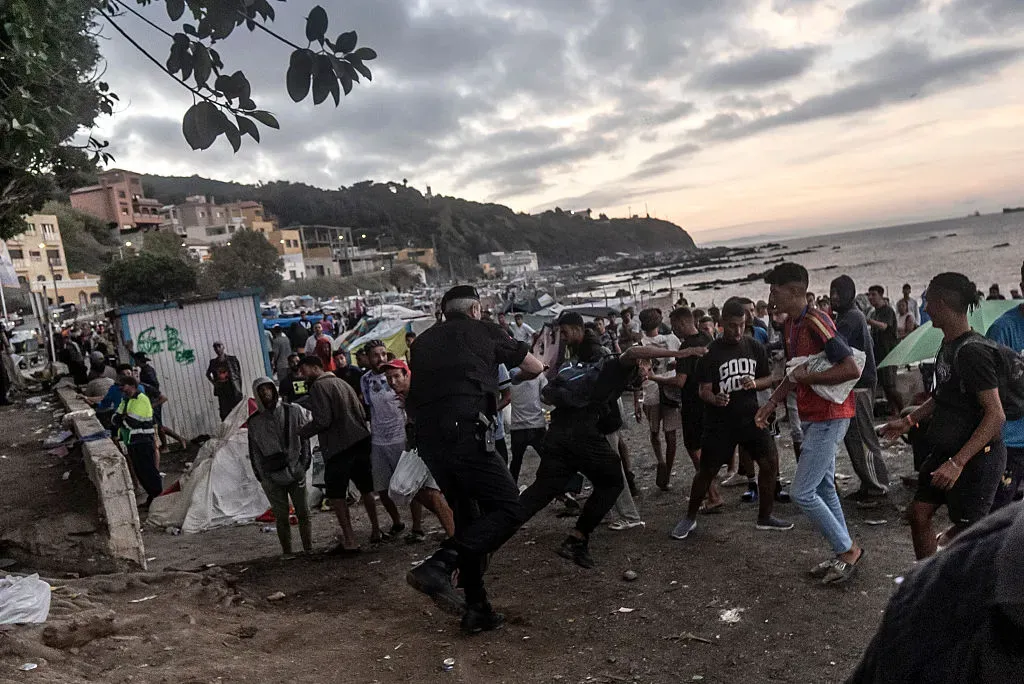
Recent calls for a mass crossing into Ceuta, a Spanish enclave located on Morocco's Mediterranean coast, have surged across Moroccan social media platforms. Posts encouraging migrants to rush the border this Saturday have proliferated, prompting an investigation by RFI that discovered these messages were driven by false rumors, dubious accounts, and indications of artificial amplification. This campaign gained momentum shortly after a significant influx of over 70,000 individuals entered Ceuta illegally, marking one of the most severe migration crises in the region's history, during which more than 141 lives were tragically lost, according to statements from Moroccan NGOs.
In light of the escalating situation, authorities on both sides of the border are taking these new calls for a mass crossing seriously. Morocco has bolstered its security measures around Ceuta and the adjacent enclave of Melilla, while Spain has tightened border controls. This response reflects a growing concern that mobilization on social media could lead to real-world consequences, echoing the dramatic events of late July.
The latest campaign began circulating on platforms such as Instagram and Facebook on July 30, while thousands of predominantly Moroccan migrants were still attempting to make their way to Ceuta. Posts advocating for a new crossing on August 15 emerged even before the previous crisis had fully subsided. Central to this campaign was a false assertion that the Ceuta border would exceptionally open for the public holiday in Spain, leading to widespread views and encouraging potential migrants to gather around that specific date. In a response to these rumors, Spain's Guardia Civil took to Instagram to clarify, stating, "The border with Spain is closed and it will not open. New security barriers have been installed. If you cross them, you will be sent back. Don't be fooled."
RFI's investigation revealed a complex web of fake accounts instrumental in spreading these rumors. Approximately ten suspicious Instagram accounts actively promoted the misinformation, most of which were newly created, exhibiting generic profiles, minimal followers, and limited activity outside of posts related to the planned crossing. Some videos associated with the campaign garnered millions of views, implying an orchestrated effort to amplify the movement, although the investigation could not ascertain the origin of this manipulation. In a further attempt to exploit social media algorithms, various videos featured captions in Japanese, seemingly copied from unrelated viral posts, to enhance visibility.
The campaign's reach extended to genuine accounts, including those with substantial followings, and even included offers from influencers promising free bus rides to the Spanish border for those who subscribed to their channels. The impacts of this campaign have already been felt on the ground, particularly in Fnideq, the Moroccan town bordering Ceuta. Security forces have been deployed extensively along roads leading to the border, with police trucks, armored vehicles, and numerous officers stationed at the Tarajal crossing—the same route used by thousands during the late July surge. Roadblocks have been established between Tangier and Fnideq, with authorities closely monitoring buses and shared taxis for potential migrants, resulting in a noticeable change in the atmosphere of the region.
Despite the significant online mobilization, RFI's journalists discovered that the reality of the situation was far more complex. By participating in various private WhatsApp groups linked to the viral posts, they found that the largest group had nearly 800 members, a stark contrast to the over 20 million views that the crossing posts received. Many members expressed curiosity about the situation without any genuine intention of attempting the perilous journey, with some opting to remain “warm at home.” Experts suggest that the popularity of these messages stems from deeper social and economic frustrations afflicting Moroccan youth, who increasingly feel marginalized from opportunities for a better future. Although Morocco's economy experienced growth of 4.9 percent in 2025, many young individuals feel disconnected from this progress.
In conclusion, the unfolding events surrounding the calls for mass migration into Ceuta reveal significant underlying issues that transcend mere security concerns. Experts argue that the social crisis in Morocco, exacerbated by high youth unemployment rates and limited prospects, drives individuals to seek better lives in Europe. As the situation evolves, it is anticipated that similar online campaigns will persist, regardless of the effectiveness of border controls. This trend reflects not only the challenges of migration policy but also the profound human desire for dignity and a brighter future.
As reported by rfi.fr.