
Recently, I found myself bedridden with a nondescript virus, the kind that doesn’t require hospitalization or invoke sympathy from friends, yet renders you utterly incapacitated. The experience was far from heroic; my days were spent alternating between fitful sleep and brief stints of consciousness, during which I would gulp down some water or take a paracetamol before sinking back into an oblivion reminiscent of a forgotten croquette on a couch. It was on a Sunday morning that I finally felt slightly better, only to make the grave mistake of checking the news.
What I discovered was staggering: approximately 50,000 individuals had crossed into Ceuta from Morocco, both by land and sea. This was no trivial number in a city with a population of just over 80,000. The situation had overwhelmed the Civil Guard, resulting in over 70 reported fatalities. By the time I woke up to this reality, more than 48,000 of those who had entered had already returned to Morocco. The entire episode transpired with the shocking speed of a nightmare, where a house fills with uninvited guests, the door mysteriously flung open, only for the chaos to dissipate just as quickly, leaving a disheveled living room in its wake.
In my effort to grasp the unfolding events, I found the explanations muddled and perplexing, akin to my feverish dreams. Some labeled it an invasion, while others insisted it was a humanitarian crisis. There were whispers of mafias involved, and a peculiar concern among some commentators about ensuring that no one spoke ill of Morocco—a supposed 'brotherly nation,' a reliable partner, and a politically aligned relative that we are expected to embrace, even when they push through our door with 50,000 people in tow, while Interior Minister Marlaska urges us not to overreact.
A Faux Security Barrier
Marlaska was adamant that Morocco posed no threat to Ceuta or Spain, branding it as an "absolutely reliable" partner. This must be a new definition of reliability that has yet to make its way into the lexicon of the Royal Spanish Academy. It’s akin to a friend abandoning you on the roadside with your bag, only to return later to help you search for it.
I soon learned that the Civil Guard was erecting a 500-meter floating barrier in the waters off Tarajal. This structure, designed with inflatable buoys, would create a visible and submerged barrier to deter crossings. Essentially, it resembled a high-security pool noodle. One cannot help but chuckle at the thought that a person brave enough to plunge into the sea at night, swim for hours, and risk their life to reach Spain would see a floating tube and think, "This is where my journey ends, Ahmed; let’s not get reckless."
At this point, I began to question whether I had truly been ill for just three days or had instead been in a coma for several years. Perhaps I had missed a war, a regime change, the annexation of Ceuta by Morocco, the resignation of the government, or the construction of a national border made out of aquagym materials. I needed a temporal reference, something to assure me that it was still August 2026 and that I hadn’t awoken in a dystopian sequel to _Mad Max_, produced by RTVE. I turned on the television, and there it was—the same old chatter about Ayuso and her penthouse.
Relief washed over me. While it wasn’t a definitive sign of normalcy—after all, some media outlets could continue to discuss Ayuso and her penthouse for decades, even if she were residing in a retirement home and the penthouse had become a museum of democratic memory—it was at least a familiar landscape. The same faces, the same gestures of shock, and the same individuals explaining for the umpteenth time that this time, for sure, the President of Madrid was finished.
Sánchez: The TikTok President
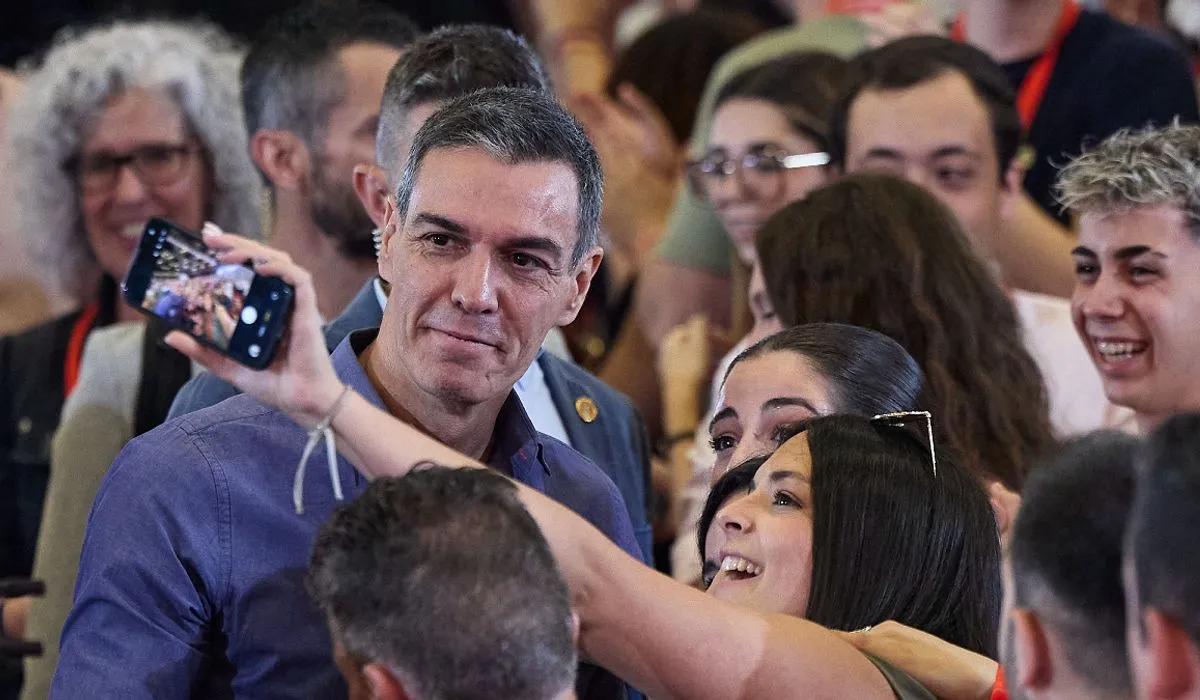
I needed to check in on what Pedro Sánchez was up to. I turned to TikTok, that indispensable tool for gauging the state of the nation, and there he was—our presidential Adonis lounging on a white sofa in Moncloa, recommending his playlist for the summer. While tens of thousands had flooded into Ceuta, and Europe was convening an emergency meeting, the president deemed it the perfect moment to share his musical preferences for the holidays.
Among his recommendations were songs by Quevedo, Charli XCX, and Melani—a rather eclectic selection, as he described with that signature smile that suggests he’s pleased with something the rest of us are oblivious to. One might find it unsettling to see a middle-aged man recommending songs for teenagers. However, I found solace in the realization that Sánchez was behaving exactly as he always has: posing as if he were governing someone else, speaking as though he had just arrived, and acting like the social media manager of his own persona. Nothing had really changed.
Then, an unsettling thought crossed my mind: perhaps it would have been better to have genuinely been in a coma and awaken five years later. The notion was fleeting, but the fear lingered. Imagine waking up in 2031, peering out the window to see neighbors in burqas, while Pedro Sánchez, clad in a tracksuit and broadcasting from the Moncloa Palace, recommends the latest summer reggaeton in celebration of Morocco remaining our most reliable partner. I took another paracetamol, but this time it wasn’t for the virus.
As reported by vozpopuli.com.