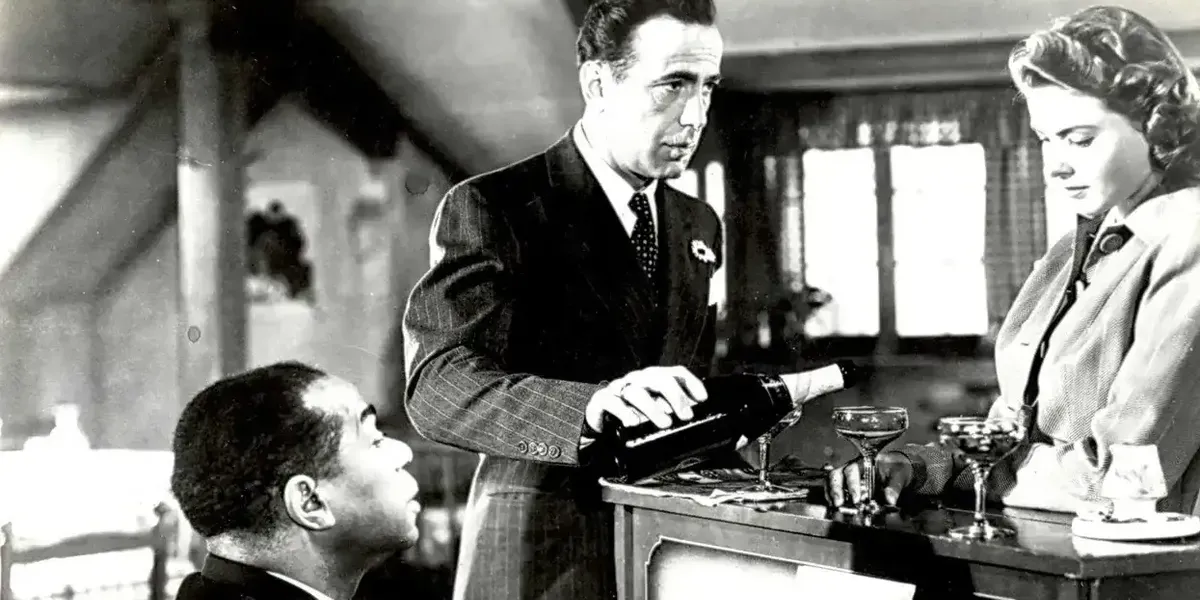

In a recent discussion about the iconic film _Casablanca_, I playfully referenced one of its most famous lines, "Play it again, Sam." This was a cheeky move to see how many readers would write in to correct me, and I must commend the astute readers for their insightful feedback. However, for the broader audience, it's essential to clarify a long-standing misconception: Rick Blaine, played by Humphrey Bogart, never actually utters that line in the film. This revelation opens the door to a deeper understanding of one of the most misquoted lines in cinematic history.
To delve into this topic, we must first examine the scene that gave rise to the misquote. _Casablanca_ is widely regarded as one of the greatest films ever made, featuring a screenplay penned by Julius J. Epstein, Philip G. Epstein, and Howard Koch, who crafted it in real-time on set. The film is a treasure trove of memorable quotes, which makes the frequent misremembering of one particular line all the more fascinating. The pivotal moment occurs within the walls of Rick’s Café, where Rick grapples with his emotions as his former lover, Ilsa Lund (Ingrid Bergman), unexpectedly reenters his life alongside her husband, whom Rick believed to be deceased.
In this emotionally charged scene, Ilsa approaches Sam, the café's pianist, seeking comfort in the form of a song. She requests, "Play it once, Sam. For old times' sake," followed by a direct plea, "Play 'As Time Goes By.'" This request is later juxtaposed with a more aggressive demand from Rick, who, in a drunken state, insists, "You played it for her, you can play it for me! ... If she can stand it, I can! Play it!" This contrast between the two characters’ requests emphasizes their differing emotional states and the undercurrents of longing and heartbreak.
The phrase "Play it again, Sam" likely emerged from the cultural zeitgeist surrounding _Casablanca_. During the film's initial release, home video technology was nonexistent, making it difficult for audiences to revisit the movie. As a result, people relied on memory and word of mouth to discuss the film's iconic moments. The phrase was solidified in pop culture when Woody Allen used it as the title for his 1972 film, further embedding it into the public consciousness.
For screenwriters and storytellers, the lesson from _Casablanca_ is profound. The movie's script showcases the power of subtext, allowing audiences to connect emotionally with characters without overt expressions of their feelings. When Ilsa gently requests the song, it carries a sense of nostalgia and melancholy, while Rick's later demand transforms into a raw expression of pain and anger. This duality exemplifies the complexity of human emotion that writers should strive to capture in their work.
As you craft your narratives, consider allowing your characters to communicate around their emotional wounds, using symbols like music to express their feelings indirectly. The economy of language can also heighten dramatic tension; a simple phrase like "Play it" can resonate more deeply than a longer, more explicit request. Lastly, tracking the shifting dynamics between characters through repetition can enrich your storytelling, as seen in the contrasting requests made by Ilsa and Rick.
In conclusion, _Casablanca_ continues to be a foundational piece of cinema, resonating with audiences for over eighty years. As long as viewers experience love and loss, the film's enduring legacy will persist, and I hope that future generations will remember its iconic lines accurately.
As reported by nofilmschool.com.