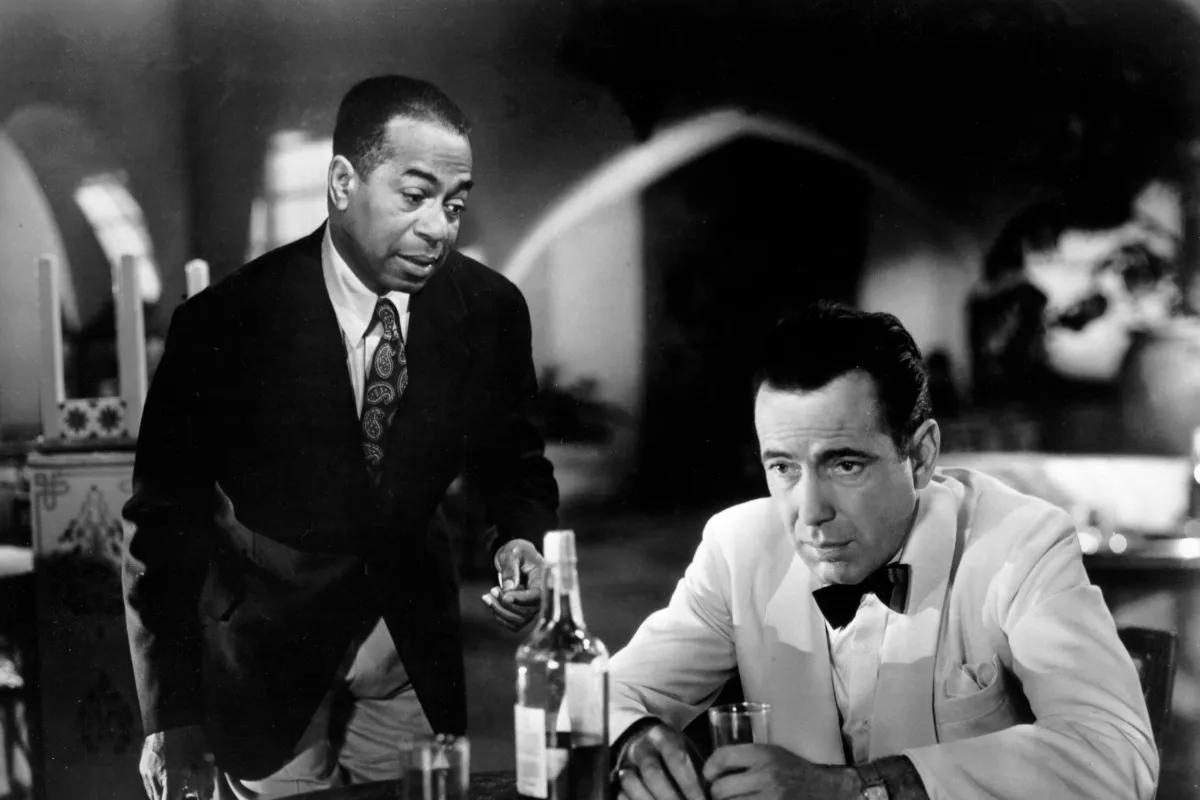
Casablanca, a cinematic masterpiece beloved by audiences, is often remembered for its iconic lines, yet few are aware of the tumultuous journey that shaped its creation. The film did not seamlessly glide into its status as a classic; rather, it was a chaotic process characterized by improvisation and rapid changes that ultimately redefined the relationships and motivations of its characters. At the core of this legendary film lies a script born from the unproduced play Everybody Comes to Rick's, crafted by Howard Koch and the Epstein brothers under the direction of Michael Curtiz. This chaotic production even left Ingrid Bergman, one of its leading stars, uncertain about her character's emotional trajectory. A last-minute decision by Warner Bros. steered the narrative toward a theme of duty over personal desire, solidifying the film's moral compass and creating lines that have remained etched in popular culture.
The Complicated Origins of Casablanca
Hollywood often embellishes its legends, but the actual backstory of Casablanca is much more complex and insightful. How did a half-finished script, shuffled between various departments, evolve into a timeless classic that continues to evoke powerful responses? The answer can be found at the intersection of chance, craftsmanship, and the urgent backdrop of wartime, where uncertainty led to bold choices and every scene felt like a gamble made under pressure. Initially, the narrative existed as a stage play by Murray Burnett and Joan Alison, which was never produced and later sold to Warner Bros. for a mere $20,000. This seemingly mundane transaction concealed immense potential, and with the studio's machinery in full swing, this unproduced script transformed into the raw material for something extraordinary.
Production Challenges and Creative Ingenuity
The journey from stage to screen was anything but smooth. Warner Bros. enlisted Howard Koch and the Epstein brothers to revamp the material, resulting in rapid revisions of scenes and character arcs, as documented by studio memos from that period. Filming began without a definitive ending, meaning the actors had to navigate their roles amidst a cloud of uncertainty. This atmosphere of unpredictability permeated the set, with Ingrid Bergman herself questioning the true feelings of her character, Ilsa, during a pivotal romantic scene. The answers she received from director Michael Curtiz varied day by day, leading to a dynamic where, at one moment, Rick's (played by Humphrey Bogart) charisma was emphasized, while at another, Victor's (played by Paul Henreid) gravitas took center stage. This evolution of character dynamics fostered a sense of authentic uncertainty, enhancing the performances.
Curtiz, operating on instinct, encouraged creative exploration, allowing for late-stage rewrites that could withstand the pressures of production. He provided Bergman with conflicting directions regarding her interactions with both Rick and Victor, as if testing which emotional response resonated most truthfully. This method of writing the film as it was being shot positioned the camera as both a witness and an editor. Screenwriter Casey Robinson proposed alternative endings, including one where Victor was killed to favor a romantic resolution; however, the studio ultimately opted for a narrative grounded in moral obligation rather than personal satisfaction, culminating in Rick's decision to send Ilsa onto the departing plane. This profound choice elevated the film from a mere thriller to a parable of sacrifice, perfectly aligned with the sentiments of audiences in 1942, during a time of global conflict.
Casablanca premiered in 1942 and quickly cemented its legendary status, fueled by a captivating blend of Bogart’s weary charm, Bergman’s poignant longing, and unforgettable lines like “Here’s looking at you, kid,” and “the beginning of a beautiful friendship.” The production's inherent chaos did not undermine its success; instead, it invigorated the film's narrative depth. The moral ambiguity reflected the anxieties of the time, while the performances, shaped by uncertainty rather than formulaic approaches, added to its authenticity. This collage-like script continues to resonate, as each scene seamlessly connects to the next.
Decades later, the film's legacy remains untainted by remakes or serious reinterpretations. Its carefully crafted ending established the overall tone, proving that clarity, even when reached at the last moment, can be timeless, as later retrospectives have noted. While some films are merely outlined, Casablanca was a discovery, unfolding one audacious page at a time.
As reported by 3dvf.com.