
In the heart of Ceuta, Halima Ahmed, a representative of the small Muslim charity "Luna Blanca," articulates the dire needs of the community: "What is most lacking are food and water." This organization is tirelessly preparing up to 5,000 meals daily for individuals who have found themselves homeless, wandering the streets for over a week. To specifically address the needs of women with small children, the NGO has set up a tent near the prominent mosque, offering a safe space for those struggling to find shelter. Ahmed estimates that between 1,000 to 1,500 children and teenagers have migrated from Morocco, many of whom remain without a roof over their heads as local authorities are only now beginning to prepare school buildings to accommodate them, as she explained in a phone interview with the F.A.Z.
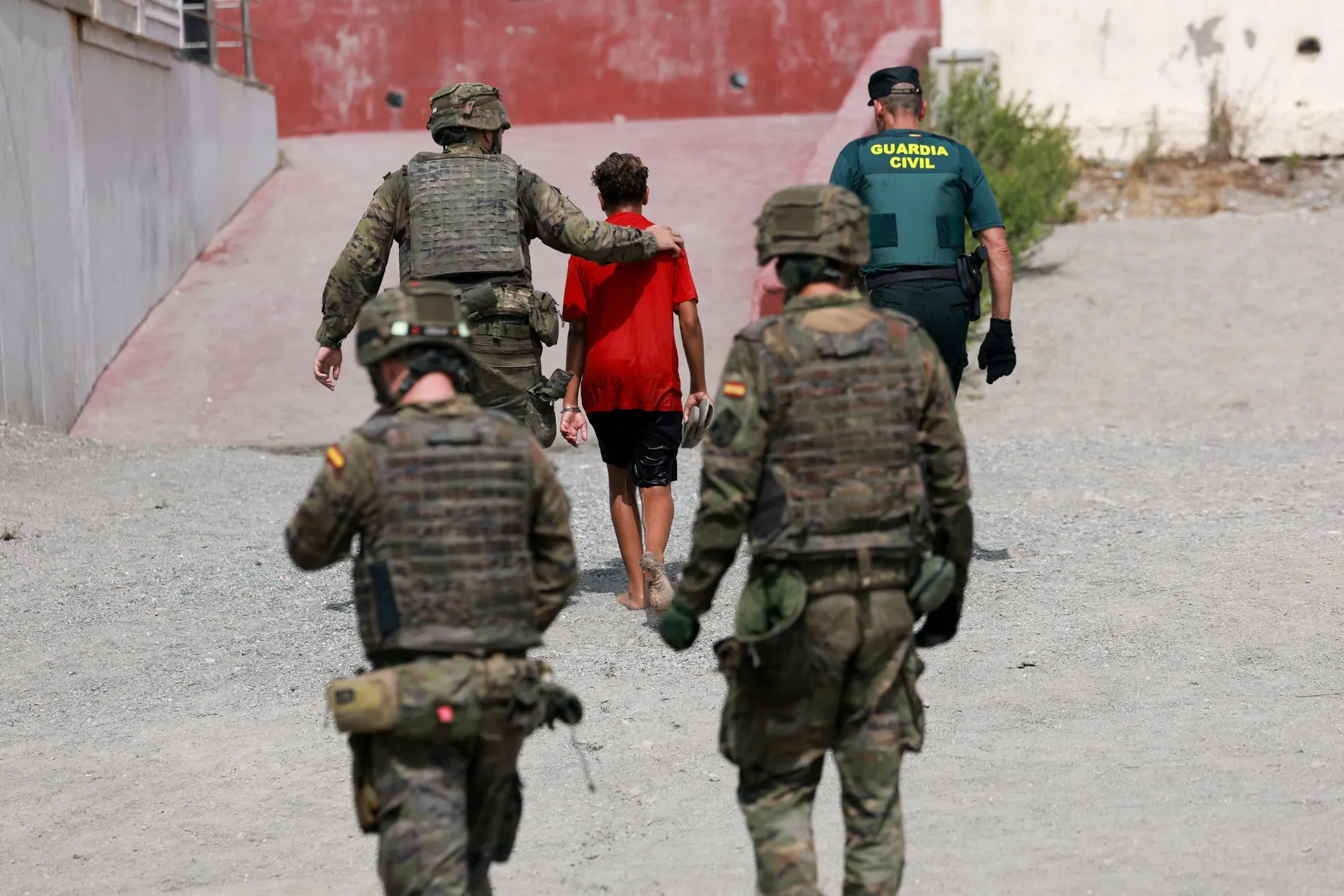
The situation is escalating alarmingly, prompting the regional president of Ceuta, Juan Jesús Vivas, to issue repeated emergency calls. He describes the condition of approximately 1,100 unaccompanied minors from Morocco as "unsustainable." The conservative politician has sought solidarity from mainland Spain, informing King Felipe VI directly about the crisis impacting this city of 84,000 inhabitants, which typically has only 29 spots available for unaccompanied minors.
In response to the ongoing humanitarian emergency, the left-leaning minority government has pledged €25 million for the care of these children and adolescents, with the aim of relocating them to the mainland, a mere 14 kilometers across the Strait of Gibraltar. However, this is where the political complications begin. The region of Andalusia, facing Ceuta across the strait, is currently governed by a coalition of the conservative PP and the right-wing populist Vox party, who only recently formed their alliance.
The Stance of Vox on Minors
Vox has stipulated that no unaccompanied minors will be accepted into Andalusia, despite a decree from the central government that mandates their redistribution, which will not take effect until 2025. This firm stance against receiving unaccompanied minors is echoed in coalition agreements across other regions like Aragón, Castilla-León, and Extremadura, where Vox has recently partnered with the PP.
The political landscape around the treatment of these minors is fraught with tension. Last summer, the regional governments of Vox and PP faced conflicts regarding the handling of these young migrants, colloquially referred to in Spain as "Menas." The PP leadership in Madrid has stated their commitment to adhering to the law, despite reservations about the redistribution mechanism. However, if the PP decides to act against this, it risks leaving the PP leader in Ceuta isolated.
The Challenge of Relocation and Ongoing Crisis
The solidarity that Spain's government requests from the EU in this refugee crisis is noticeably limited within its own borders. For instance, Isabel Díaz Ayuso, the PP regional president, refused to accept additional minors in Madrid, which is the most economically prosperous region in Spain. Previously, the regional governments were solely responsible for unaccompanied minors arriving in their territories, while adult migrants were typically transported to the mainland quickly, where authorities often left them to fend for themselves. A staggering number of about 6,000 minors were stranded in the Canary Islands and in Ceuta and Melilla at times, especially during the mass migration of tens of thousands of migrants via boat in 2023 and 2024.
As of now, the number of unaccompanied minors in Ceuta has decreased to around 2,700, yet this figure still exceeds the legally established maximum capacity for care. The new redistribution process requires time, and reports indicate that only approximately 1,700 unaccompanied minors were successfully relocated to the Spanish mainland last year. This is not the first emergency of its kind for Ceuta; residents and aid workers recall the events of May 17, 2021, when Moroccan border police abruptly ceased operations, allowing a massive influx of over 8,000 Moroccans, including around 1,000 children and adolescents, to enter Ceuta.
Even during calmer periods, unaccompanied minors continue to arrive from Morocco, often finding themselves homeless initially, living on the streets near supermarkets by the port. Many attempt to cling to the undersides of trucks under the cover of darkness, waiting for an opportunity to cross to the other side of the Strait of Gibraltar. The port's fence has been heightened, and surveillance systems installed to combat this issue. Aid workers recount harrowing stories of young boys rummaging through garbage destined for incineration in Spain, while others have attempted to scale the ropes of ships. Tragically, many do not survive the perilous journey. If no family members can be identified in Morocco, these children may find their final resting place in nameless graves in the Muslim cemetery beneath the grand mosque.
As reported by faz.net.