
The narrative surrounding Israel has increasingly been clouded by a dangerous misconception that portrays it as merely a white European colonial entity. This flawed perception, perpetuated in universities, media outlets, activist groups, and diplomatic discussions, not only distorts historical truths but also disregards the profound connection the Jewish people have with Zion. It glosses over the historical suffering of Jews who have faced expulsion and persecution throughout the world. However, Israel, too, has made significant missteps by failing to present the full spectrum of Jewish identity and experience to the international community.
One must question the absence of Ethiopian Israelis in Israel's international media strategy. Where are the voices of black Zionists on prominent platforms like CNN, Fox News, the BBC, and other major English-speaking Israeli outlets? Why aren’t Ethiopian Jews, along with Mizrahi, Yemenite, Moroccan, Persian, and Indian Jews, represented in high-level diplomatic discussions, government delegations, and public diplomacy efforts? If the global narrative falsely depicts Israel as a colonial project, it is imperative for Israel to elevate these diverse Jewish identities to counter such misconceptions. This is not just about enhancing diversity; it is about affirming the truth of Jewish history.
Ethiopian Jews: A Testament to Zionism
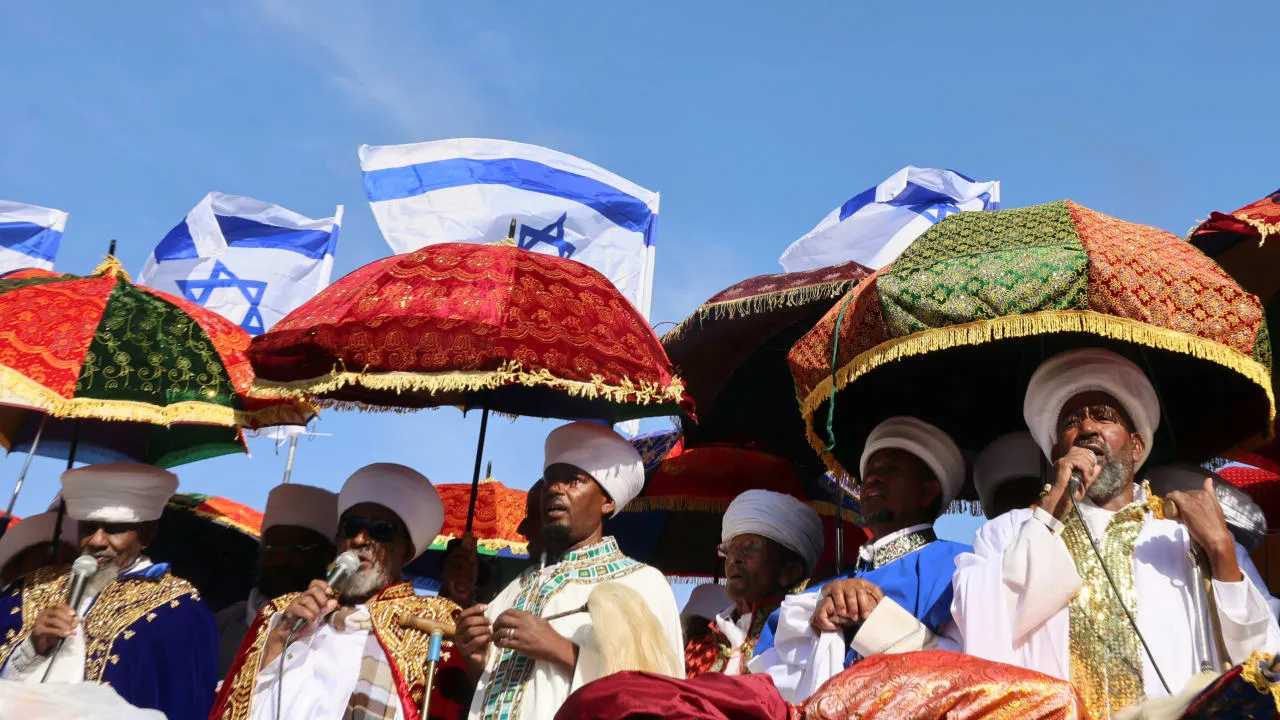
Ethiopian Jews embody the very essence of Zionism, providing irrefutable evidence that it is not merely a European construct. Our existence and heritage affirm that the Jewish people are ancient and indigenous to Jerusalem, transcending race, geography, and language. For generations, Ethiopian Jews have yearned for Zion, preserving our Jewish identity in Africa amidst isolation and longing. Our prayers, memories, and faith have kept the dream of Jerusalem alive within us.
The colonial narrative against Israel falters in the face of the Ethiopian Jewish experience. It fails to explain the countless black African Jews who traversed deserts and sacrificed everything in pursuit of their ancestral home. This narrative also cannot justify the stories of Moroccan, Iraqi, Yemenite, Persian, Kurdish, and Indian Jews who returned to their roots after enduring centuries of exile and persecution. The Jewish identity is not monolithic; it is a tapestry woven from diverse colors, histories, and experiences. Israel cannot be viewed as a mere transplant of Europe into the Middle East, as it is the national home for a diverse people returning from all corners of the globe.
Unfortunately, the representation of this truth is lacking. When Israel communicates with the world, it often promotes a narrow image, characterized by familiar voices and established political circles. While these individuals are undoubtedly skilled and patriotic, they do not encapsulate the entirety of Israel's identity. Our adversaries are adept at manipulating imagery and narratives, portraying Israel as foreign and disconnected from its Middle Eastern roots, effectively undermining its legitimacy among various demographics, including youth, minorities, and undecided audiences.
Rethinking Israel's Global Representation
As an Ethiopian Israeli, I am weary of being relegated to the role of a symbol rather than being recognized as a strategist. Ethiopian Jews are often celebrated as part of Israel's emotional narratives, which, while genuine, do not encompass our full identity. We are soldiers, parents, students, writers, activists, and citizens, and we seek to be included in Israel's national discourse not as charity, but as integral contributors to its future.
The emergence of the Yashar party and its leader, Gadi Eisenkot, offers a glimmer of hope for a more inclusive Israeli leadership. Eisenkot, of North African Moroccan Jewish descent, symbolizes a future where leadership is not confined to a singular elite. His potential rise to the position of prime minister would signify that minority backgrounds can enhance national leadership rather than hinder it.
The principles of responsibility, service, unity, and trust put forth by Yashar are vital. However, this unity must manifest in tangible leadership. A governing party should reflect the diverse Israeli story in its Knesset representation, diplomatic strategies, and decision-making processes. It is crucial for Israel to showcase individuals like black Ethiopian Israelis in roles such as international diplomatic experts, strategic advisors on significant agreements, or senior figures in public diplomacy.
Israel has previously relied on prominent figures to shape its diplomatic landscape, and it is time to extend that trust to Ethiopian Israelis and other minority Jewish leaders. We do not belong solely in narratives of rescue; our place is firmly within Israel's strategic planning. The inclusion of diverse voices is not merely a moral imperative; it is a strategic necessity. Black Ethiopian Israelis can connect with audiences that might overlook traditional spokespeople, while Mizrahi Jews can emphasize the profound historical ties of Jewish communities in the Middle East and North Africa to Zionism. This collective representation can effectively convey the truth: that the Jewish people are indigenous to the Land of Israel and are the original inhabitants of this region.
It is essential for the next Israeli government to recognize this reality. A party advocating for national unity must embrace the full spectrum of its citizenry. To restore Israel's standing on the international stage, it must uplift voices that carry moral weight, not as mere tokens, but as leaders. Allow Ethiopian Jews to articulate their narratives. Empower black Zionists to take charge. Let the authentic representation of Israel dispel the falsehoods surrounding it.
As reported by jpost.com.