
The Evolution of Morocco's Automotive Sector
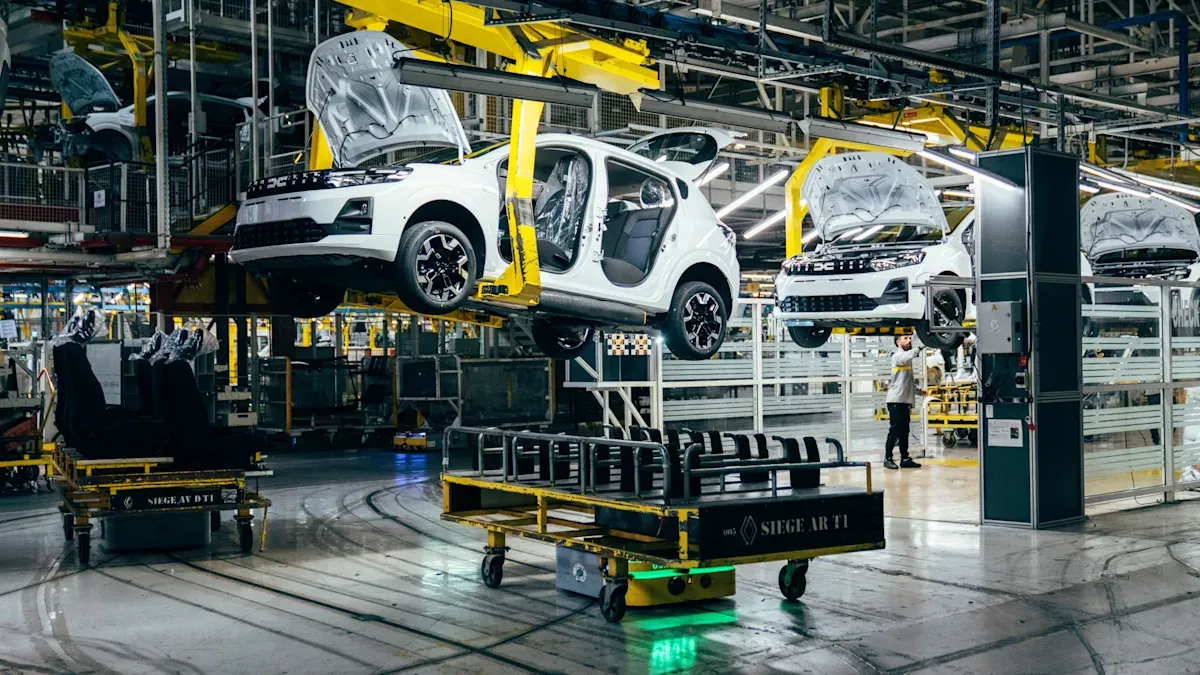
In stark contrast to the recent challenges faced by Morocco's national football team in the World Cup against France, the kingdom's automotive industry is experiencing a remarkable transformation, fueled by its historical ties with the former colonial power. The Moroccan automotive sector is rapidly emerging as a significant player in the global market, supported by substantial investments from French automotive manufacturers. The production facility near Tangier serves as a testament to this progress, where vehicles roll off the assembly line at an impressive pace. Notably, the Dacia Sandero has become a popular model, not just within Morocco but across a total of 63 markets worldwide, as Renault capitalizes on the kingdom's strategic position to enhance its supply chain efficiency.
With the automotive assembly plant located strategically close to the Mediterranean Sea, transportation logistics are greatly optimized. The factory's dedicated rail line facilitates the swift movement of finished vehicles to the port, enabling them to reach Spain in just a short distance and Rotterdam in a mere three days. This advantageous location positions Morocco as a crucial hub for automotive exports, which predominantly flow to European markets, especially Germany, Italy, and France.
Strategic Investments and Future Prospects
Morocco's automotive industry has flourished over the past decade, thanks to a well-coordinated effort between the government and private sectors, leading to the establishment of several free trade zones. These zones offer significant tax benefits for both imports and exports, alongside enhanced infrastructural support, such as the rail link to the port. Furthermore, Morocco boasts a relatively young population, providing a skilled workforce for the burgeoning industry. Since the inception of the industrial project in the early 2010s, approximately 220,000 new jobs have been created, and the sector is now capable of producing around one million vehicles annually.
As the second-largest production site for the Renault Group, trailing only France, Morocco has become integral to the company’s global strategy. The automotive plant in Tangier alone employs about 6,000 workers around the clock, with an additional 54,000 jobs indirectly reliant on its operations. The majority of the vehicles produced, predominantly Dacia models, are earmarked for export, establishing Morocco as Africa's largest automotive manufacturing hub. However, the challenge remains for the kingdom to enhance local value creation, aiming to increase from the current 66% to 76% by 2030. This ambition coincides with Morocco's co-hosting of the FIFA World Cup, symbolizing its aspirations on both the global automotive stage and the sports arena.
As reported by welt.de.