
The Essence of Water in Marrakech's Gardens
Marrakech, a city that thrives with vibrant energy, is characterized by its bustling markets where vendors passionately hawk their wares amidst the aromatic allure of spices. The medina's narrow alleyways witness the gentle rumble of donkey carts, yet this semi-arid oasis is also renowned for its verdant gardens that provide a much-needed respite from the sweltering summer heat, where temperatures can soar to a scorching 37°C. Central to the sustenance of these lush landscapes is a precious resource: water. Since its inception in the late 11th century, Marrakech has relied on intricate networks of wells and underground irrigation systems known as _khettaras_. These gravity-fed structures, which tap into distant aquifers, have been the lifeblood of the region, enabling agricultural communities to thrive across generations.
These ingenious systems not only sustain the vast palm groves surrounding the city but also nourish the historic Agdal Gardens, created in the mid-12th century. The subterranean water networks have historically supported orchards and monumental reservoirs, which were utilized for various activities, including military training exercises involving swimming and boating drills. However, the past fifty years have seen a decline in both the Agdal Gardens and the once-mighty _khettara_ systems. By the early 2000s, many of these water channels were overwhelmed by excessive drilling and private pumping stations, leading to deterioration from neglect. Indigenous flora suffered as urban expansion encroached upon these vital water sources, resulting in a significant reduction in groundwater levels.
Revitalizing Marrakech's Gardens
In response to this alarming trend, Tom Stuart-Smith, a renowned English landscape architect, took on the challenge of revitalizing a derelict site in Marrakech. Over a decade ago, he was commissioned to transform this space, which was once home to one of the largest riads in the city. His vision for Le Jardin Secret was to narrate a distinctly Moroccan story through the garden's design. The garden is divided into two distinct sections: the Islamic garden, influenced by symbols and plants mentioned in the Qur’an, and the Exotic garden, showcasing plants that thrive in climates akin to Marrakech's. Water is integrated into both sections, playing a crucial role in their aesthetic and ecological balance.
The Islamic garden is designed following the _chahar bagh_, a classical Persian garden layout divided by stone-lined irrigation channels. It incorporates traditional Moroccan elements such as ornate tiles from Fez and Carrara marble, revered for its beauty and purity. Water flows gently through a narrow central rill, culminating in a shallow basin situated before the elegantly tiled Hbiqa pavilion. The irrigation system has been meticulously designed to maintain optimal water levels, ensuring that fountains are activated while also keeping the plants hydrated. In this context, the precision of height plays a critical role; even the slightest variation, such as the central fountain being only four centimeters above the basin, is enough to foster a seamless flow of water. Historical gardens, such as the Saadian El Badi Palace gardens from the 16th century, utilized similar principles, elevating walkways and basins to provide a unique perspective on the flourishing citrus orchards below.
Stuart-Smith's Exotic garden features a diverse array of plants from semi-arid regions across five continents, each selected for its resilience to heat and limited water availability. Succulents are strategically placed close to the ground to minimize moisture loss, while taller grasses and herbs create a layered effect above them. The gardeners at Le Jardin Secret have successfully reduced water usage by half, recognizing that overwatering had led to excessive and unsustainable growth. As Stuart-Smith observes, most Moroccan gardeners come from agricultural backgrounds where yield and growth are paramount, highlighting the deep-rooted connection to the land.
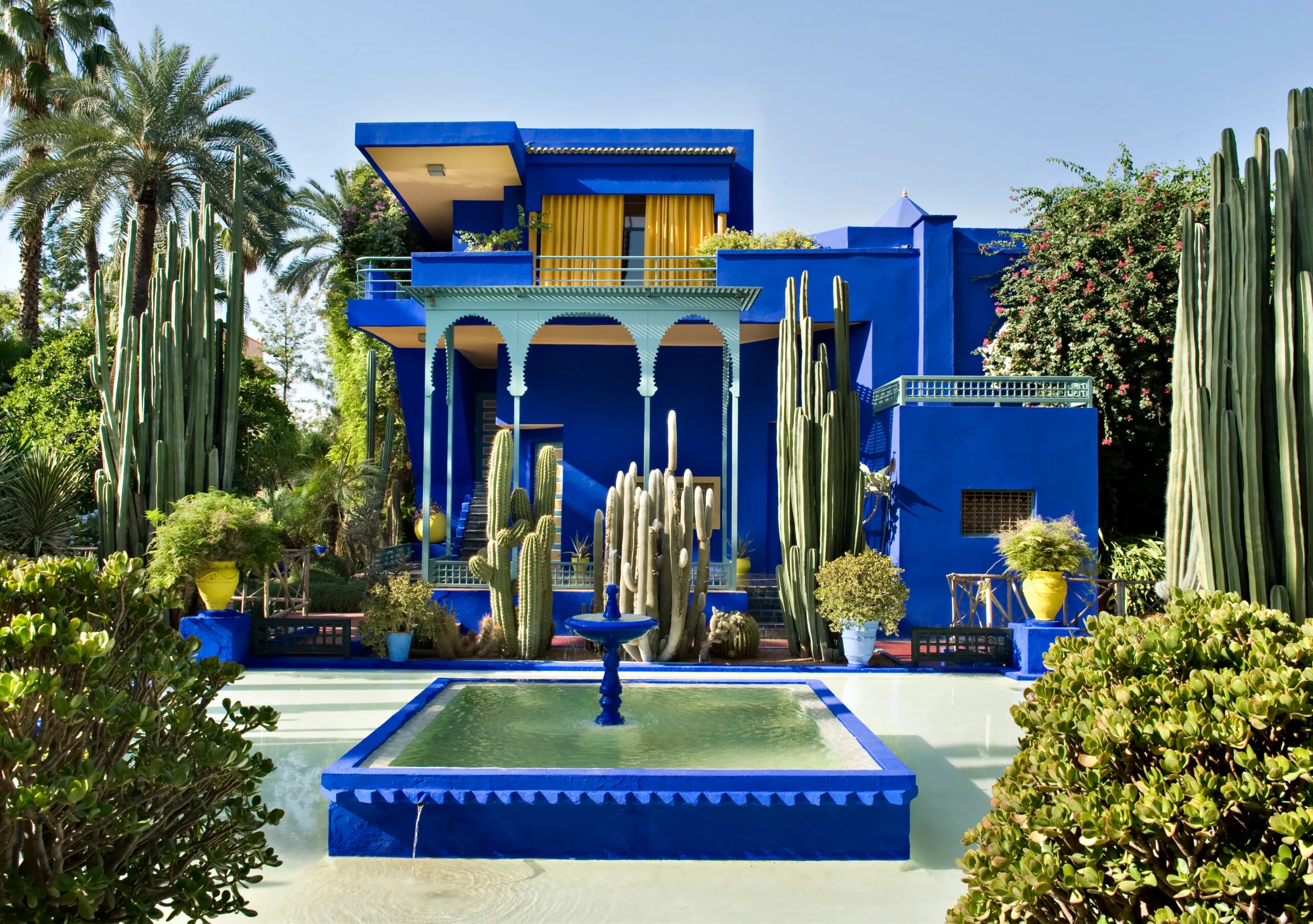
Water's significance extends beyond mere functionality; it embodies cultural and historical narratives as well. As noted by Egyptian architect Hassan Fathy, fountains in hot climates serve as the heart of the home, similar to hearths in colder regions. They are not only practical installations but also sensory experiences that enhance the ambiance of riads. Madison Cox, the garden designer and President of the Fondation Jardin Majorelle, emphasizes the transformative psychological effect of water sounds on visitors. The famed Jardin Majorelle, known as the former residence of Yves Saint Laurent, has recently expanded its water features by nearly 50%, aiming to create a serene oasis that muffles the hustle and bustle of the city beyond its walls.
The iconic 'Majorelle Blue' walls are complemented by tranquil water lily ponds, which were originally introduced in the 1920s. While these lily ponds evoke Claude Monet’s Giverny paintings, they diverge from his naturalistic style, embracing geometric forms reminiscent of traditional Islamic gardens. For decades, the gardens at Le Jardin Majorelle and Villa Oasis relied on traditional flood irrigation, channeling water from the property’s wells to maintain lush lawns. However, in 1996, Cox proposed removing the lawns entirely, recognizing that they often led to rot in surrounding cacti and aloes due to excessive watering. Initially met with resistance, the idea was eventually accepted, underscoring the colonial notions of what constitutes a garden and the intrinsic connection to wealth represented by lush green lawns.
In the gardens of Marrakech, water transcends its physical presence; it serves as a living testament to the city's rich history, traditions, and cultural identity. As the climate shifts and water availability becomes increasingly critical, the verdant gardens behind Marrakech's iconic red walls continue to celebrate the multifaceted significance of water, reminding us of its essential role in sustaining life and heritage.
As reported by arabianbusiness.com.