
In February 2020, President Recep Tayyip Erdoğan of Türkiye made a provocative announcement that would reverberate across Europe: he declared that Türkiye would no longer impede the flow of migrants seeking to cross into Europe, proclaiming, "The gates are now open." This declaration rapidly set into motion a series of events, with Turkish authorities facilitating the transit of thousands of migrants toward the Greek border at Evros. As tensions flared, clashes ensued between migrants and Greek border forces, who were supported by Frontex, leading to injuries and escalating chaos. This incident was not merely a humanitarian crisis; it was a calculated demonstration of political maneuvering. Erdoğan sought to illustrate that he held the reins over Europe’s external borders, turning human migration into a tool for geopolitical leverage. European leaders, wary of acknowledging this reality, found themselves grappling with a difficult truth: their own principles regarding asylum and refugee protection were being weaponized against them by a state that did not share their values. This unsettling dynamic lies at the heart of the discussion surrounding the weaponization of migration.
A Tactic with a History
The concept of 'weaponized migration' often enters discussions of policy but is frequently conflated with irregular migration in general. Understanding the distinction is crucial. Most individuals who cross European borders unlawfully do so due to dire circumstances such as poverty, conflict, or persecution, rather than because of state-sponsored initiatives. Weaponized migration refers to the intentional movement of people by a state to exert pressure on another government or to secure a political advantage. This tactic transforms migrants into instruments of political strategy, rendering them victims of geopolitical gamesmanship. A historical illustration can be found in Cuba under Fidel Castro, who orchestrated migration crises to embarrass various U.S. administrations during the Mariel crisis in 1980 and the rafters crisis in 1994. The implications of this distinction are profound, influencing how governments respond, which legal frameworks apply, and how we assess accountability. Mislabeling weaponized migration as simply a more organized form of irregular migration can result in misguided policies, obscuring the responsibility of the actors involved. The cases of Belarus, Türkiye, and Morocco exemplify this strategic logic, each revealing different facets of Europe’s vulnerabilities.
Exploring Recent Case Studies
The situation in Belarus in 2021 serves as a stark example of weaponized migration. Following the European Union's imposition of sanctions on President Alexander Lukashenko’s regime due to a fraudulent election and subsequent crackdowns on protests, Belarus initiated a systematic strategy to direct migrants toward its borders with Poland, Lithuania, and Latvia. State-controlled airlines marketed flights as tourist packages to individuals from countries like Iraq, Syria, and Afghanistan, facilitating their entry into Belarus with the understanding that they would subsequently attempt to enter the EU. The government utilized border troops to transport these migrants to contested zones, cutting through fencing and providing tools for forced crossings. Tragically, at least 21 migrants lost their lives in the harsh conditions of the forests along the Polish border, highlighting the deadly consequences of such state-led operations.
In contrast, Türkiye’s approach to migration has evolved into a mechanism of reliance, particularly highlighted by the 2016 EU–Türkiye Statement. This agreement obligated Ankara to deter irregular departures from its territory in exchange for substantial financial aid and political concessions from the EU. While initially effective in curbing crossings, it established a dependency that Erdoğan later exploited by signaling his ability to open or close borders at will. This strategic leverage turned migration into a bargaining chip, fundamentally altering the dynamics of EU-Türkiye relations.
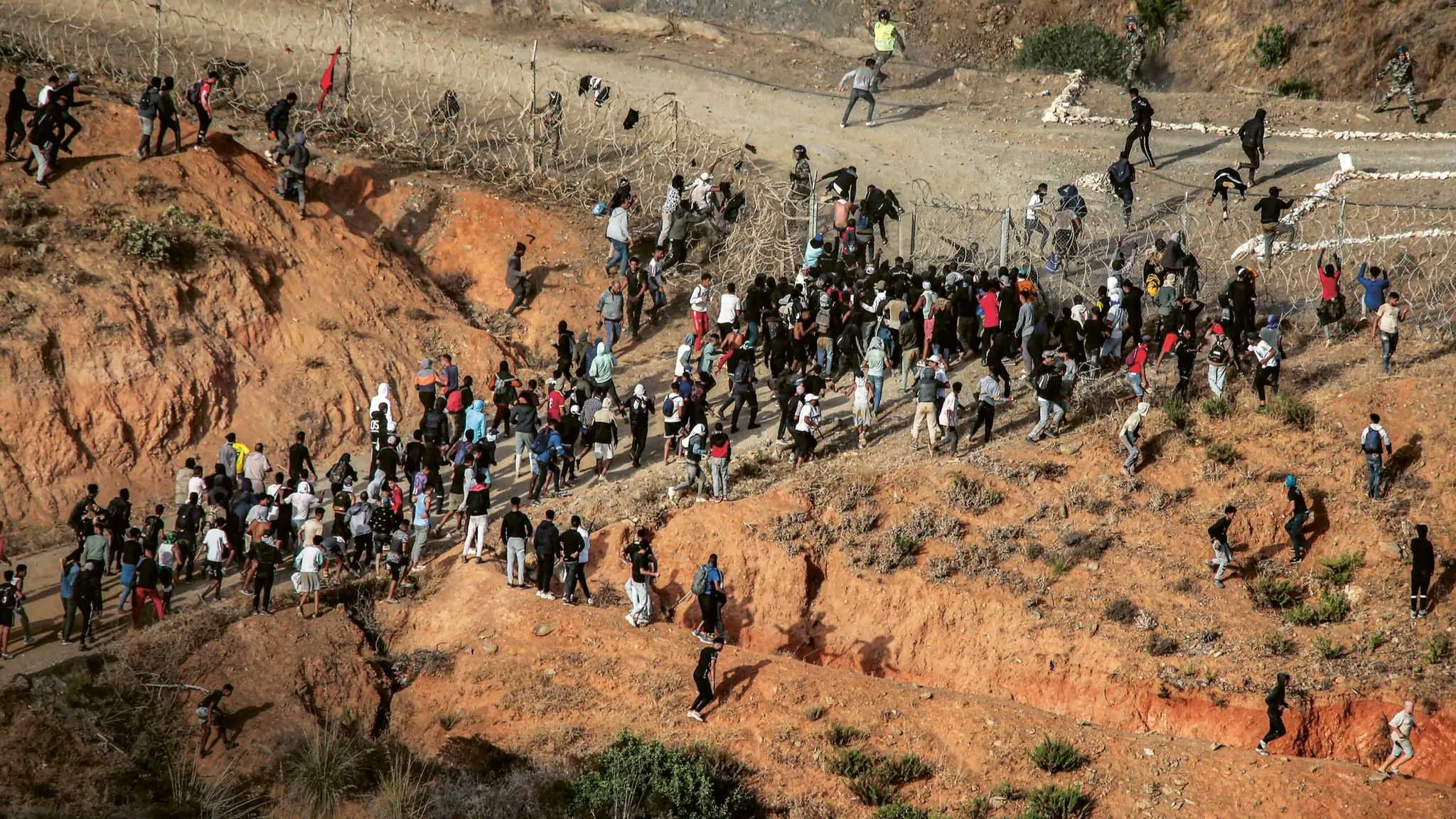
Moreover, Spain's experience with Morocco further exemplifies the weaponization of migration as a diplomatic tool. In May 2021, following Spain's medical assistance to a leader of the Polisario Front, Morocco relaxed its enforcement of border controls near Ceuta, leading to the rapid influx of approximately 10,000 individuals, including many unaccompanied minors. This orchestrated movement was not an accident but rather a deliberate act of political pressure. Subsequently, Spain’s foreign policy underwent a significant shift when Prime Minister Pedro Sánchez endorsed Morocco’s stance on Western Sahara, revealing the extent to which migration can influence diplomatic decisions.
These instances illustrate a broader trend: authoritarian regimes can leverage migration with few constraints, posing challenges for liberal democracies that must navigate complex legal frameworks and public scrutiny. While liberal states strive to uphold humanitarian values, they often find themselves vulnerable to manipulation by states willing to exploit migration for geopolitical gain. As the cases of Belarus, Türkiye, and Morocco indicate, the intersection of migration and political strategy demands careful consideration in shaping future policies.
As reported by hungarianconservative.com.