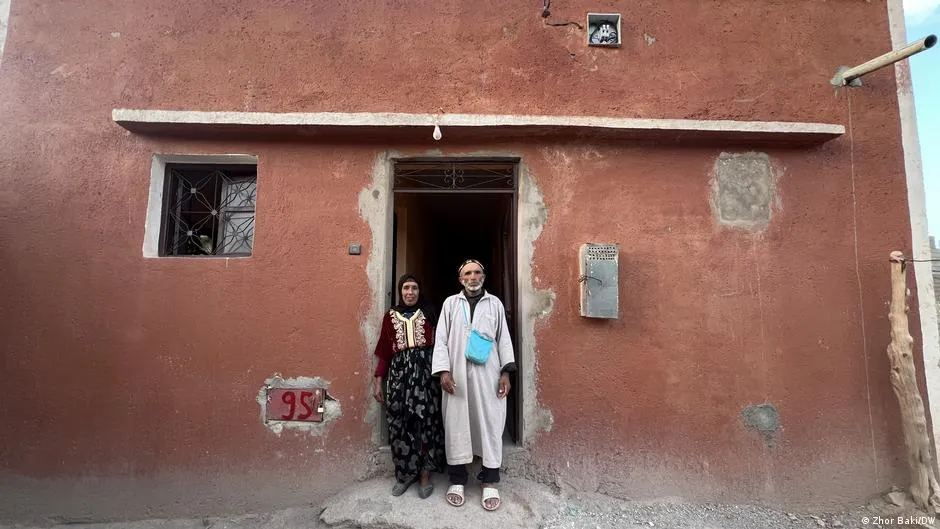

On September 8, 2023, the Al Haouz region of Morocco was struck by a catastrophic earthquake that resulted in the tragic loss of over 2,900 lives and injured more than 5,500 individuals. The seismic event left a trail of destruction throughout the area, particularly affecting local communities. Three years later, the residents of the village of Ighermane, situated approximately 50 kilometers southwest of Marrakech in the High Atlas Mountains, are experiencing a contrasting reality compared to those in neighboring areas. Mohamed Ait Belaid, a 72-year-old resident, shares that he has transitioned from living in a tent to occupying a newly constructed home, albeit smaller than his previous abode, thanks to partial state support amounting to 80,000 dirhams (approximately €7,300) and his own financial contributions totaling around 100,000 dirhams (about €9,110). He expresses gratitude for his new living situation, stating, "I like my new house and I'm comfortable in it. I'm at peace because my wife, my children, and I are all healthy, and I haven't lost any of them."
Conversely, Larbi Ait Jelloulat, also 72, faces a grim reality in Azgour, a town severely impacted by the earthquake. Sitting amid the ruins of what was once his home, he voices his frustration over the lack of support he has received. "I want to know where my rights have gone," he asserts, emphasizing the bureaucratic challenges he has encountered while seeking assistance. Despite being a former council employee who meticulously saved to build his house, Ait Jelloulat now finds himself entangled in a web of red tape that questions his residency status, leaving him feeling marginalized and unheard.
The Spectrum of Reconstruction Efforts
The disparities in recovery experiences between Ighermane and Azgour highlight the complexities involved in post-disaster reconstruction. According to Omar Saeed from the Ighermane Association for Development and Solidarity, approximately 90% of Ighermane has been rebuilt, with many residents returning to a semblance of normalcy. Out of the village's 150 families, 114 have received some form of state support, enabling them to begin the rebuilding process. In stark contrast, Azgour has seen a much slower recovery. Ait Jelloulat reports that only 76 families have received assistance, while 56 others remain in limbo, waiting for help. Compounding the issue, those who managed to rebuild their homes in alternative locations face difficulties accessing essential services such as water and electricity.
As per a March statement from the High Atlas Development Agency (ADHA), which was established to facilitate recovery efforts, a total of 54,425 homes have been constructed or rehabilitated since the earthquake, with over 3,000 homes still under construction. The Moroccan government has allocated more than 7.2 billion dirhams (approximately €656 million or $770 million) to aid affected families. Notably, Marrakech-based architect Mohamed Belmejjad acknowledges the progress made thus far, suggesting that the pace of construction has been commendable given the challenging circumstances faced in the aftermath of the earthquake.
Ongoing Struggles and Calls for Action
Despite the strides made in reconstruction, numerous survivors still report inadequate support. The National Coordination for Al Haouz Earthquake Victims has received complaints from over 3,000 families who feel overlooked by the state. Montasser Itri, a representative of the organization, highlights that some individuals have been deemed ineligible for assistance due to their relocation for work, which affects their residency status on official documents. He criticizes the government's approach, arguing that it reduces the plight of the earthquake victims to mere statistics instead of acknowledging their humanity and struggles.
Local residents, like Fawzia Aliban and Mohamed Belkaid, express their despair over the lack of timely assistance. Aliban, whose home is on the verge of collapse, fears for her safety, while Belkaid has been living in a tent with his four children since the disaster. As the general election approaches, there is a flicker of hope among some residents that their voices may finally be heard, with promises from political figures for solutions to their ongoing struggles. However, skepticism remains, as many feel that the political promises come too little, too late, and question why action was not taken sooner.
As reported by dw.com.