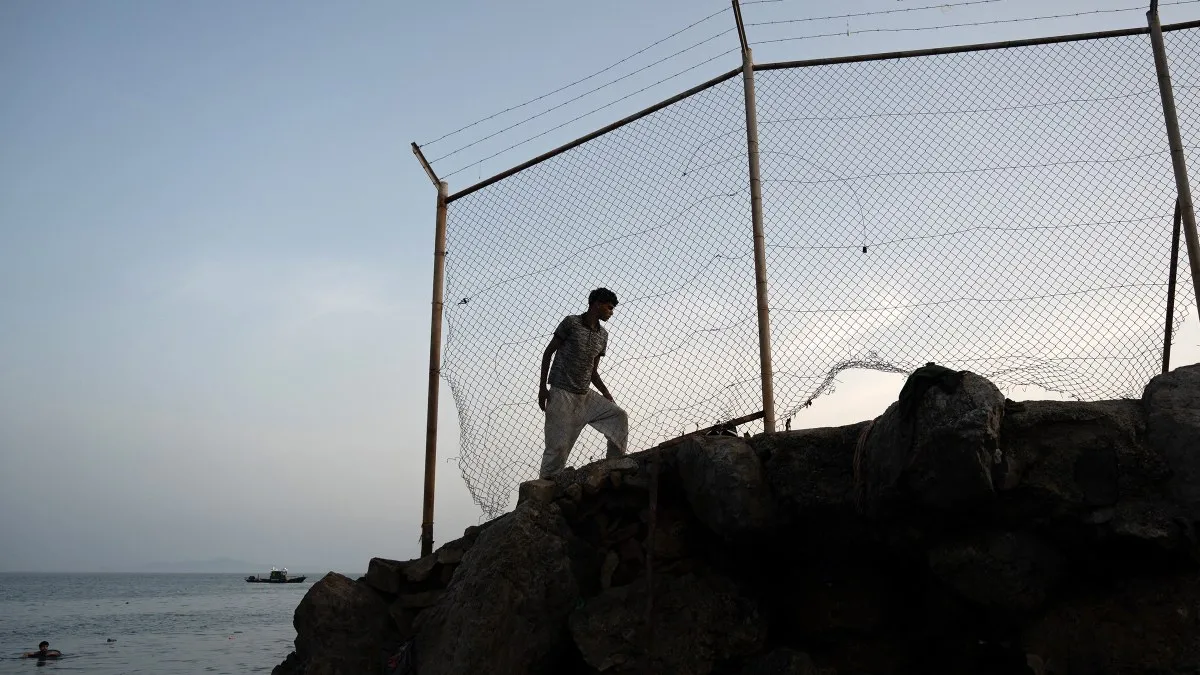

The story of El Azizi, a Moroccan woman who juggled her career as a footballer with working in a cemetery due to insufficient wages, is emblematic of the tragic outcomes faced by many in the ongoing migration crisis. El Azizi is among the at least 141 individuals who lost their lives during the desperate rush to the Spanish enclave of Ceuta. This incident underscores the pressing humanitarian issues at the heart of European migration policy as the EU grapples with the complexities of border control and asylum.
In an effort to manage the influx of migrants, the European Union is currently considering relocating rejected asylum seekers to third countries far beyond its external borders, with Uganda and authoritarian Uzbekistan being discussed as potential destinations. The choice of these countries raises questions about human rights and the EU's commitment to upholding them. The ongoing situation reflects a broader trend in European policy where economic interests often overshadow ethical considerations.
The annexation of Western Sahara by Morocco has further complicated the relationship between Morocco and the EU. To maintain favorable economic ties, Rabat has engaged in extensive lobbying efforts in Brussels, seeking to gain support for its controversial annexation. This political maneuvering illustrates how international relations can be influenced by migration issues, revealing a troubling dynamic in which human lives are often treated as bargaining chips in diplomatic negotiations.
Recently, over 70,000 individuals attempted to cross from Morocco to Ceuta. This mass migration has sparked political reactions across Europe, particularly from far-right factions that have used the crisis to further their agendas. The question arises: was this surge in migration spontaneous? A recent court ruling, a viral video, and various unanswered questions suggest that the situation is far more complex than it appears.
Following reports of the mass attempt to reach Ceuta, 22 EU member states called for an urgent meeting of interior ministers, reflecting the serious implications of such a migration crisis. In response, Italy announced the suspension of visa-free entry from Spain and reinstated border controls, demonstrating the immediate political fallout from the situation. This reaction highlights the deep-seated fears surrounding migration in Europe, which have historically fueled the rise of far-right parties adept at manipulating public sentiment against immigrants for political gain.
Italian Prime Minister Giorgia Meloni, concerned about dwindling electoral prospects, has led a backlash against Spain instead of expressing solidarity with a fellow EU member. Her decision to reintroduce border checks, rather than working collaboratively, signals a troubling trend among European leaders to prioritize national interests over collective responsibility. The support she received from Denmark's Prime Minister Mette Frederiksen further emphasizes a growing divide in European unity in the face of migration challenges.
In stark contrast to the EU's rapid response during the 2021 crisis, when 8,000 individuals attempted to cross into Melilla, the current situation reveals a troubling shift in accountability. Many EU governments have shifted the blame onto Spain for a crisis it did not initiate, further complicating the political landscape. This has left EU Commission President Ursula von der Leyen navigating a delicate political situation, as she refrains from taking a definitive stance amidst rising tensions.
The immediate trigger for the recent crisis was a ruling by the Spanish Supreme Court regarding the treatment of migrants attempting to swim to Ceuta. The court clarified that crossing a border by sea should not be equated with land crossings, which require a conscious effort to overcome a physical barrier. This legal distinction, while contentious, has inadvertently encouraged many potential migrants, who quickly spread the news on social media that maritime crossings would no longer guarantee immediate deportation. This shift in legal interpretation led to a surge of desperate individuals attempting to cross the border, despite the challenges posed by a lack of rights to continue into mainland Europe.
Compounding this crisis are the dire circumstances faced by many young Moroccans, who see little future in their homeland. With approximately 1.5 million youths aged 14 to 24 neither in school nor employed, the frustration is palpable. The rising level of education among the youth is not matched by job opportunities, leading to a situation where educated young Moroccans rightfully expect job offers that align with their qualifications. The GDP per capita in Ceuta is significantly higher than in Morocco, further enticing those seeking better prospects.
The situation in Ceuta serves as a stark reminder of the fragility of European solidarity in times of migration pressure. With elections approaching in France, Italy, Spain, and Poland in 2027, the temptation to adopt hardline immigration policies may increase, further empowering extremist right-wing factions. Consequently, security-focused responses are being favored, despite the understanding that such measures will not resolve the underlying issues driving migration.
In conclusion, the crisis at Ceuta highlights the urgent need for a reevaluation of Europe's approach to migration, emphasizing the importance of sustainable cross-border development and humanitarian considerations over political expediency. Zaki Laïdi, a professor at Sciences Po in Paris, notes that without addressing the root causes of migration, the cycle of crisis will persist.
As reported by freitag.de.