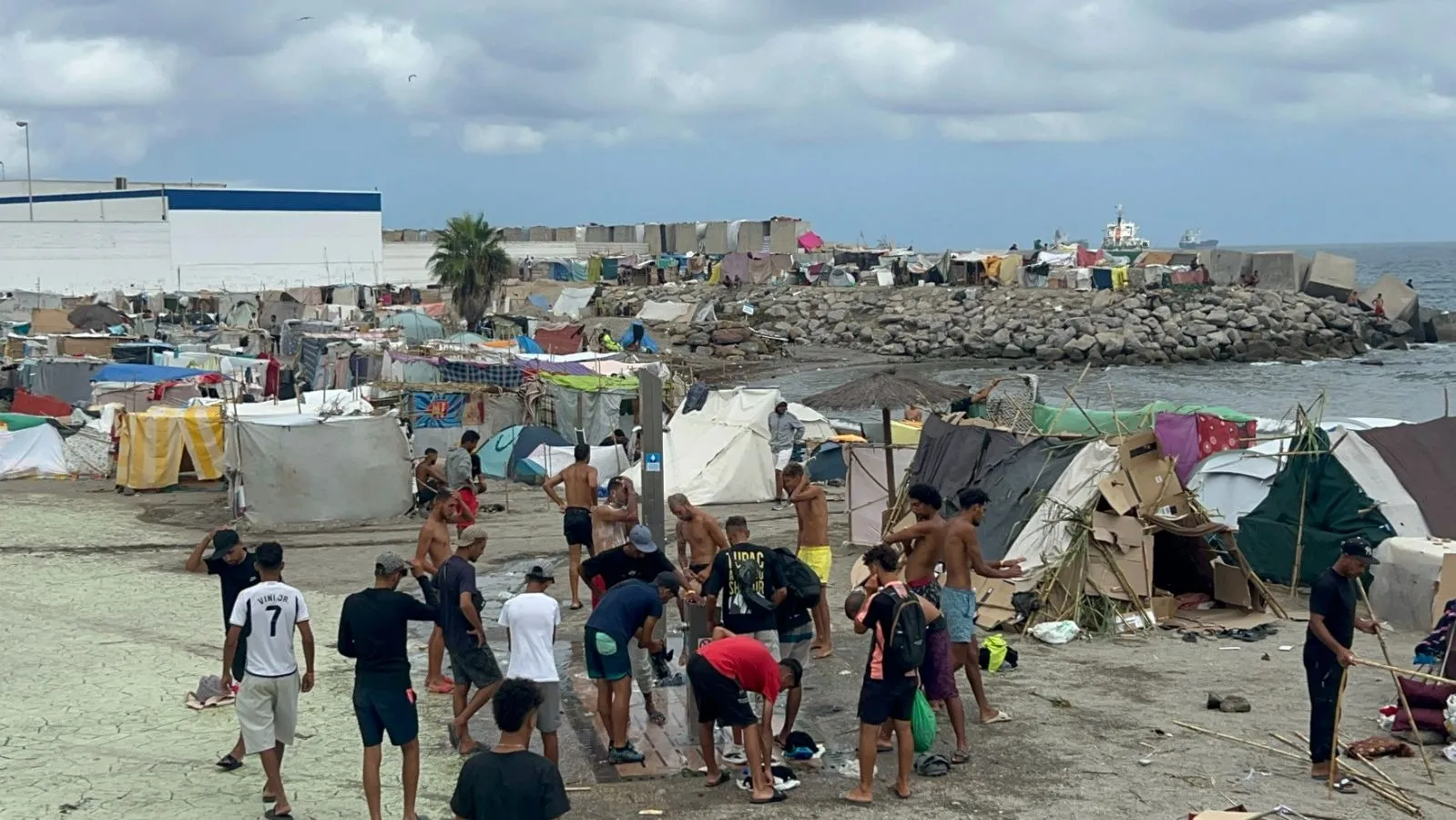
Humanitarian Crisis in Ceuta
In a devastating turn of events, at least 18 migrants have lost their lives while attempting to breach the border between Morocco and the Spanish territory of Ceuta. This tragic incident unfolded as thousands of individuals surged across the border in search of a better life, resulting in chaos and a dire humanitarian crisis. Reports indicate that the situation escalated dramatically on Thursday night, with images broadcasted by Spain's state broadcaster RTVE depicting burned vehicles on the Moroccan side of the border, following reported clashes.
Local leaders, including Rachid Sbihi, who represents Civil Guard officers, have characterized the situation as a serious humanitarian crisis. Thousands of migrants, many of whom are unaccompanied minors, have been left to sleep in parks and on the streets, while others wander aimlessly in the chaotic aftermath of the border breach. "People are still entering. The reinforcements that have arrived are only helping the injured and other humanitarian efforts," Sbihi stated, emphasizing the urgent need for assistance in the region. The tragedy has been compounded by the fact that many of the deceased drowned in the treacherous waters or were caught in a stampede as they attempted to cross the breakwater fence at Tarajal beach, a well-known crossing point into Spanish territory.
Motivations Behind the Surge
The motivations driving this mass migration are complex and deeply rooted in the socio-economic challenges faced by many in Morocco. Ahmed Karim, a 33-year-old Moroccan migrant, shared that he crossed into Ceuta in search of job opportunities, stating, "Many people want to go to Europe, America, but they don't have the opportunity." The influx of migrants into Ceuta reflects broader trends where Spain remains a primary entry point into Europe for individuals escaping violence or seeking better economic prospects. Migrants often embark on perilous journeys, swimming from the Moroccan town of Fnideq, which lies approximately 3 miles from Ceuta. Others attempt shorter crossings from nearby towns, driven by desperation and the hope of a brighter future.
The crisis has prompted immediate responses from both Spanish and French authorities. Spanish Prime Minister Pedro Sánchez and Interior Minister Fernando Grande-Marlaska are expected to visit Ceuta to assess the situation firsthand. Concurrently, French Interior Minister Laurent Nunez announced that France would bolster border checks with Spain, activating a Rapid Intervention Border Force to manage the escalating situation. Footage from the border indicates a significant presence of migrants, with many still attempting to cross, while some have even tried to return to Morocco amidst the chaos. Despite the scale of the crisis, Moroccan authorities have yet to publicly comment on the situation, leaving many questions unanswered about the motivations behind such a large-scale migration.
Calls for action have been made, with Juan Jesús Vivas, the head of Ceuta's regional government, urging the national government to declare a state of emergency to address the burgeoning crisis. He highlighted that local reception centers are already overwhelmed, with hundreds of individuals sleeping on the streets and thousands more believed to have arrived. The situation remains fluid as Spain's Interior Ministry prepares to publish its next migration report, while local leaders continue to call for immediate assistance to manage the humanitarian fallout from this tragic event.
As reported by npr.org.