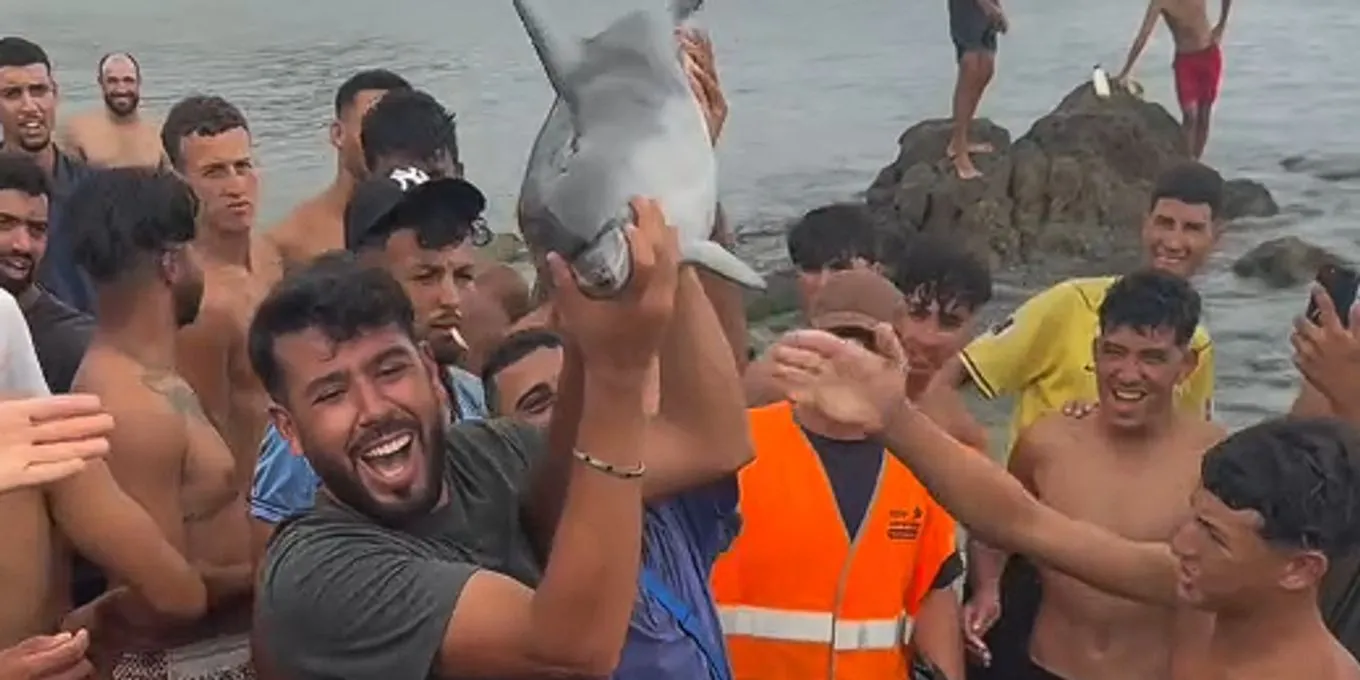

A shocking incident has unfolded at the beach of Ceuta, where a group of migrants reportedly pulled a dolphin calf from the sea and fatally struck it with a stick. This disturbing event has sparked outrage and raises questions about the treatment of wildlife amid the ongoing migrant crisis.
According to reports from the Spanish newspaper "El Faro de Ceuta," the incident occurred on a Wednesday when the group was seen dragging the young dolphin out of the water. Initially, the calf had been swimming close to the shore when the men noticed it and decided to enter the water to retrieve it. The situation escalated dramatically when one of the individuals began to strike the dolphin on the head, leading to its tragic demise. An employee from "Ecoservicios," a company responsible for maintaining the beach, witnessed the cruel act and intervened, but the damage had already been done.
In a bizarre twist, this dolphin incident is not isolated. Just days before, another report surfaced of a man attempting to capture a goose, seemingly with the intent to kill and consume it. The same employee from "Ecoservicios" managed to prevent harm to the goose, showcasing a troubling pattern of animal cruelty during this period of heightened tension.
The backdrop of these events is a significant influx of migrants from Morocco, with nearly 72,000 individuals having crossed into Ceuta by swimming or climbing over border fences by late July. Despite the initial chaos, many returned to Morocco shortly after their arrival, but as of now, approximately 5,000 migrants remain in the area, including around 1,200 minors. This situation has led to growing frustration among local residents, some of whom have begun to demonstrate against the extended presence of migrants in their community, accusing the government of neglecting the enclave.
In response to this crisis, the Spanish government has announced a support program worth €309 million aimed at addressing the challenges faced by Ceuta due to the mass influx of migrants. This financial aid is expected to be deployed within the year to assist in managing the ongoing situation.
As reported by nau.ch.