
Transformative Infrastructure Reshaping Morocco's Economy
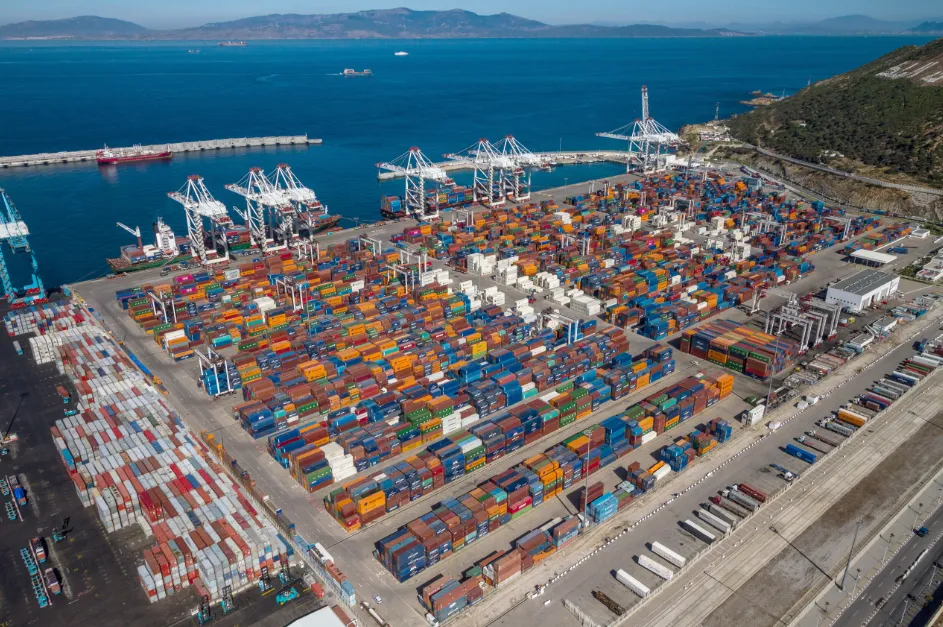
In Tangier, container ships continuously arrive, while high-speed trains zip between major cities, and the sun in Ouarzazate generates electricity. Across the landscape, roads, dams, and desalination plants gradually alter the environment, signaling the emergence of a new Morocco. Among these monumental transformations, the Tanger Med port stands out as a beacon of economic change, marking a significant shift in the region's economic landscape.
Tanger Med is not just another port; it is a fundamental driver of the northern Moroccan economy. By 2025, the port is projected to handle over 11.1 million containers, with a staggering 161 million tons of goods processed. This bustling port has catalyzed the establishment of industrial and logistics zones, attracting diverse industries, most notably the automotive sector, which has visibly flourished in the area. The impact of the port extends far beyond its docks, as it has transformed Tangier into a major industrial and logistical hub, altering the economic dynamics of the entire region.
Railway Advancements Connecting Major Cities
The introduction of Al Boraq in 2018 has revolutionized Morocco's railway system, making it the first African nation to operate a high-speed train line. This innovation has drastically reduced travel times between Tangier and Casablanca, reshaping the commuting habits of countless travelers and enhancing trade between these significant urban centers. Plans are underway to extend the high-speed rail network further south, with a new line connecting Kenitra to Marrakech already in progress. By 2030, Morocco aims to establish approximately 630 kilometers of high-speed rail connections, reinforcing its commitment to modern transportation infrastructure.
Moreover, the expansion of the country's highway network continues to facilitate regional connectivity. A notable recent addition is the Tit Mellil-Berrechid highway, which became operational in November 2025. Stretching 30 kilometers, this new route links the Casablanca bypass to the Casablanca-Marrakech and Berrechid-Beni Mellal routes, also improving access to Mohammed V Airport. While these highways may be less conspicuous, their daily impact is significant, as they reduce travel times, streamline goods transport, and enhance inter-regional connections.
The transformation of Morocco, however, extends beyond transportation. The nation is also addressing its strategic water needs as it faces increasing droughts. The shift towards securing water supplies has led to a central focus on desalination. The Jorf Lasfar plant currently provides desalinated water to Southern Casablanca, boasting a capacity of 60 million cubic meters annually. A much larger facility is under construction in Casablanca, expected to produce 200 million cubic meters annually, with a future capacity of 300 million cubic meters. Furthermore, Morocco is developing interconnections between its dams to facilitate the transfer of water from resource-rich regions to those experiencing shortages. This comprehensive strategy is evolving to incorporate not just storage and transfer, but also desalination and water reuse.
In Ouarzazate, the Noor solar complex epitomizes Morocco's ambition to embrace renewable energy on a grand scale. With a capacity of around 600 MW, Noor has become a significant solar project, bringing international attention to Morocco's renewable energy initiatives and positioning Ouarzazate as a hub for emerging energy technologies.
Looking to the future, the Nador West Med port, located on the northeastern Mediterranean coast, continues its development, while major airports are expanding to accommodate growing traffic. From Tangier to Ouarzazate, and through ports, railways, highways, and desalination plants, the changes in Morocco are evident. They can be quantified in kilometers traveled, goods transported, water produced, and energy harnessed.
Gradually, Morocco is evolving into a more connected, industrialized, and self-reliant nation, preparing its territory for the future while continuing to transform the present.
As reported by lecourrierdelatlas.com.