
Advancements in Morocco's Railway Sector
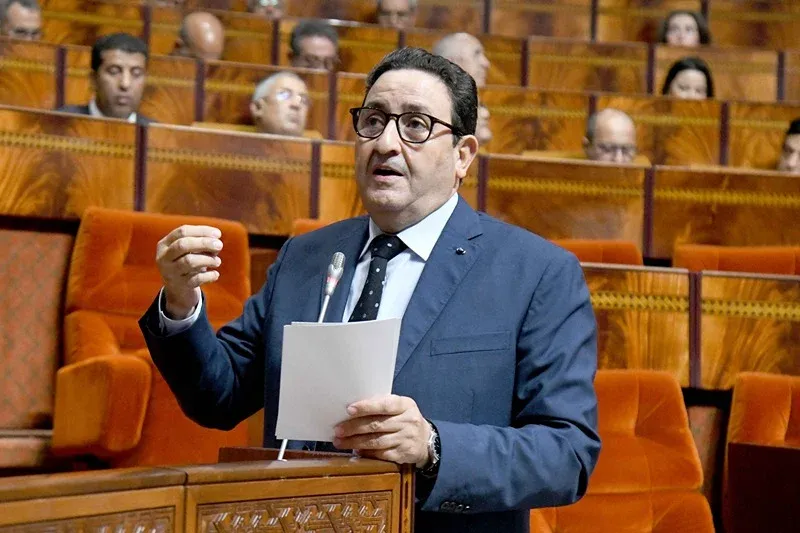
On Monday, May 25, 2026, the House of Representatives convened a session focused solely on the transport and logistics sector, where Minister Abdessamad Kayouh presented the progress on key railway projects and outlined the major objectives of the national rail development program. This extensive initiative aims for an investment of 96 billion dirhams by 2030, marking it as a cornerstone of the national mobility strategy. The plan is intended to radically transform Morocco's railway network through three interlinked pillars: the expansion of high-speed rail, the development of regional networks, and the modernization of the existing rail system.
According to Minister Kayouh, this roadmap is designed to significantly enhance connectivity between Morocco's main regions, reduce travel times between economic hubs, and strengthen the role of railways in promoting sustainable mobility while alleviating congestion in major urban areas.
High-Speed Rail: Expanding Connectivity and Reducing Travel Times
The Kénitra–Marrakech high-speed rail line is currently approximately 30% complete, as reported by the government official, who believes this progress aligns with the initial timeline, with operations expected to commence by the end of 2029. This new rail corridor is not merely a north-south connection; it will integrate several significant links connecting Rabat to Casablanca, Casablanca to Marrakech, and Rabat to Mohammed V Airport. Additionally, the route will pass by the upcoming grand stadium in Benslimane.
The minister also announced the completion of studies for the future Marrakech–Agadir high-speed line, a segment projected to cost around 55 billion dirhams and present considerable technical challenges due to the Atlas Mountains' terrain. Nearly 70% of the work will involve major civil engineering projects, including bridges and tunnels that total over 35 kilometers in length. The Ministry and the National Rail Office (ONCF) are currently in discussions to secure international financing for this ambitious project.
Advanced projections indicate a significant reduction in travel times. The journey from Tangier to Marrakech is expected to be shortened from approximately 6 hours and 30 minutes to just 3 hours and 30 minutes, while the Rabat-Tangier route will be reduced to about one hour. Travel time between Rabat and Mohammed V Airport will not exceed 35 minutes, compared to 55 minutes for the journey from the airport to Marrakech.
Overall, the national railway program mobilizes an investment of 96 billion dirhams by 2030, encompassing infrastructure, rolling stock, and the modernization of the existing network. This comprehensive program includes the construction of the Kénitra–Marrakech high-speed line, the acquisition of 168 new trains to renew and enhance the fleet, and funding dedicated to upgrading and reinforcing the existing rail system.
In terms of service quality, data from the ONCF reveals that 80% of users express satisfaction with railway services, according to Minister Kayouh. The punctuality rate for national trips stands at an impressive 87%, a figure that reflects the modernization efforts undertaken in recent years. Furthermore, railway traffic saw a 6% increase in 2025, with 55 million passengers transported, including over 5.5 million on high-speed lines. These achievements, according to the minister, affirm the growing importance of rail as a key mode of transport, especially in the transition towards more sustainable solutions.
As reported by fr.hespress.com.