
Rethinking Mobility in Agadir
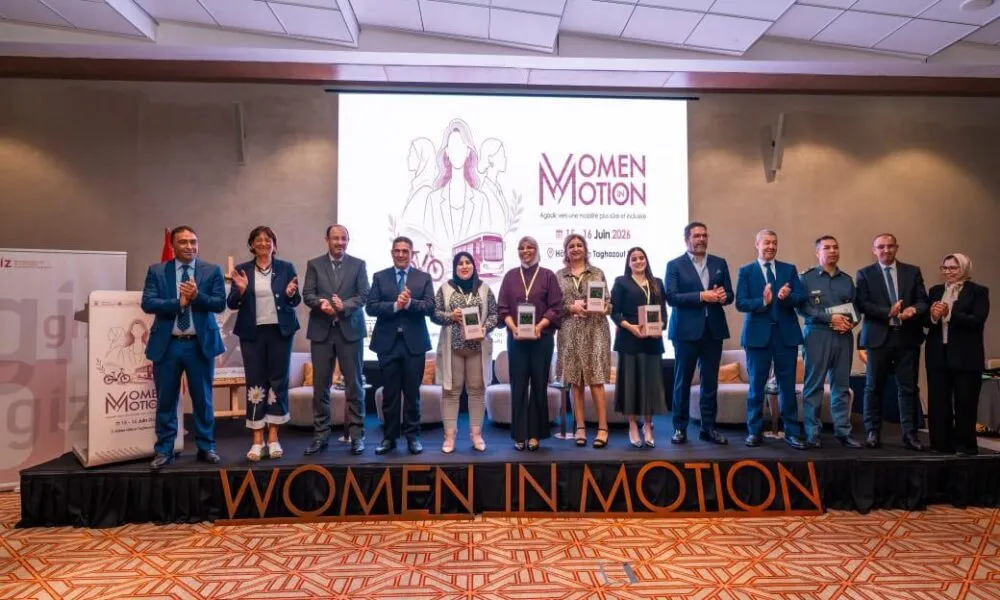
In Agadir, the discourse surrounding mobility has evolved beyond merely addressing transportation options; it now encompasses the broader experience of how the city is navigated, experienced, and utilized on a daily basis, particularly from the perspective of women. This paradigm shift is exemplified by the recently inaugurated summit, "Women in Motion," which commenced this Monday in the capital of Souss, presided over by the region's wali, Saïd Amzazi, and attended by a diverse array of institutional stakeholders, international partners, transport operators, experts, and civil society representatives.
Organized by GIZ in collaboration with the Ministry of Energy Transition and Sustainable Development, the Wilaya of Souss-Massa, and SDL Agadir Mobilités, this summit aims to address a topic that is seldom discussed openly: how to construct a city that is more accessible, fluid, and inclusive based on the actual mobility needs of women. Choosing Agadir as the host city for this significant gathering is noteworthy, as the city has been undergoing a transformative urban phase driven by an urban development program and the gradual modernization of its mobility infrastructure.
Enhancing Urban Experience through Inclusivity
In his remarks, Saïd Amzazi highlighted that this dynamic transformation is particularly evident in the renewal of the urban transport fleet, which includes the introduction of 247 new buses and the launch of the first BHNS Amalway Trambus line designed to meet standards of regularity, comfort, and accessibility. However, the summit extends beyond merely showcasing infrastructure; it ignites a discussion about the genuine quality of urban experiences. Mobility within the city is not solely concerned with routes or travel times; it also encompasses safety, the clarity of public spaces, equality of access to services, employment, education, and, more broadly, participation in social life. Through this comprehensive approach, Agadir seeks to embed mobility within a larger framework of urban inclusion.
The organizers also aimed to root this dialogue in practical realities, featuring site visits and hands-on workshops focused on cycling. The underlying objective is clear: to connect public policies with lived experiences and to generate tailored responses to everyday usage. This summit thus signifies a critical evolution in the approach to urban mobility. In Agadir, the focus transcends simply improving transportation; it emphasizes rethinking the city from the perspective of its inhabitants. By placing women's mobility at the forefront of the discussion, the city raises an essential question regarding urban development that aspires not only to modernity but also to greater fairness and inclusivity.
As reported by lavieeco.com.